
Dentalkart Editorial
Editorial Team
Mastering Endodontic Irrigant Activation
A Clinical Step-by-Step Protocol
Achieving thorough canal disinfection is the foundation of lasting endodontic success. Moving beyond simple irrigation to dynamic fluid activation ensures that disinfectants reach every part of the complex root canal system, leading to superior clinical outcomes.
Table of Contents
Preparing the Canal System
- Establish straight-line access for unhindered instrument and irrigant delivery.
- Shape canals to a minimum size of 25 with a .04 taper.
- Confirm a smooth, reproducible glide path to the canal terminus.
- Ensure adequate coronal flaring to create an irrigant reservoir.
- Verify the working length accurately with an electronic apex locator.
- Irrigate between each file to flush out dentinal debris effectively.
Pre-Activation Readiness
Ensure no coronal interferences are blocking the path to the apex.
Confirm a small file (size 10) can passively reach the working length.
A final shape of at least 25/.04 allows for effective fluid exchange.
The pulp chamber must be full of NaOCl before activation begins.
Sonic vs. Ultrasonic Activation
- Sonic devices operate at a lower frequency range of 1-6 kHz.
- Ultrasonic devices function at a higher frequency of 25-40 kHz.
- Sonic tips are typically flexible polymer, reducing the risk of ledging.
- Ultrasonic tips are rigid metal and require more careful handling.
- Ultrasonic energy produces more vigorous acoustic streaming and cavitation effects.
- Sonic systems are generally more affordable and offer greater portability.
Sonic Activation
- + Safer polymer tips
- + More affordable
- + Excellent for curved canals
- - Less powerful streaming
Ultrasonic Activation
- + Superior acoustic streaming
- + Highly effective debridement
- - Risk of canal transportation
- - More expensive equipment
The Clinical Activation Protocol
- Fill the canal system completely with fresh 3-5% sodium hypochlorite.
- Select a tip that fits loosely and does not bind within the canal.
- Position the tip 1-2 mm short of the full working length.
- Activate the handpiece for a 30-second cycle inside the canal.
- Use short, 2-3 mm vertical strokes to agitate the fluid.
- Replenish with fresh irrigant and repeat for a second cycle.
Maximize Fluid Dynamics
To prevent the tip from binding, never keep it static. Continuous, gentle vertical motion of 2-3 mm is critical for generating powerful acoustic streaming and preventing air bubble formation at the apex.
Final Rinse and Obturation
- Perform a final rinse with 1 ml of 17% EDTA for one minute.
- Activating the EDTA solution for 30 seconds further enhances its efficacy.
- Neutralize the canal with a final flush of saline or sterile water.
- A chlorhexidine rinse may be used in persistent infection cases.
- Thoroughly dry the canal system using sterile, absorbent paper points.
- Proceed with obturation immediately to prevent any recontamination.
Avoid Chemical Interaction
Never allow sodium hypochlorite (NaOCl) and chlorhexidine (CHX) to mix inside the canal. This interaction forms a toxic precipitate (para-chloroaniline) that is difficult to remove and compromises the final seal.
Frequently Asked Questions
For most canals, the standard protocol involves two to three cycles of activation, each lasting 30 seconds. This totals 60-90 seconds of active agitation per canal, with fresh irrigant introduced between each cycle to maximize the chemical effect and debris removal.
No, it is a crucial adjunctive step, not a replacement. Mechanical shaping with files is essential to create space for the irrigant to flow and for the activation tip to work effectively. Activation enhances disinfection within the shape you create, cleaning areas files cannot reach.
For optimal fluid dynamics, the canal should be shaped to at least a size 25 with a .04 or .06 taper. This size allows the activation tip to move freely without binding and creates a sufficient volume for the irrigant to generate powerful acoustic streaming.
No, you should avoid direct contact. Touching the canal wall with a vibrating ultrasonic tip dampens its oscillation, reducing effectiveness. More importantly, it can cause iatrogenic damage like ledging or transportation, especially in curved canals. The tip should always be kept centered.
Written by
Dentalkart Editorial
Editorial Team
The Dentalkart Editorial team curates dental education content, treatment guides, and equipment insights drawn from clinical research and feedback from practising dentists across India.
Keep reading
Browse all →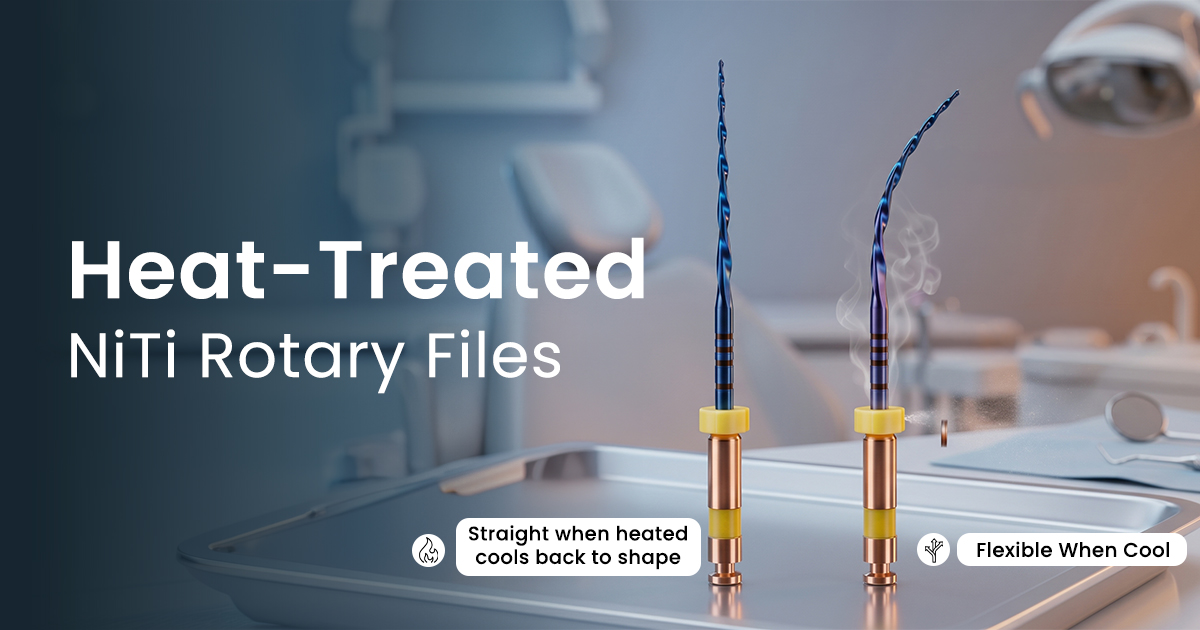
Heat-Treated NiTi Rotary Files — A Modern Alloy and Phase Guide
Heat-Treated NiTi Rotary FilesA Modern Alloy and Phase Guide Heat-treated NiTi files are endodontic rotary instruments thermomechanically processed to enhance f
MTA vs. Bioceramic Repair Materials — A Clinical Selection Guide
MTA vs. Bioceramic Repair MaterialsA Clinical Selection Guide Modern endodontics requires more than simple obturation. The choice between traditional MTA and ne
Choosing Your Root Canal Sealer — A Modern Material Guide
Choosing Your Root Canal SealerA Modern Material Guide The long-term success of root canal treatment hinges on the final obturation material. This guide explore