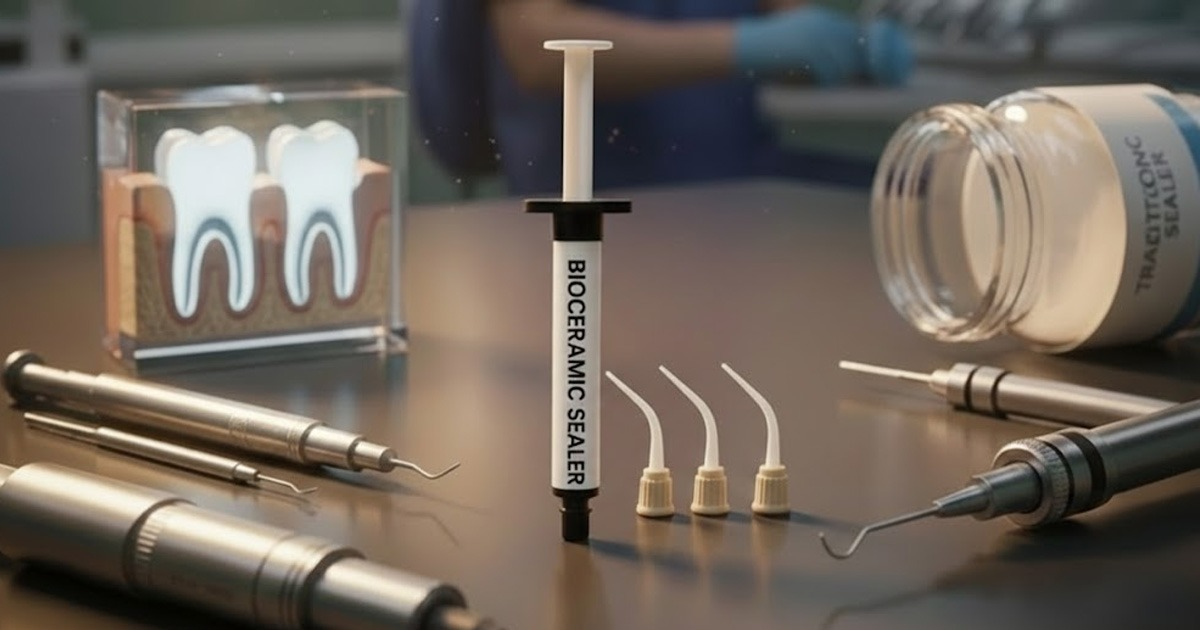
The Rise of Bio-ceramic Sealers: What Dentists Must Know in 2026

Dr. Bhavishya Arora
Chief Dental Editor
Introduction
In everyday endodontic practice, success depends not only on shaping and cleaning but also on how well the root canal system is sealed. For many years, sealers were chosen out of habit rather than strategy. However, this approach has changed significantly in recent times.
By 2026, bioceramic sealers have become an important part of modern root canal treatment. Their biological compatibility, moisture tolerance, and long-term sealing ability have made dentists rethink conventional obturation materials. These sealers are now widely used in routine cases, retreatments, and complex clinical situations. This blog explains the materials used in bioceramic sealers, recent advancements, clinical advantages, and practical points every dentist should know.
What Are Bioceramic Sealers?
Bioceramic sealers are bioactive, calcium silicate–based materials designed to seal root canals while supporting healing of periapical tissues.
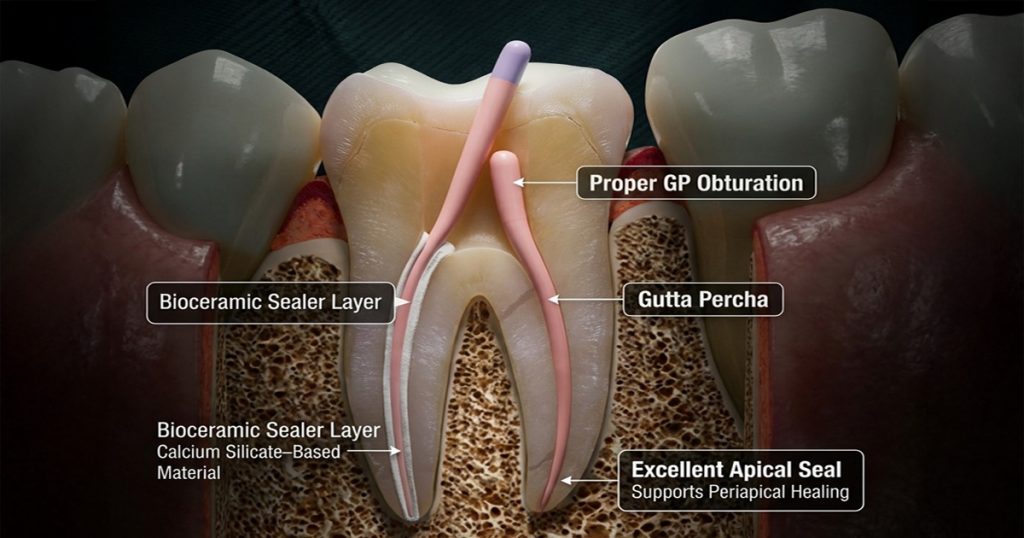
They are different from conventional sealers because they:
- Set in the presence of moisture
- Form a chemical bond with dentin
- Promote mineralization
- Remain dimensionally stable over time
Instead of just filling space, they actively participate in biological repair.
Features include:
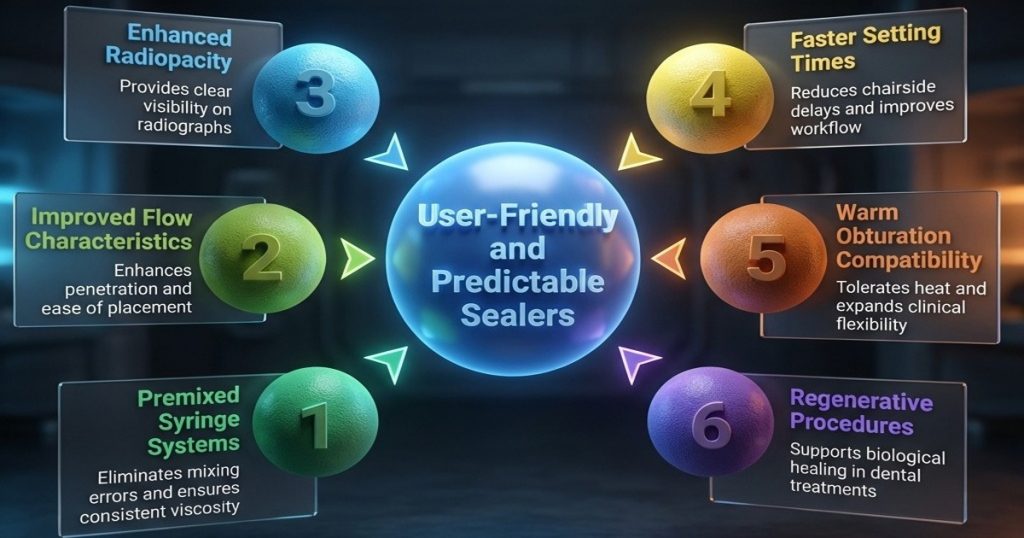
- Premixed syringe systems
- Eliminates mixing errors
- Consistent viscosity
- Improved flow characteristics
- Better penetration into complex anatomy
- Easier placement with minimal pressure
- Enhanced radiopacity
- Clear visibility on follow-up radiographs
- Improved diagnostic confidence
- Faster and controlled setting times
- Reduced chairside delays
- Better workflow efficiency
- Improved compatibility with warm obturation
- Tolerates moderate heat
- Expands clinical flexibility
- Use in regenerative procedures
- Widely accepted in apexification and revascularization
- Supports biological healing
These advancements have made bioceramic sealers more user-friendly and predictable.
Materials Used in Bioceramic Sealers
Modern bioceramic sealers are composed of carefully balanced inorganic compounds that mimic natural tooth and bone minerals.

Common materials include:
- Calcium silicate
- Primary setting component
- Responsible for bioactivity
- Calcium phosphate
- Supports hydroxyapatite formation
- Improves bonding with dentin
- Calcium hydroxide
- Maintains high alkaline pH
- Provides antibacterial action
- Zirconium oxide or tantalum oxide
- Added for radiopacity
- Improves radiographic visibility
- Silica-based fillers
- Enhance flow and handling
These materials together allow the sealer to interact positively with dentin and surrounding tissues.
Why Bioceramic Sealers Are Preferred in 2026
Dentists are increasingly choosing bioceramic sealers due to consistent clinical advantages.
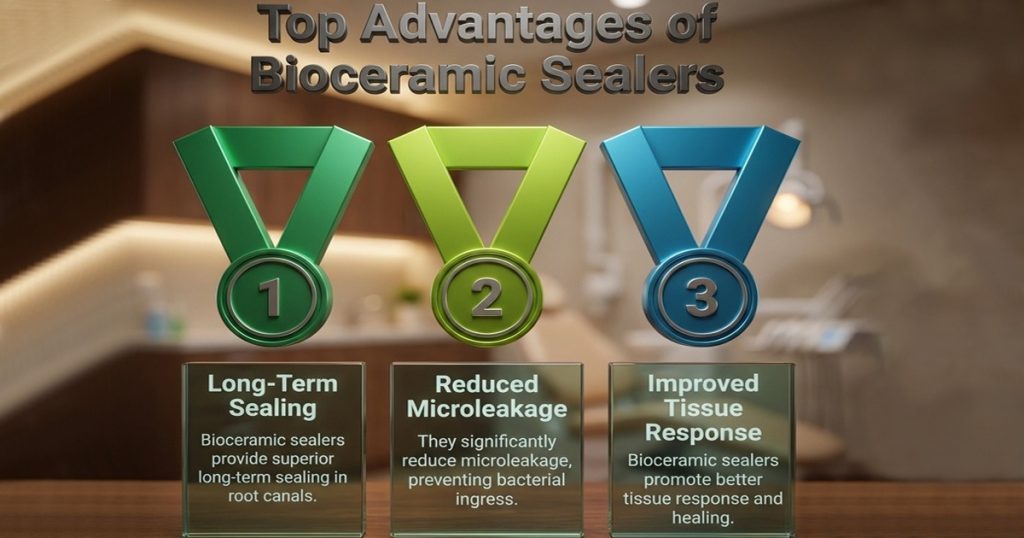
Key reasons include:
- Better long-term sealing
- Reduced microleakage
- Improved tissue response
- Minimal post-operative pain
- Higher success in challenging cases
How Bioceramic Sealers Work Clinically
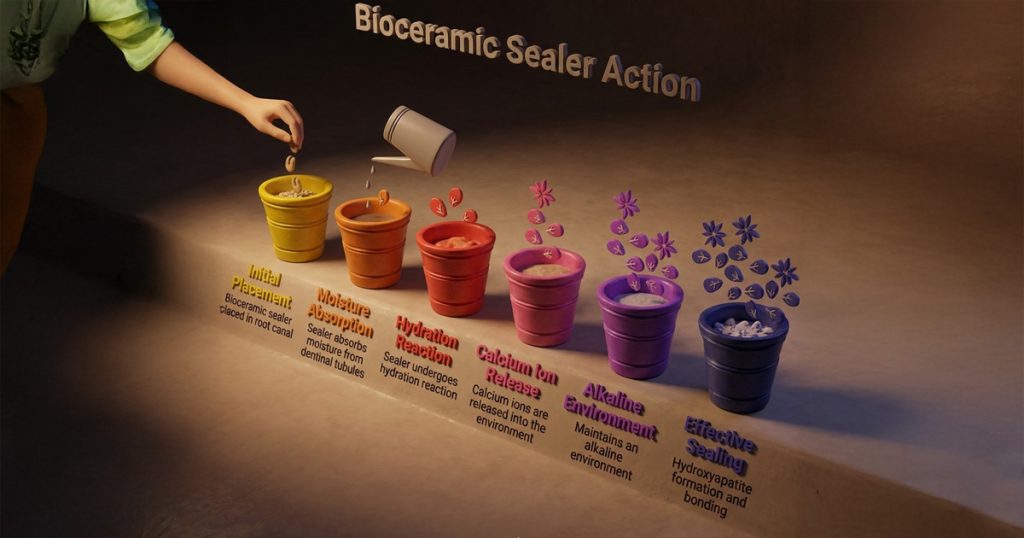
When placed inside the root canal, bioceramic sealers:
- Absorb moisture from dentinal tubules
- Undergo hydration reaction
- Release calcium ions
- Maintain an alkaline environment
This leads to:
- Formation of hydroxyapatite
- Chemical bonding with dentin
- Sealing of dentinal tubules
Major Clinical Advantages
1. Moisture-Friendly Setting
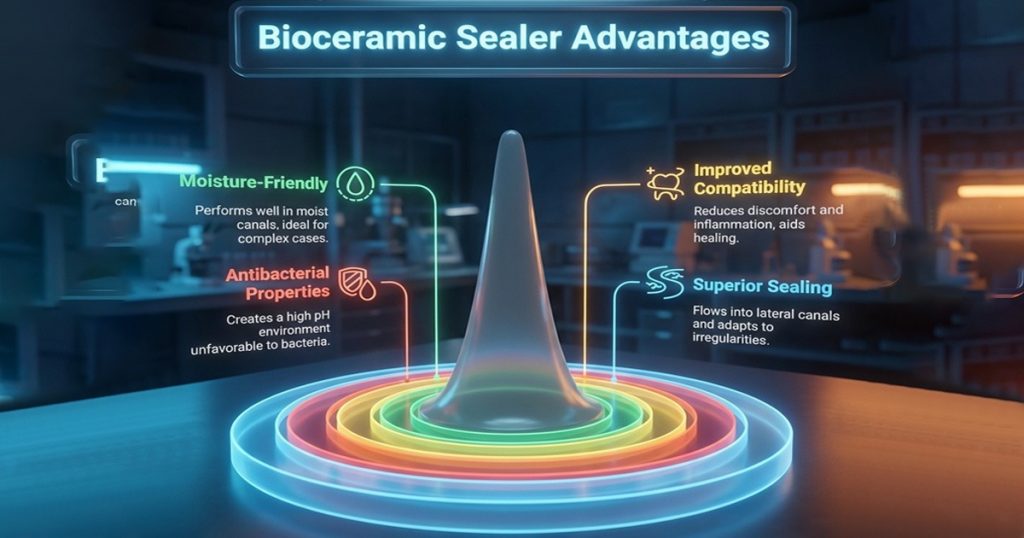
Unlike traditional sealers, bioceramics perform well in moist canals.
This is especially helpful in:
- Retreatment cases
- Teeth with periapical lesions
- Wide or immature apices
Complete dryness is no longer critical.
2. Improved Biological Compatibility
Dentists frequently observe:
- Reduced post-operative discomfort
- Less inflammation
- Faster periapical healing
This makes bioceramic sealers ideal for symptomatic and necrotic cases.
3. Antibacterial Properties
- High pH environment
- Unfavorable conditions for residual bacteria
- Supports long-term canal disinfection
Although not a replacement for irrigation, it adds an extra layer of protection.
4. Superior Sealing Ability
Bioceramic sealers:
- Flow into lateral canals
- Adapt to canal irregularities
- Expand slightly on setting
This reduces chances of microleakage and reinfection.
Indications Where Bioceramic Sealers Perform Best
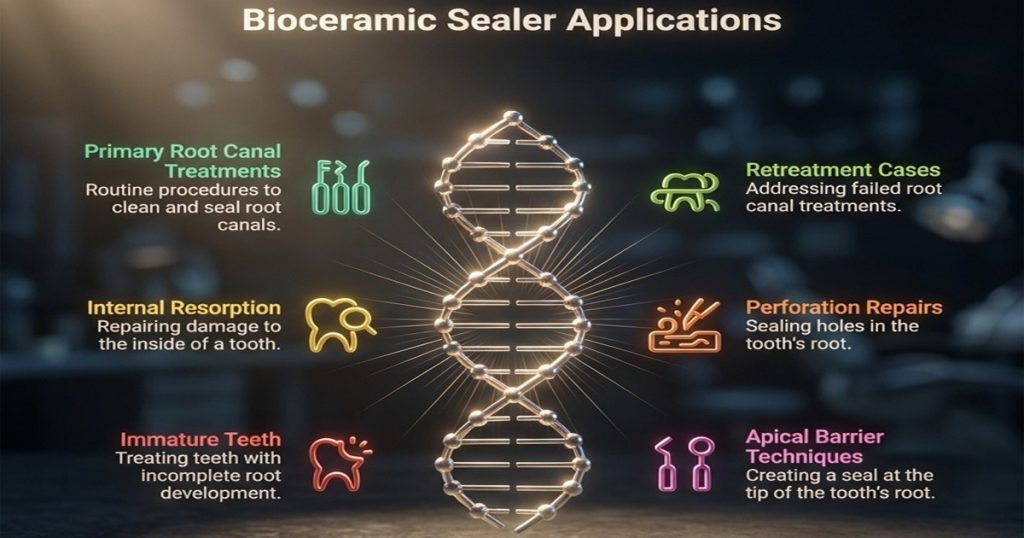
Dentists commonly use bioceramic sealers in:
- Primary root canal treatments
- Retreatment cases
- Teeth with internal resorption
- Perforation repairs
- Immature teeth
- Apical barrier techniques
Minor extrusion beyond the apex is generally well tolerated due to their bioactive nature.
Compatible Obturation Techniques
Bioceramic sealers work well with:
- Single cone technique
- Hydraulic condensation
- Modified warm vertical compaction
Excessive heat should be avoided, as it may affect material properties.
Practical Chairside Tips for Dentists
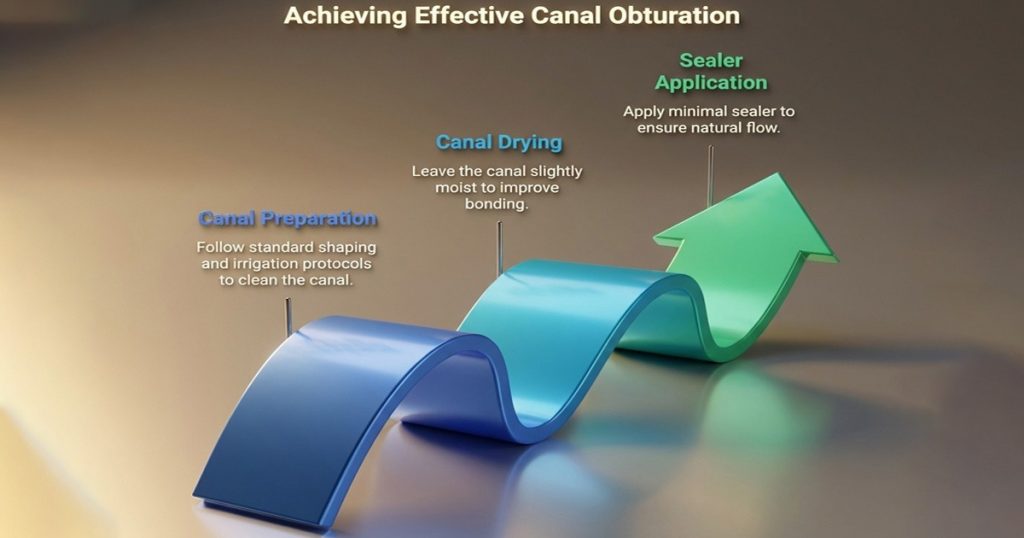
Canal Preparation
- Follow standard shaping and irrigation protocols
- Use EDTA to remove smear layer
- Final rinse with saline
Canal Drying
- Avoid over-drying
- Leave canal slightly moist
- Moist dentin improves bonding
Sealer Application
- Use minimal quantity
- Avoid excessive extrusion
- Allow sealer to flow naturally
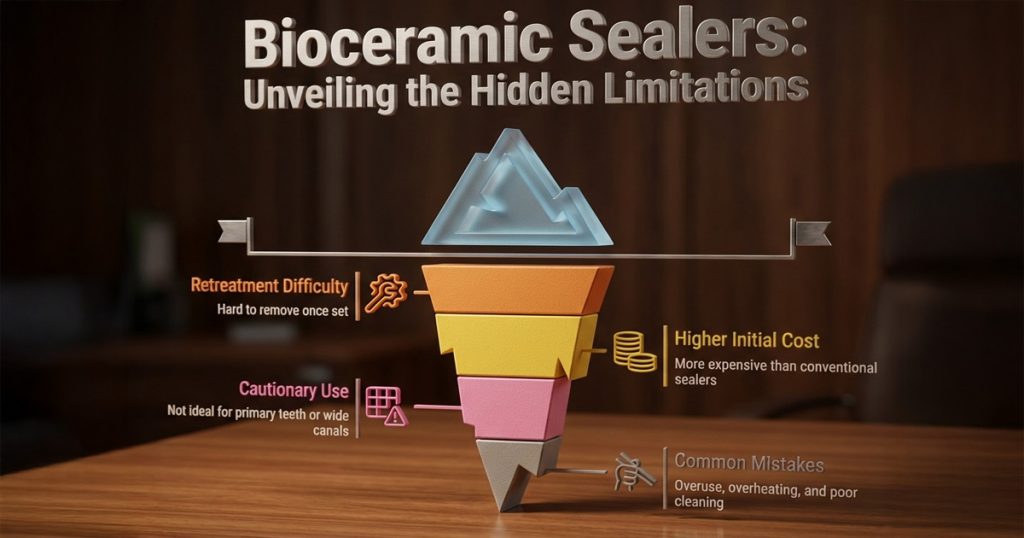
Limitations to Keep in Mind
Despite their advantages, bioceramic sealers have certain limitations.
Retreatment Considerations
- Difficult to remove once set
- Requires mechanical instrumentation
- Not ideal when future retreatment is highly anticipated
Cost Factor
- Higher initial cost compared to conventional sealers
- Often justified by improved outcomes and fewer failures
Use with Caution In:
- Primary teeth
- Extremely wide canals without apical stop
- Cases requiring predictable retrievability
Common Mistakes to Avoid
- Using excessive sealer volume
- Overheating during obturation
- Expecting sealers to compensate for poor cleaning
Bioceramic sealers enhance good technique but cannot replace it.
Final Thoughts
Bioceramic sealers have changed how dentists approach obturation in 2026. Their bioactivity, sealing ability, and compatibility with modern endodontic protocols make them a reliable choice for many clinical situations.
When used with proper diagnosis, cleaning, and shaping, they significantly improve treatment predictability and healing outcomes. For dentists looking to upgrade their endodontic practice, understanding bioceramic materials and the recent advances in bioceramic sealers is an important step forward.
FAQ’s
Unlike conventional sealers, bioceramics are bioactive, hydrophilic, and dimensionally stable, offering superior sealing, antibacterial properties, and better tissue compatibility.
Yes. They are biocompatible and promote tissue repair, making them ideal for sealing small perforations. Minor extrusion beyond the apex is usually well tolerated.
Yes. Bio-ceramic sealers contain zirconium oxide or tantalum oxide, making them clearly visible on radiographs for follow-up evaluation.
Use a thin layer only. Excessive sealer does not improve sealing and can complicate future retreatment or extrusion beyond the apex.
No. Standard irrigation with NaOCl and EDTA is sufficient. Avoid over-drying canals, as moisture is needed for proper setting.
Written by
Dr. Bhavishya Arora
BDS, MDSChief Dental Editor
A contributing clinician at Dentalkart Blogs, Dr. Bhavishya is a compassionate, detail-driven dentist known for thoughtful patient care, clear communication, and a calm chair-side manner that puts patients at ease. Beyond the clinic, she leads product content and category initiatives at Dentalkart India's largest dental marketplace where she bridges clinical understanding with commercial insight to help dentists make better-informed product choices.
Keep reading
Browse all →Navigating Gates-Glidden Drill Sizes
Navigating Gates-Glidden Drill SizesA Clinical Selection Guide Gates-Glidden (GG) drills are latch-type, side-cutting rotary instruments for shaping the coronal
Gauging Canal Status with Absorbent Paper Points
Gauging Canal Status with Absorbent Paper PointsA Clinical Selection Guide Using absorbent paper points for diagnosis provides critical, real-time feedback on c

Ideal Cases for Intraligamentary Anaesthesia
Ideal Cases for Intraligamentary AnaesthesiaAn Evidence-Based Guide Intraligamentary anaesthesia is a supplemental injection technique that forces a local anaes
