
Dr. Bhavishya Arora
Chief Dental Editor
Case Selection for Electric Pulp Testing
A Diagnostic Decision Guide
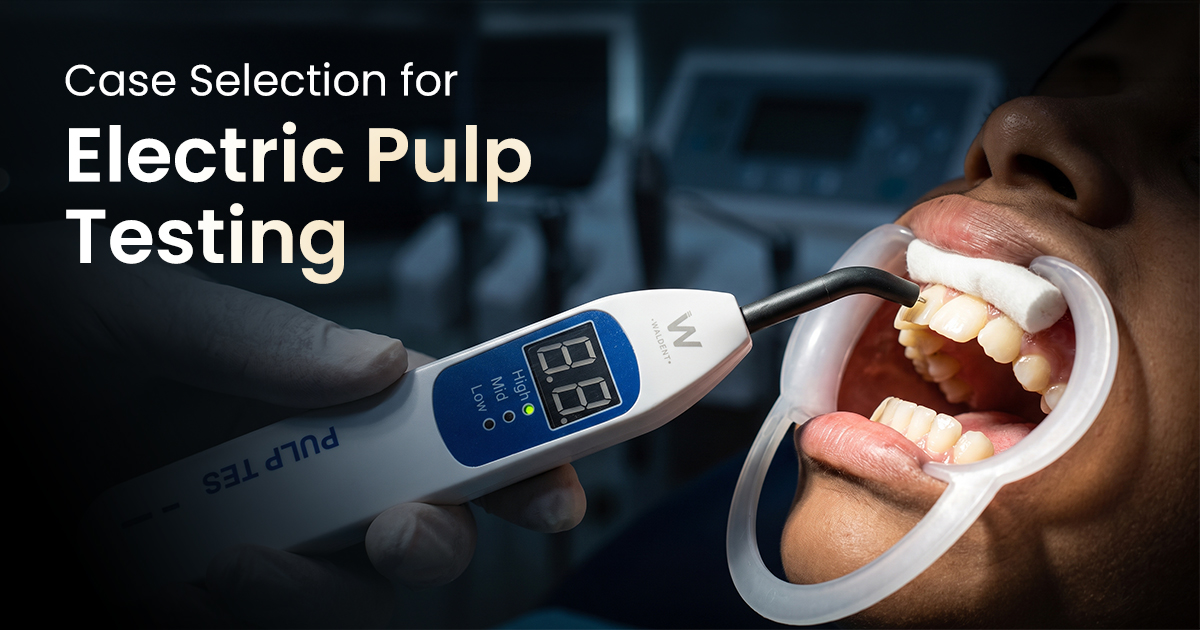
An electric pulp tester (EPT) assesses pulp nerve response using a graduated electrical current, confirming vitality when thermal tests are inconclusive. Proper case selection is crucial, especially for complex presentations in Indian dental practice.
Table of Contents
EPT Indications Over Cold Testing
An EPT is indicated over a cold test when a tooth's thermal response is unreliable or absent despite vitality. This is common in teeth with calcific metamorphosis or recent trauma, where the cold test's hydrodynamic mechanism is compromised. EPT directly stimulates intradental A-delta nerve fibers.
In older patients, tertiary dentin insulates the pulp, requiring stronger thermal stimuli (below 0°C) than standard refrigerants provide, often causing false negatives. EPT bypasses this insulation. Following dental trauma, the pulp may enter a temporary non-responsive 'shock' phase for weeks. An electric pulp tester can often still elicit a response, preventing necrosis misdiagnosis.
- Calcific Metamorphosis: Use EPT when canals appear constricted or obliterated on radiographs; pulp tissue is often vital but thermally insulated.
- Recent Trauma: Wait 2-3 weeks post-injury; EPT assesses vitality as cold test response may not return for 6-8 weeks.
- Differentiating Lesions: Distinguishes endodontic periapical lesions from non-odontogenic cysts or granulomas when adjacent teeth test vital.
- Ankylosed Teeth: EPT is a useful adjunct for assessing vitality in ankylosed teeth when other signs are ambiguous.
Prioritizing Pulp Tests
What are the contraindications for using an EPT?
The absolute contraindication for EPT is any patient with a cardiac pacemaker or other implanted electronic device. Even minimal electrical current can generate electromagnetic interference (EMI), disrupting these life-sustaining devices.
Beyond this critical safety issue, EPT is unreliable in several relative contraindications. Extensive metallic restorations (e.g., large amalgam, full metal crowns) can conduct current to adjacent teeth or gingiva, causing false-positives. EPT is also not recommended on recently anesthetized teeth or in patients on high doses of analgesics/sedatives, as their neural response threshold will be altered.
- Absolute Contraindication: Patients with cardiac pacemakers, cochlear implants, or nerve stimulators.
- Unreliable on Primary Teeth: Inconsistent nerve response and thinner enamel lead to unpredictable results.
- Immature Permanent Teeth: Open apex with underdeveloped nerve fibers (plexus of Raschkow) often result in false-negative responses.
- Orthodontic Appliances: Brackets and archwires can create electrical circuits, conducting current across multiple teeth.
Cardiac Pacemaker Alert
Always confirm medical history before EPT. Using it on a cardiac pacemaker patient is malpractice and can cause severe medical complications. When in doubt, defer to thermal testing.
Achieving Reliable EPT Readings on Crowns
For reliable EPT readings on full-coverage crowns, the electrode must contact natural tooth structure, bypassing insulating porcelain or non-conductive ceramic. The common technique for PFM or all-metal crowns is creating a small buccal window/divot to expose underlying dentin.
This access point should fit the EPT probe tip. For all-ceramic crowns, this method is destructive; test accessible cervical tooth structure at the crown margin if recession exists. Always use a conductive medium (e.g., fluoride gel or toothpaste) to ensure a complete circuit. Test a healthy contralateral or adjacent tooth first to establish a patient's baseline response. After testing, the small PFM access cavity can be restored with composite resin.
- Isolate and Dry: Use cotton rolls and air to ensure no saliva creates a conductive bridge to the gingiva.
- Use a Conductor: Apply a small amount of toothpaste or prophylaxis paste to the EPT probe tip.
- Control Tooth First: Test a healthy, unrestored tooth (ideally contralateral) to orient the patient and find their baseline response value.
- Probe Placement: For a prepared window, press firmly. For a cervical margin, ensure contact is only on tooth structure, not the crown or gingiva.
Step 1: Identify Test Site
For PFM/metal crowns, prepare a 1-2 mm divot on the mid-buccal surface. For all-ceramic, locate exposed cervical tooth structure.
Step 2: Apply Conductive Medium
Place a dab of toothpaste on the probe tip. This is non-negotiable for effectively completing the electrical circuit.
Step 3: Test and Record
Place the probe, increase the current slowly, and record the number at which the patient first feels a tingling sensation.
Troubleshoot False EPT Results
False-positive EPT results (a non-vital tooth responds) typically stem from electrical current leakage. This occurs if current transmits to the gingiva via saliva, contacts a large metallic restoration touching an adjacent vital tooth, or in multirooted teeth where one canal is vital while others are necrotic.
Conversely, false-negative results (a vital tooth fails to respond) are more common. Causes include inadequate probe contact, insufficient conductive medium, or a patient heavily premedicated with analgesics/sedatives. Clinical factors like extensive calcification, a recently traumatized pulp in shock, or an immature apex with undeveloped nerve fibers are also frequent causes. Accurate diagnosis requires correlating EPT findings with other tests before treatment planning with materials like root canal sealers and gutta percha points.
- Check Isolation: Re-isolate and ensure the tooth is completely dry to prevent current leakage to soft tissues.
- Verify Contact: Ensure the probe has firm contact with tooth structure and the conductive medium is fresh.
- Review Medical History: Ask about recent trauma or medications (analgesics, tranquilizers, narcotics) that could alter nerve response.
- Assess Patient Anxiety: An anxious patient may react prematurely, giving a lower reading that mimics hypersensitivity.
Causes of False-Positives
- Current leakage to gingiva via saliva.
- Probe contact with metallic restorations.
- Patient anxiety causing premature response.
- Liquefaction necrosis in canal conducting current.
Causes of False-Negatives
- Inadequate conductive medium.
- Recent trauma (pulpal shock).
- Extensive pulpal calcification.
- Immature apex with undeveloped nerves.
Conclusion: EPT as an Adjunctive Tool
The EPT is a powerful diagnostic adjunct, not a standalone indicator of pulp health. Its greatest clinical value is clarifying ambiguous thermal and radiographic findings. A definitive endodontic diagnosis synthesizes EPT data with all other clinical information, never relying on a single numerical reading.
- Primary Indication: Prioritize EPT for traumatized teeth or those with calcific metamorphosis where cold tests are often unreliable.
- Pacemaker Rule: EPT is absolutely contraindicated in cardiac pacemaker patients due to electromagnetic interference risk.
- Crowned Teeth Protocol: For reliable readings on PFM crowns, create a 1-2 mm buccal window to access dentin directly.
- Final Diagnosis: Always correlate EPT results with at least two other diagnostic tests (e.g., cold test, percussion, radiograph) before commencing treatment.
Frequently Asked Questions
The main difference is their mechanism. A cold test assesses pulp vitality by inducing rapid outward flow of dentinal fluid (hydrodynamic theory), stimulating A-delta nerve fibers. An EPT bypasses this fluid mechanism, directly stimulating the same A-delta nerve fibers with a graduated electrical current, useful when hydrodynamic response is compromised.
It is generally not recommended to use an EPT on primary teeth. Their nerve response is unreliable and unpredictable. Thinner enamel/dentin and potential patient anxiety can lead to inaccurate readings and a negative clinical experience. Thermal or radiographic assessment is more appropriate.
A response from a non-vital tooth is a false-positive, often due to electrical current leakage. Current may conduct through saliva to the gingiva, through large metallic restorations to an adjacent vital tooth, or in cases of liquefaction necrosis, via canal fluid to apical tissues.
No universal number indicates vitality; the reading is relative. Vital pulp is determined by its response relative to a healthy control tooth. First, test a healthy adjacent or contralateral tooth to establish the patient's baseline. A vital tooth typically responds similarly; a necrotic tooth will not respond even at maximum setting.
First, thoroughly clean and dry the tooth and adjacent teeth, isolating with cotton rolls to prevent electrical leakage via saliva. Next, apply a small amount of conductive medium (e.g., toothpaste, prophylaxis paste) to the probe tip. This ensures a complete electrical circuit for a reliable reading.
Written by
Dr. Bhavishya Arora
BDS, MDSChief Dental Editor
A contributing clinician at Dentalkart Blogs, Dr. Bhavishya is a compassionate, detail-driven dentist known for thoughtful patient care, clear communication, and a calm chair-side manner that puts patients at ease. Beyond the clinic, she leads product content and category initiatives at Dentalkart India's largest dental marketplace where she bridges clinical understanding with commercial insight to help dentists make better-informed product choices.
Keep reading
Browse all →Navigating Gates-Glidden Drill Sizes
Navigating Gates-Glidden Drill SizesA Clinical Selection Guide Gates-Glidden (GG) drills are latch-type, side-cutting rotary instruments for shaping the coronal
Gauging Canal Status with Absorbent Paper Points
Gauging Canal Status with Absorbent Paper PointsA Clinical Selection Guide Using absorbent paper points for diagnosis provides critical, real-time feedback on c

Ideal Cases for Intraligamentary Anaesthesia
Ideal Cases for Intraligamentary AnaesthesiaAn Evidence-Based Guide Intraligamentary anaesthesia is a supplemental injection technique that forces a local anaes
