
Dr.Yashasvi
Dental Content Contributor
Digital Cephalometric Software Explained
A Modern Orthodontic Overview
Transitioning from manual tracing to digital analysis fundamentally enhances orthodontic diagnostics, treatment planning, and patient communication. This technology offers superior precision, speed, and collaborative features for today's busy dental practices in India.
Table of Contents
Key Features of Modern Systems
- Automatically identifies and plots dozens of anatomical landmarks in seconds.
- Provides a built-in library of common cephalometric analyses (Steiner, Ricketts).
- Generates a Visual Treatment Objective (VTO) to simulate surgical outcomes.
- Creates detailed, professional-grade reports for patient records and referrals.
- Offers robust superimposition features to accurately track treatment changes.
- Integrates directly with digital X-ray machines and practice management systems.
CORE DIGITAL ANALYSIS PLATFORM FEATURES
Instantly identifies landmarks and draws anatomical structures, saving significant clinical time.
Access a pre-loaded library of standard analyses like Steiner, Ricketts, and McNamara.
Simulate surgical and orthodontic outcomes to visualize final results for patients.
Generate detailed, professional reports for patient records and referral communication.
Evaluating AI Landmark Detection
- Verify the AI's claimed accuracy against established clinical research data.
- Ensure the system allows for easy manual adjustment of any AI-placed landmark.
- Test the processing speed from image upload to the final analysis report.
- Check for consistent performance across images of varying quality and exposure.
- Confirm the AI model is updated regularly to improve its accuracy.
- Inquire about the diversity of the dataset used to train the AI.
AI-Powered Detection
- Drastically reduces tracing time to seconds
- High consistency across all users
- Reduces subjective human error
- May require manual verification
- Dependent on software updates
Manual Tracing
- No software cost or subscription
- Full practitioner control over points
- Extremely time-consuming process
- Prone to human error and inconsistency
- Lacks advanced analytics or reporting
Standalone vs. Integrated Systems
- Standalone software is typically a one-time purchase with optional support fees.
- Cloud-based platforms usually operate on a monthly or annual subscription model.
- Cloud systems enable seamless case collaboration with colleagues or specialists remotely.
- Desktop applications are not dependent on internet speed for performance.
- Integrated cloud platforms often link directly with other practice management software.
- Data backup and security are managed automatically by the cloud provider.
| Feature | Standalone Software | Cloud-Based Platform |
|---|---|---|
| Accessibility | Single computer only | Any internet-enabled device |
| Cost Model | One-time license fee | Monthly/Annual Subscription value |
| Data Backup | Manual responsibility | Automatic and redundant |
| Collaboration | Difficult, requires file sharing | Seamless, real-time sharing best |
| Updates | Manual installation required | Automatic and instant |
Ensuring X-Ray Compatibility
- Verify the platform has full, native support for the DICOM file format.
- Check the vendor’s official list of compatible X-ray machine manufacturers.
- Ask if the system can also import common formats like JPEG or TIFF.
- Evaluate the software's tools for image calibration and magnification correction.
- Ensure that all original patient metadata within the file is preserved.
- Request a trial to test image import from your machine directly.
Pre-Purchase Compatibility Checklist
Ensure the system can read and write standard DICOM files without data loss.
Provide the vendor with sample images from your machine to test compatibility.
Check for flexibility in importing different file types beyond just DICOM.
The platform must have reliable tools to calibrate images for accurate measurements.
IMAGING INTEGRATION WORKFLOW
Capture a lateral cephalogram from your X-ray or CBCT machine.
Export the image file in the universal DICOM format to preserve data.
Upload the DICOM file directly into the analysis platform for processing.
Perform tracing, analysis, and treatment simulation with accurate data.
Frequently Asked Questions
Digital platforms can reduce the time spent on tracing and analysis from 20-30 minutes per case for manual methods down to just 2-5 minutes. For a practice handling 50 orthodontic cases a month, this can save over 20 hours of valuable clinical time, allowing for more focus on patient care and treatment planning.
AI accuracy is now comparable to, and in some cases exceeds, that of trained orthodontists, especially in reducing inter-operator variability. Studies show top-tier AI models achieve over 95% accuracy in landmark placement within a 2mm clinical acceptance range. However, orthodontists should always review and have the ability to fine-tune AI-suggested points for final validation.
Most modern analysis platforms are designed to be brand-agnostic, provided the machine exports images in the standard DICOM format. Before purchasing, it is critical to confirm compatibility with your specific imaging equipment. Always request a trial or send at least 3 sample files from your machine to the vendor to guarantee seamless integration.
The learning curve is generally short, with most clinicians becoming proficient within 3-5 hours of training. Modern platforms feature intuitive user interfaces with guided workflows. Most vendors provide comprehensive onboarding, video tutorials, and customer support to help new users master the system's core functionalities, like tracing and reporting, within the first week of use.
Yes, reputable cloud-based platforms use robust security measures to protect patient data, often exceeding local server capabilities. They employ end-to-end 256-bit encryption, secure data centers with multiple redundancies, and comply with international privacy standards like HIPAA. This ensures patient confidentiality is maintained with a security level of 99.9% uptime and protection.
Written by
Dr.Yashasvi
Dental Content Contributor
Dr. Yashasvi Sharma is a contributing Dental professional at Dentalkart Blogs, where she distills chair-side clinical experience into evidence-based, practice-ready guides for Indian dentists. Her work bridges the gap between academic dentistry and everyday practice, translating global research into actionable insights tailored to the realities of Indian clinical settings.
Keep reading
Browse all →
Elastomeric Chains vs. NiTi Coil Springs: A Clinical Guide
Elastomeric Chains vs. NiTi Coil Springs: A Clinical GuideSpace Closure Selection An elastomeric power chain delivers a high initial force that decays rapidly,

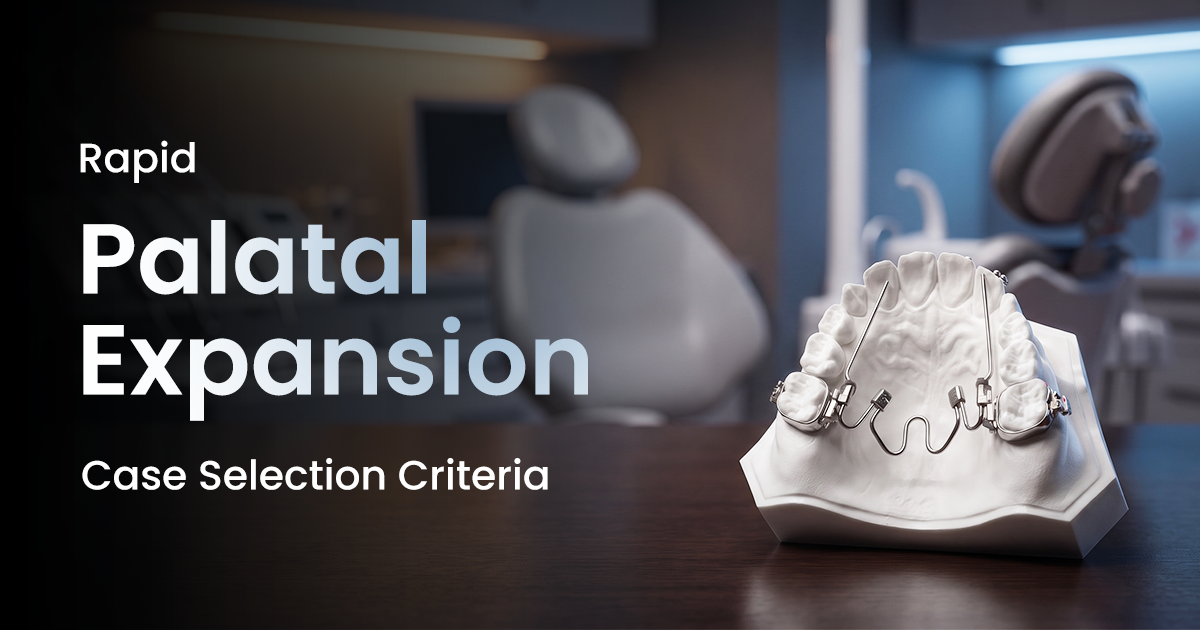
Rapid Palatal Expansion Case Selection Criteria
Rapid Palatal Expansion Case Selection CriteriaAn Orthodontic Clinical Guide A rapid palatal expander (RPE) is indicated for skeletal maxillary transverse defic

A Clinician's Guide to Pediatric Space Maintainer Selection
A Clinician's Guide to Pediatric Space Maintainer SelectionCase Selection Simplified A pediatric space maintainer is a custom-made appliance designed to preserv
