
Dr. Prerna Sahrawat
Contributing Dental Clinician
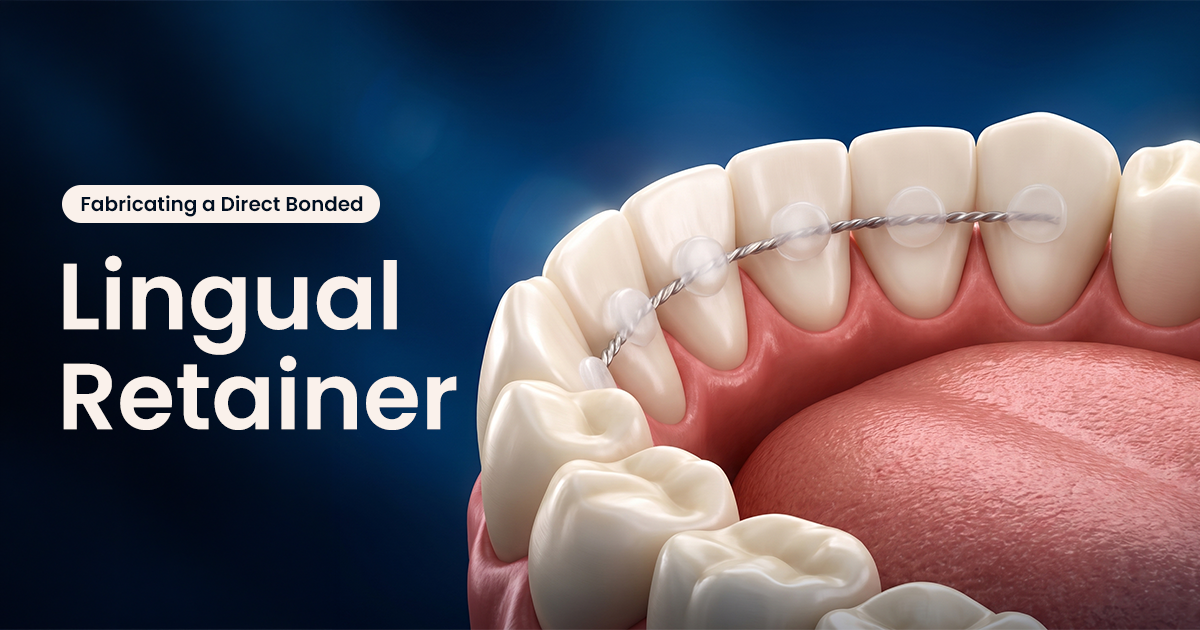
Fabricating a Direct Bonded Lingual Retainer
A Chairside Clinical Protocol
A fixed lingual retainer is a passive, multi-stranded wire bonded to anterior teeth's lingual surfaces, preventing post-orthodontic relapse. Ensuring passive fit and meticulous bonding is critical for long-term stability and avoiding iatrogenic tooth movement.
Table of Contents
Which Cases Need a Fixed Lingual Retainer?
Fixed lingual retainers primarily maintain mandibular incisor alignment post-treatment, especially after correcting severe crowding or rotation. They also maintain maxillary midline diastema closure or generalized spacing. Their non-removable nature ensures high patient compliance.
Case selection is critical. A deep, impinging overbite is a primary contraindication, as occlusal forces cause bond failure and wire deformation. Patients with poor oral hygiene or active periodontal disease are poor candidates, as retainers complicate cleaning and exacerbate inflammation. Extensive lingual restorations also present bonding challenges.
- Ideal Indication: Mandibular incisor retention post-treatment, especially for severe crowding with high relapse potential.
- Secondary Indication: Maintaining maxillary diastema closure or preventing space reopening.
- Key Contraindication: Deep, impinging overbite where incisal edges contact the bond site.
- Relative Contraindication: High caries index or poor oral hygiene motivation.
- Consideration: Adequate lingual surface area for bonding, free of large restorations.
Fixed Retainer Decision Guide
Materials Required for Chairside Fabrication
Standard direct bonded retainers typically use 0.0175" multi-stranded, flexible stainless steel wire. Its flexibility permits minor physiological tooth movement without stressing bonds, reducing rigid wire failures. A medium-viscosity, light-cured flowable composite is ideal, adapting well to wire and tooth without slumping. An acid-etch bonding system is essential.
Prepare all instruments chairside: retainer wire, fine explorer for composite, floss for positioning, wire cutter, and a high-quality LED curing light. An organized tray ensures efficient workflow, crucial for isolation. Proper orthodontic wire choice is pivotal; a stiff wire becomes an active appliance if not perfectly adapted.
- Retainer Wire: 0.0175" multi-stranded stainless steel wire (e.g., twist-flex or co-axial).
- Bonding: 37% phosphoric acid etchant, universal bonding agent, and flowable composite resin.
- Instrumentation: Ligature/wire cutter, Mathieu or Weingart plier for adaptation, fine explorer, and floss.
- Isolation: Cotton rolls, Dri-Angles, or rubber dam for absolute moisture control.
- Curing: High-intensity LED curing light (min. 1000 mW/cm²).
| Wire Type | Flexibility | Adaptation | Best For |
|---|---|---|---|
| Multi-stranded (0.0175") | High | Easy; conforms to lingual anatomy. | Routine lower incisor retention best |
| Solid (0.028") | Low (Rigid) | Difficult; precise bending needed. | Splinting periodontally-involved teeth |
| Fibre-Reinforced Composite | Moderate | Bonded directly; no wire bending. | Metal-free alternative; technique-sensitive |
Adapt the Wire for Passive Fit
Wire passivity is the most critical factor for long-term fixed lingual retainer success. An 'active' wire, exerting minimal force, causes unwanted tooth movement and bond failure. The wire must perfectly conform to lingual contours without force. Pre-adapting the wire on a plaster model is essential.
Mark the ideal wire position on the model, usually at the incisal and middle thirds' junction of the lingual surface. Use Weingart or bird-beak pliers for small, gradual bends. After each bend, re-place the wire on the model to check its fit. It should lie flat against all teeth simultaneously, with no rocking or springiness. Floss can hold the wire during adaptation.
- Measure First: Use floss to determine length from canine distal to canine distal, adding 2-3 mm before cutting.
- Adapt on a Model: Always pre-adapt the wire on a stone model to save chair time and improve precision over direct intraoral adaptation.
- Check for Passivity: The wire must rest unaided on the model. If pressing one end lifts the other, it's not passive and needs adjustment.
- Smooth the Ends: Ensure cut wire ends are smooth and rounded to prevent tongue irritation.
The One-Finger Passivity Test
Place adapted wire on the stone model. Gently press the center with one finger. If either end lifts, the wire is active. Adjust until the entire wire remains seated under central pressure.
What Is the Correct Bonding Technique?
Correct bonding prioritizes absolute moisture control and meticulous material application for a strong, seamless interface. Begin by cleaning lingual surfaces with non-fluoridated pumice. Isolate effectively, preferably with a rubber dam, or with cotton rolls and saliva ejector for cooperative patients. Etch planned bonding sites for 30 seconds with 37% phosphoric acid, then rinse and dry until frosty white.
Apply a thin, uniform layer of bonding agent to etched surfaces and light-cure per manufacturer instructions. Secure the pre-adapted wire using floss looped over incisal edges. Apply a small increment of flowable composite over the wire on one terminal tooth (e.g., canine), covering the wire without excess bulk. Light-cure this 'tack' point for 20 seconds. Re-verify wire passivity, then bond each subsequent tooth, curing for 20-40 seconds. Finally, cure each bond from both lingual and incisal angles.
- Isolate Rigorously: Saliva contamination is primary cause of bond failure.
- Etch Adequately: Etch an area slightly larger than the final composite margin.
- Tack Cure First: Secure one wire end with minimal composite and cure; this stabilizes the wire for subsequent bonding.
- Use Minimal Composite: Apply just enough flowable composite to cover wire strands for a smooth, cleansable surface, preventing plaque retention.
- Check for Voids: Ensure composite fully engages the wire mesh with an explorer before curing.
Avoid Iatrogenic Tooth Movement
Never force an ill-fitting wire with composite. This introduces active forces, causing significant, unplanned tooth movement and torque changes within months. If the wire is not 100% passive, remove and re-adapt it.
Conclusion: Ensure Retainer Passivity
The single most critical factor for successful fixed lingual retainers is ensuring absolute wire passivity before bonding; an active wire guarantees iatrogenic movement and bond failure. Proper case selection—avoiding deep, impinging overbites or poor hygiene—is foundational. A meticulous, moisture-controlled bonding protocol yields a durable, long-term orthodontic stability solution.
- Case Selection: Avoid fixed lingual retainers in deep overbite cases where incisal contact on the wire is inevitable.
- Wire Choice: Use a flexible, multi-stranded 0.0175" stainless steel wire for routine retention, accommodating physiological tooth movement.
- Passivity Check: The adapted wire must lie flat on a stone model without rocking under central pressure.
- Bonding Protocol: Etch enamel for 30 seconds and tack-cure one wire end first to ensure stability for subsequent teeth.
Frequently Asked Questions
A bonded retainer is a fixed wire permanently bonded to teeth's lingual surfaces, offering continuous retention. A Hawley is a removable acrylic and metal appliance, relying on patient compliance. Fixed lingual retainers prevent minor incisor rotations; Hawleys provide better molar and occlusal settling.
Most failures stem from bond detachment, often due to moisture contamination during placement or excessive occlusal forces. Wire fracture from work-hardening over years is another major reason. Improperly adapted, 'active' wires consistently fail by placing sustained stress on the composite bond.
Ideally, fixed lingual retainers are long-term or permanent solutions, especially for high relapse potential cases like severe mandibular crowding. While some suggest a minimum of 5 years, most evidence supports indefinite retention with good oral hygiene and regular check-ups.
Placing a standard lingual retainer in a patient with a deep, impinging overbite is strongly contraindicated. Lower incisors will contact the wire and composite, leading to rapid bond failure and wear. A removable Essix or Hawley retainer is preferred in such cases.
A medium-viscosity, light-cured flowable composite resin is best for fixed lingual retainer bonding. Its viscosity allows strong mechanical lock within the wire's braided texture, yet prevents slumping during placement. Heavily filled packable composites make adaptation difficult and create bulky, plaque-retentive margins.
Written by
Dr. Prerna Sahrawat
Contributing Dental Clinician
Dr. Prerna Sahrawat is a dentist with over 4 years of experience in clinical dentistry and dental content writing. She is passionate about simplifying complex dental concepts into practical, evidence-based content that helps dentists make informed clinical and purchasing decisions while staying updated with the latest advancements in dentistry.
Keep reading
Browse all →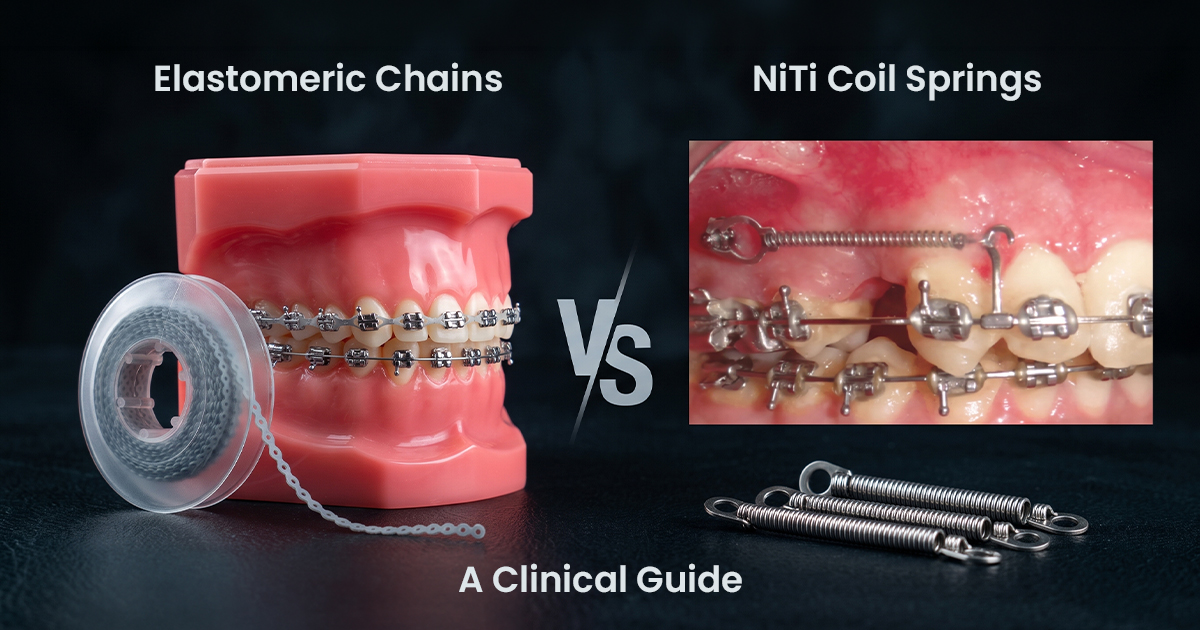
Elastomeric Chains vs. NiTi Coil Springs: A Clinical Guide
Elastomeric Chains vs. NiTi Coil Springs: A Clinical GuideSpace Closure Selection An elastomeric power chain delivers a high initial force that decays rapidly,

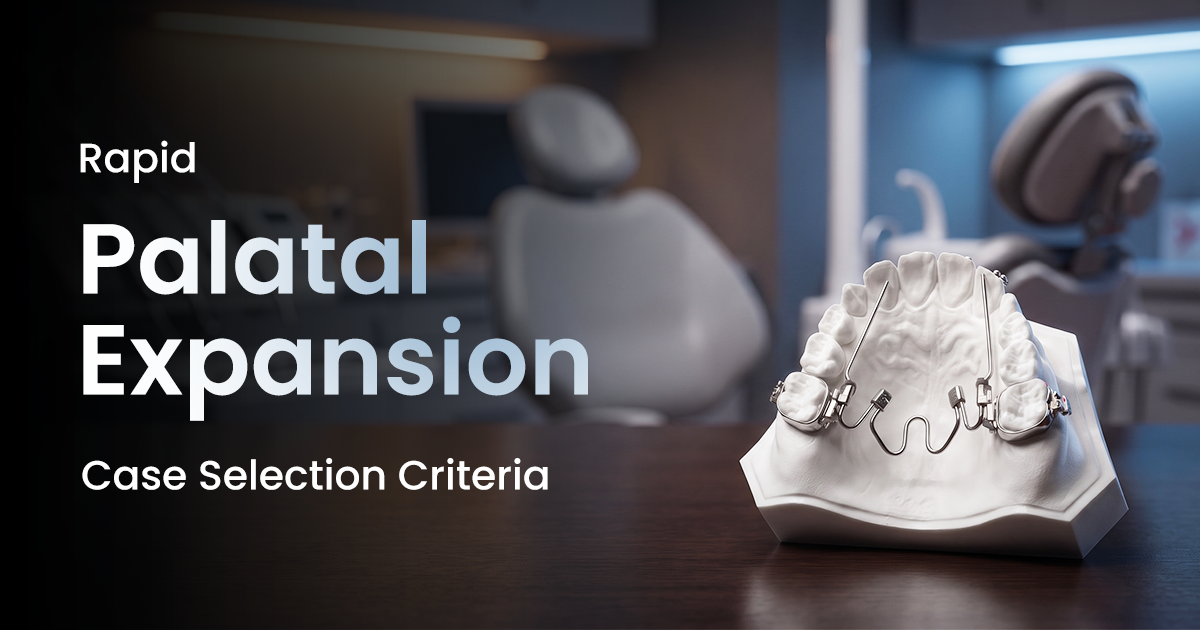
Rapid Palatal Expansion Case Selection Criteria
Rapid Palatal Expansion Case Selection CriteriaAn Orthodontic Clinical Guide A rapid palatal expander (RPE) is indicated for skeletal maxillary transverse defic

A Clinician's Guide to Pediatric Space Maintainer Selection
A Clinician's Guide to Pediatric Space Maintainer SelectionCase Selection Simplified A pediatric space maintainer is a custom-made appliance designed to preserv
