

Dr.Yukti
Dental Content Contributor
A Clinician's Guide to Pediatric Space Maintainer Selection
Case Selection Simplified
A pediatric space maintainer is a custom-made appliance designed to preserve arch length following the premature loss of a primary tooth. Correctly selecting and placing one is a critical preventive decision that averts malocclusion, impaction, and complex future orthodontic needs.
Table of Contents
Key Indications for Space Maintenance
The primary indication for space maintenance is the premature loss of a primary tooth when the succeeding permanent tooth's eruption is not imminent. This intervention is crucial to prevent mesial drift of posterior teeth and subsequent loss of arch perimeter. We consider placement when an assessment of dental age, typically via radiograph, shows less than two-thirds of the permanent successor's root is formed, or when eruption is more than 6 months away. The patient's overall oral health, caries risk, and motivation must also be favorable. Consider it a non-negotiable step when a primary second molar is lost before the eruption of the permanent first molar to guide its path correctly.
- Developmental Stage: The permanent successor has less than 2/3 root formation.
- Timing: More than 6 months are expected until the eruption of the permanent tooth.
- Arch Integrity: There is adequate space in the arch that needs to be preserved, without pre-existing severe crowding.
- Abutment Health: The teeth intended to support the appliance are sound, with sufficient tooth structure and good periodontal health.
These foundational decisions set the stage for all future occlusal development, making the correct selection of orthodontic products a priority.
Quick Case Selection Matrix
When is a band and loop the best choice?
A band and loop is the ideal choice for maintaining space following the premature unilateral loss of a single primary first or second molar, provided the permanent first molar has fully erupted. Its design is simple, non-invasive, and cost-effective for holding a single tooth space in either the maxillary or mandibular arch. The appliance consists of a stainless steel orthodontic band cemented onto the tooth distal to the extraction site (usually a permanent first molar or primary second molar) and a 0.9 mm stainless steel wire loop that extends mesially to contact the distal surface of the tooth anterior to the space. This passive contact prevents mesial migration and rotation of the molar.
- Simplicity: It is easy to fabricate, either chairside or in a lab, and easy to place.
- Unilateral Focus: Specifically designed for single-tooth space loss in one quadrant.
- Non-functional: It does not participate in mastication, simplifying its design and reducing fracture risk.
- Hygiene: The open design allows for easier cleaning compared to acrylic-based appliances.
Chairside Fabrication Tip
When adapting the loop, ensure the wire is positioned 1.0-1.5 mm above the gingival tissue to prevent impingement and inflammation. The loop should be wide enough buccolingually to allow for the eruption of the permanent premolar without obstruction.
How to choose between a lingual arch and a Nance appliance?
The choice between a lower lingual holding arch (LLHA) and a maxillary Nance appliance is determined entirely by the arch in question, as they serve the same bilateral space-holding function in opposite jaws. The LLHA is used in the mandible, while the Nance appliance is for the maxilla. Both are indicated for bilateral posterior tooth loss. The LLHA uses a rigid 0.9 mm stainless steel wire that contacts the cingula of the lower incisors, while the Nance appliance has a wire that terminates in an acrylic button resting on the anterior palate. This design difference is critical; a lingual wire against the maxillary incisors could tip them labially, a risk the palatal acrylic button avoids.
- Mandibular Arch: Always choose the Lower Lingual Holding Arch for bilateral space maintenance.
- Maxillary Arch: Always choose the Nance appliance to prevent incisor flaring.
- Material: Both are typically fabricated with high-quality stainless steel orthodontic wires soldered to molar bands.
- Hygiene Note: The Nance button is a significant plaque trap and requires diligent hygiene instructions to prevent palatal inflammation.
Lingual Holding Arch (Mandible)
- Excellent at preventing mesial molar drift and incisor tipping.
- Minimal tissue contact reduces plaque accumulation compared to Nance.
- Can be converted to an active appliance if needed.
- Can interfere with incisor eruption if placed too early.
Nance Appliance (Maxilla)
- Effectively prevents mesial migration of maxillary molars.
- Provides additional anchorage via the palatal button.
- Acrylic button can cause significant tissue irritation and inflammation.
- Plaque accumulation under the button is a major clinical challenge.
What are the contraindications for placing a space maintainer?
A space maintainer is not always indicated, and placing one in a contraindicated situation can cause more harm than good. The most significant contraindication is poor oral hygiene or high, uncontrolled caries risk, as fixed appliances invariably increase plaque retention. Another key factor is the timing and available space; if the succedaneous tooth is close to eruption (less than 6 months away or more than 2/3 root formed), an appliance is unnecessary. Furthermore, if there is insufficient space in the arch to begin with due to severe crowding, a space maintainer merely preserves a problem that requires comprehensive orthodontic treatment, including potential extractions. A proper diagnosis may indicate that future treatment with orthodontic brackets is inevitable, making simple space maintenance a temporary and insufficient solution.
- Poor Oral Hygiene: Uncooperative patients with high plaque and caries rates are poor candidates.
- Imminent Eruption: If the permanent tooth will erupt within a few months, no appliance is needed.
- Lack of Space: If significant crowding already exists, space maintenance alone is insufficient.
- Missing Successor: Congenitally missing permanent teeth require a different, long-term prosthetic plan.
- No Abutment: If the intended abutment tooth is decayed, mobile, or soon to exfoliate, it cannot support an appliance.
Risk of Iatrogenic Damage
Placing a space maintainer in a high-caries-risk patient without enforcing a strict oral hygiene protocol can lead to decalcification and caries on abutment teeth. The appliance itself can become a nidus for infection and further decay.
Frequently Asked Questions
A non-functional space maintainer, like a band and loop, is a passive appliance that only holds space without replacing the missing tooth's function. A functional space maintainer is a removable appliance that not only maintains space but also includes an artificial tooth to restore masticatory function and aesthetics, which is often preferred for anterior tooth loss or for longer-term posterior maintenance.
A fixed pediatric space maintainer should be professionally checked every 4 to 6 months. These appointments are critical for assessing cement integrity, appliance stability, gingival health around the abutments, and monitoring the eruption progress of the succedaneous tooth. Prompt intervention can prevent complications like cement washout and subsequent caries under the band.
Yes, a removable space maintainer can be used for a 5-year-old, but case selection depends heavily on the child's maturity and cooperation. While they are easier to clean, their success is entirely patient-dependent. They are often considered for bilateral posterior space loss when a fixed appliance is contraindicated or for maintaining anterior spaces where aesthetics are a concern.
The most common reason for band and loop failure is cement loss, leading to the band becoming loose. This is often caused by masticatory forces or consumption of sticky foods. The second most frequent failure is the fracture of the solder joint connecting the loop to the band, which can occur due to fabrication defects or excessive force.
A distal shoe is necessary only when the second primary molar is lost *before* the eruption of the first permanent molar. Its intra-alveolar blade guides the unerupted permanent molar into its correct position. If the first permanent molar is already erupted and in its proper place, a standard band and loop or lingual arch can be used instead.
Written by
Dr.Yukti
Dental Content Contributor
Dr. Yukti Jain is a BDS-qualified dental professional and Product Specialist at Dentalkart with expertise in dental materials, equipment, and clinical innovations. Passionate about evidence-based dentistry, she creates insightful, research-driven content that simplifies complex topics and empowers dental professionals to make informed clinical and purchasing decisions.
Keep reading
Browse all →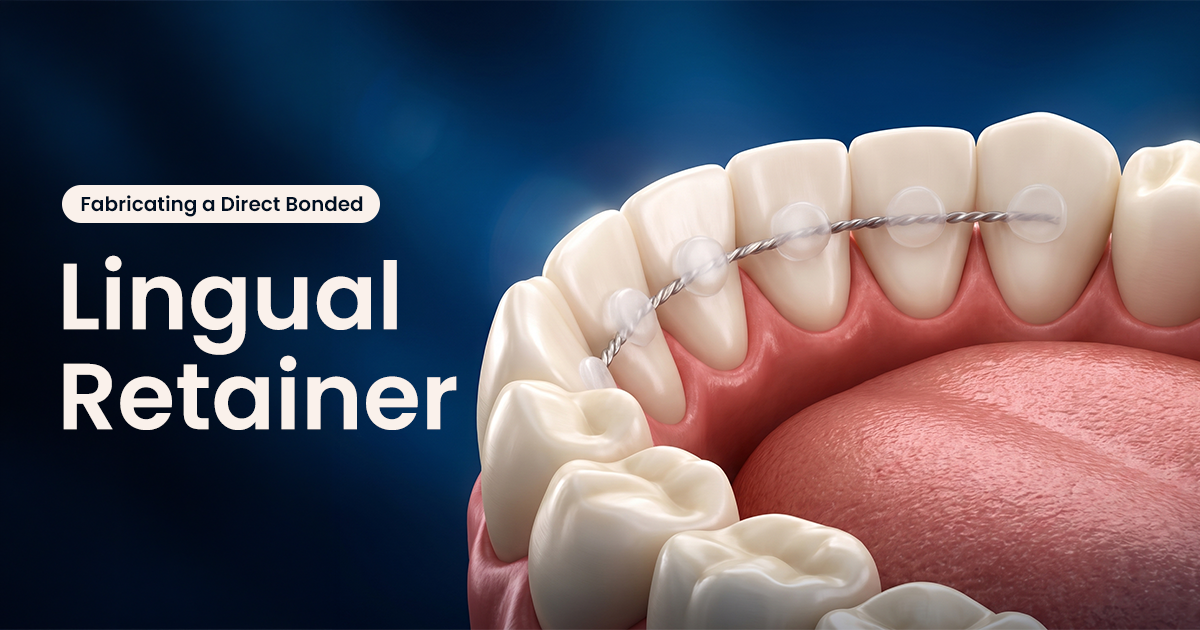
Fabricating a Direct Bonded Lingual Retainer
Fabricating a Direct Bonded Lingual RetainerA Chairside Clinical Protocol A fixed lingual retainer is a passive, multi-stranded wire bonded to anterior teeth's

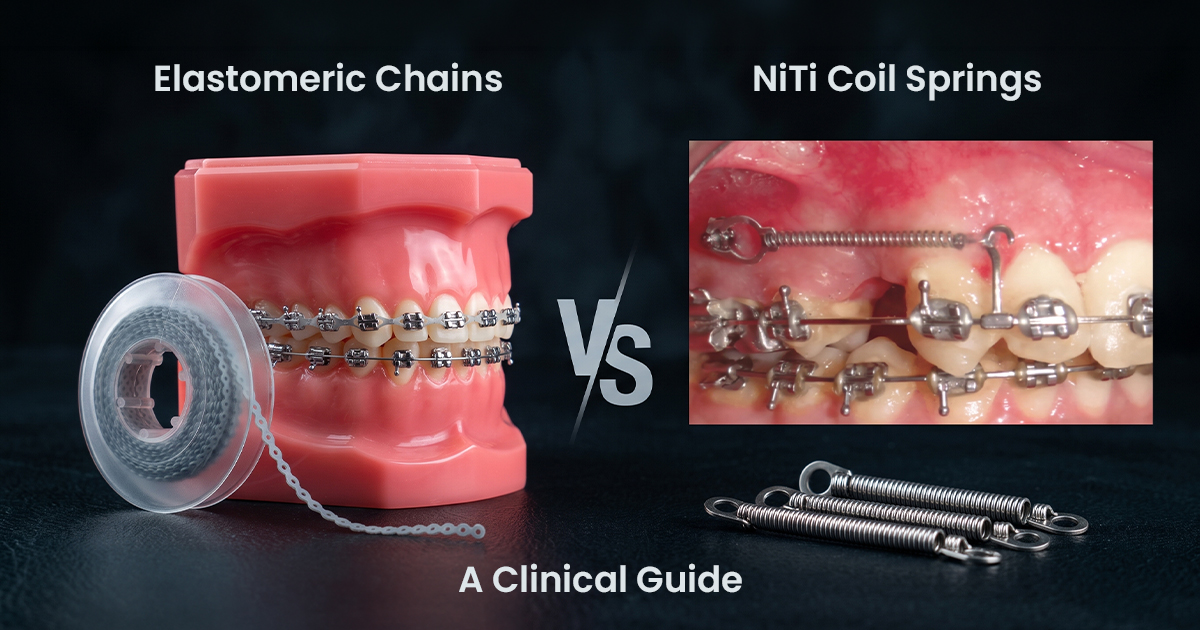
Elastomeric Chains vs. NiTi Coil Springs: A Clinical Guide
Elastomeric Chains vs. NiTi Coil Springs: A Clinical GuideSpace Closure Selection An elastomeric power chain delivers a high initial force that decays rapidly,

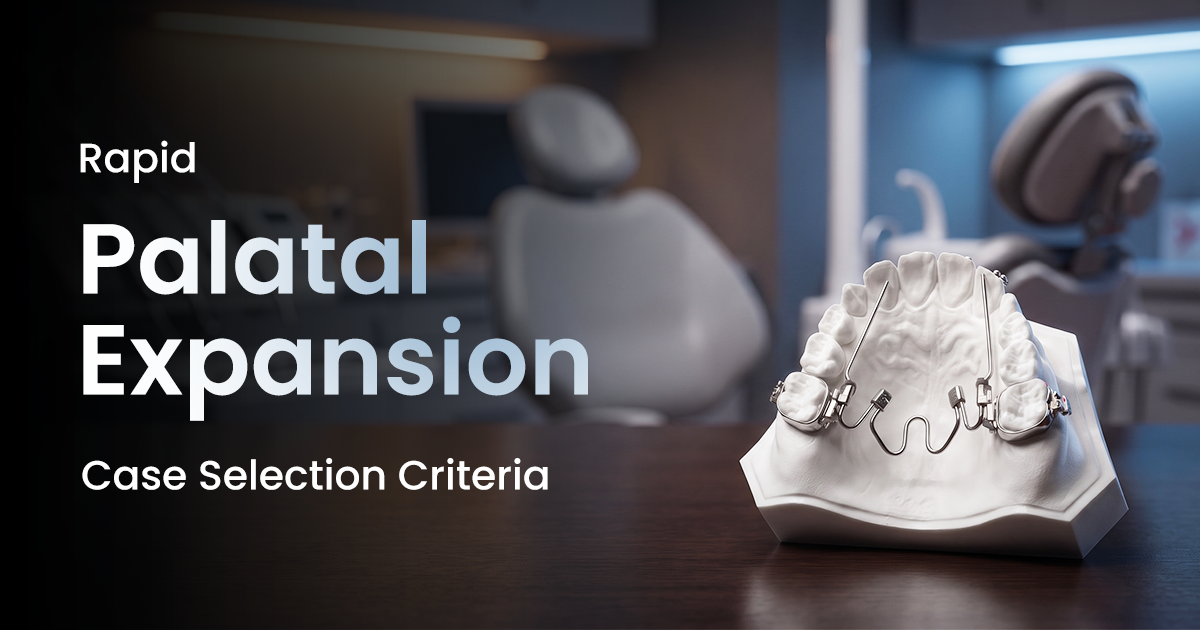
Rapid Palatal Expansion Case Selection Criteria
Rapid Palatal Expansion Case Selection CriteriaAn Orthodontic Clinical Guide A rapid palatal expander (RPE) is indicated for skeletal maxillary transverse defic