
Dr. Yashasvi Sharma
Contributing Dental Clinician
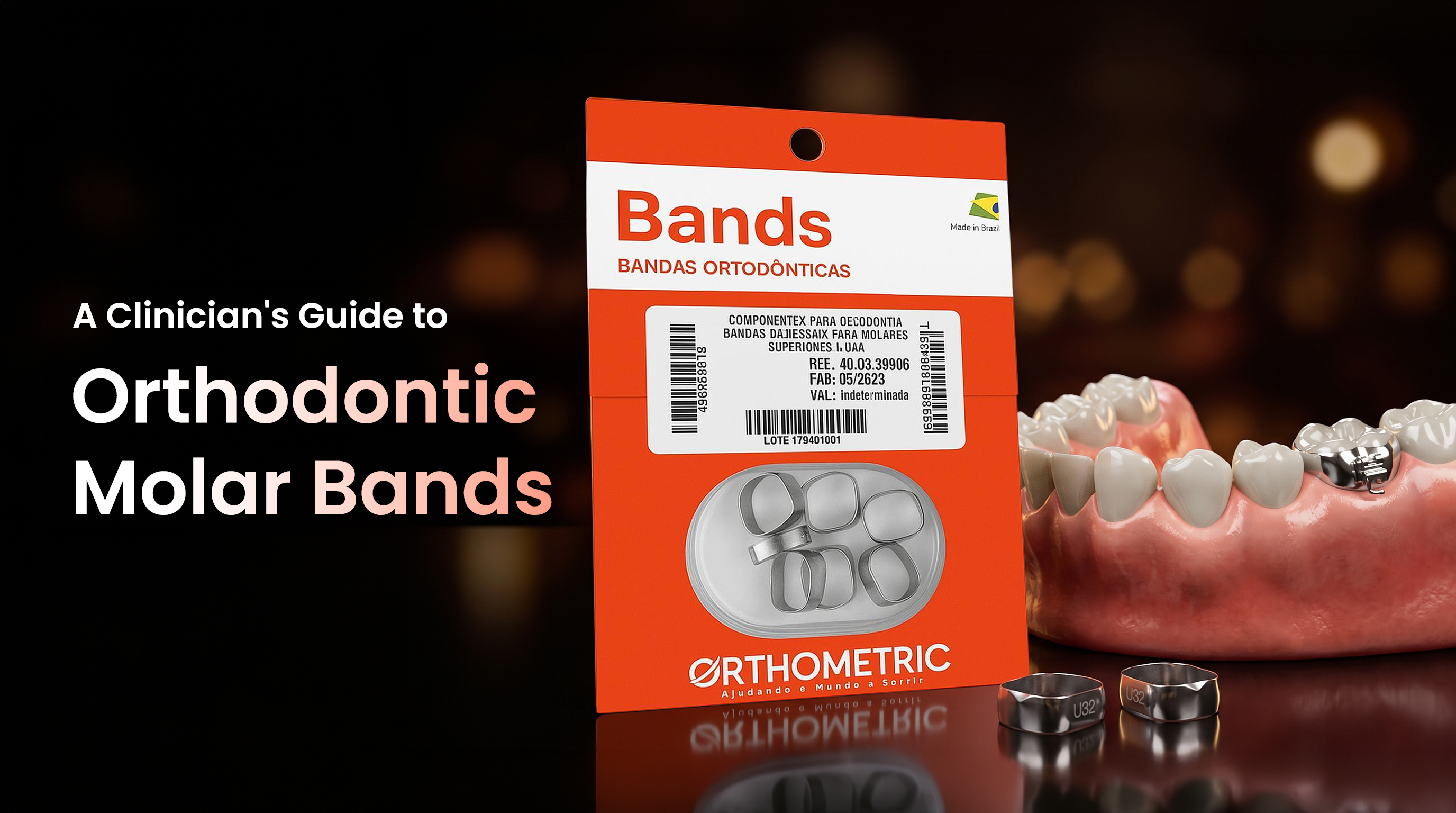
A Clinician's Guide to Orthodontic Molar Bands
Selection, Sizing, and Cementation
Orthodontic molar bands are circumferential stainless steel rings fitted to molars, providing stable anchorage for archwires and auxiliaries. Proper molar band selection is foundational for successful fixed orthodontics, improving treatment efficiency and patient comfort, particularly with diverse molar anatomies.
Table of Contents
Main Types of Preformed Molar Bands
The main types of preformed molar bands are seamless and welded, differing by manufacturing and surface characteristics. Correct type selection is fundamental for a precise fit and gingival health. Stainless steel remains the standard molar band material. Seamless bands, sometimes called molar rings, are stamped from a single stainless steel piece and offer a smooth, continuous surface and superior anatomical contour, minimizing plaque and gingival irritation. Welded bands are formed by joining metal strips, creating a microscopic seam that can interfere with tight contacts. While cost-effective, seamless bands are now preferred for their fit and biocompatibility. Some convertible bands feature molar tubes with a removable buccal tube cap, transforming them into a tie-wing bracket for ligating NiTi archwires.
- Anatomical Shape: Bands feature specific contours for maxillary/mandibular and right/left molars, accommodating differences like the cusp of Carabelli.
- Material Properties: Most bands are 300-series stainless steel, balancing strength for occlusal forces with malleability for minor chairside adjustments.
- Surface Finish: A micro-etched or sandblasted interior surface increases surface area for mechanical cement retention.
- Temper: Available in various hardness levels; harder temper resists deformation, softer allows easier adaptation to tooth contours.
| Feature | Seamless Bands | Welded Bands |
|---|---|---|
| Manufacturing | Stamped from a single piece | Flat strip rolled and welded |
| Gingival Fit | Superior contour best | Good, seam can interfere |
| Surface Finish | Smooth, continuous | Microscopic seam |
| Plaque Retention | Lower | Slightly higher at seam |
| Clinical Use | Ideal for tight contacts | Cost-effective general use |
Clinically Selecting the Correct Band Size
Correct molar band size is selected via systematic trial-and-error fitting after interproximal separation. The goal is a snug, stable fit resisting occlusal forces without discomfort or gingival impingement. Begin by placing elastic separators for 3-7 days to create ~0.5 mm space. At the fitting appointment, select a band from a graded kit that appears slightly smaller. Seat initially with firm finger pressure on marginal ridges. Final seating uses a band pusher on mesiobuccal/distolingual lugs, followed by patient biting firmly on a bite stick on the occlusal seating lug. A correctly sized band will 'snap' fit, seating securely below marginal ridges and parallel to the occlusal plane.
- Occlusal Margin: Position approximately 1.0-1.5 mm below marginal ridges and cusp tips.
- Gingival Margin: Seat just apical to contact area, not extending into gingival sulcus, preventing irritation.
- Adaptation: Band should closely adapt to tooth contours on all surfaces with no visible gaps.
- Stability: Band must not rock or rotate under pressure, indicating a stable arch foundation.
Step 1: Separation
Place elastomeric separators 3-7 days prior to banding, creating ~0.5 mm interproximal space for placement.
Step 2: Initial Try-in
Select a slightly undersized band. Use firm finger pressure on mesial and distal marginal ridges for initial seating.
Step 3: Seating & Verification
Use a band pusher and bite stick for final seating. Verify snug, stable fit with no rocking.
Selecting Molar Bands by Attachments
Most ortho molar bands are supplied with pre-welded molar tubes, and the tube configuration you select determines how the band functions within the appliance. Molar band attachments must match the treatment plan's biomechanical requirements, with buccal tubes and lingual auxiliaries being primary considerations. These attachments serve as the critical interface between the band and other orthodontic products. The buccal tube's prescription (e.g., Roth, MBT, Edgewise) and slot size (0.018" or 0.022") must match other orthodontic brackets for proper torque and angulation from wires. Lingual attachments, like sheaths or cleats, are chosen for anchorage devices such as transpalatal or lingual holding arches, or for securing elastics.
- Buccal Tubes: Single, double, or triple. Triple tubes on first molars accommodate main archwire, auxiliary wire, and headgear facebow (1.15 mm or 0.045 inch inner diameter).
- Convertible vs. Non-Convertible Tubes: Convertible tubes offer flexibility for late-stage mechanics but are bulkier. Non-convertible tubes provide a lower profile for patient comfort.
- Lingual Sheaths: Typically 0.036 inch inner diameter, designed for heavy wires in appliances like palatal bars for rigid anchorage.
- Lingual Cleats: Small, button-like attachments for engaging elastics for rotations or crossbite correction.
Attachment Selection Matrix
Best Cements for Molar Band Fixation
Molar band cementation depends on a cement that bonds reliably to both enamel and stainless steel while tolerating moisture at the gingival margin. The best cements for molar band fixation are glass ionomer (GIC) and resin-modified glass ionomer (RMGI). Both provide crucial fluoride release, preventing enamel demineralization under bands throughout treatment. Conventional GIC is the gold standard, offering reliable chemical bonding to enamel and sustained fluoride release. RMGI cements enhance this with a resin component, improving fracture toughness, lowering solubility, and providing a faster, often dual-cure, setting. While zinc phosphate has high compressive strength, its high solubility and lack of fluoride make it less desirable. Composite resin cements offer the highest bond strength but require a complex, moisture-sensitive protocol and lack caries protection.
- Fluoride Release: Most critical property, offering a cariostatic effect protecting enamel for 18-36 months.
- Working Time: Sufficient time (~2-3 minutes for GIC) needed to mix, line, and fully seat the band.
- Compressive Strength: Cement must withstand occlusal forces. GICs offer 90-150 MPa compressive strength, adequate for this application.
- Film Thickness: Low film thickness (under 25 µm) is essential for complete band seating without occlusal interference.
Glass Ionomer Cement (GIC)
- Excellent sustained fluoride release.
- Chemical adhesion to enamel and metal.
- Good biocompatibility.
- Higher solubility than RMGI.
- Longer setting time and moisture sensitive during set.
Resin-Modified GIC (RMGI)
- Higher strength and fracture toughness.
- Lower solubility and better marginal seal.
- Command set with light-curing.
- Still provides good fluoride release.
- Can exhibit slight hygroscopic expansion.
Frequently Asked Questions
The main difference lies in attachment method and anchorage. Molar bands are cemented rings encircling the tooth, providing maximum resistance to heavy forces. Bonded buccal tubes are brackets adhered directly to the buccal surface, less invasive and more hygienic. Bands are superior for key anchors, supporting auxiliaries, or teeth with large restorations; bonded tubes suit simpler cases with good enamel.
No. A broken molar band has compromised structural integrity and will not seat or retain properly. Replace it with a correctly sized band rather than attempting a repair, as a distorted band creates uneven cement thickness and leads to premature failure.
To prevent loose molar bands, ensure a precise 'snap' fit and meticulous cementation technique. Thoroughly clean, isolate, and dry the tooth. Use a high-quality cement like GIC or RMGI, mixed to correct consistency, coating the band's entire inner surface. Final seating with a band pusher and bite stick is crucial. Instruct patients to avoid hard, sticky foods.
Yes, molar bands can be used on both first and second molars, based on anchorage needs. First molars are banded in most comprehensive fixed cases as primary anchors. Second molars are typically banded in maximum anchorage situations, like extraction cases needing significant retraction, or when supporting specific auxiliaries (e.g., headgear, TADs).
If gums are inflamed, first assess band fit and patient's oral hygiene. Plaque accumulation from inadequate cleaning is the most common cause. Reinforce proper brushing with a soft-bristled brush and interproximal aids. Check for and remove extruded cement. If the band margin impinges on gingiva, remove it, allow tissue to heal, and place a new, better-fitting band.
Written by
Dr. Yashasvi Sharma
Contributing Dental Clinician
Dr. Yashasvi Sharma is a contributing Dental professional at Dentalkart Blogs, where she distills chair-side clinical experience into evidence-based, practice-ready guides for Indian dentists. Her work bridges the gap between academic dentistry and everyday practice, translating global research into actionable insights tailored to the realities of Indian clinical settings.
Keep reading
Browse all →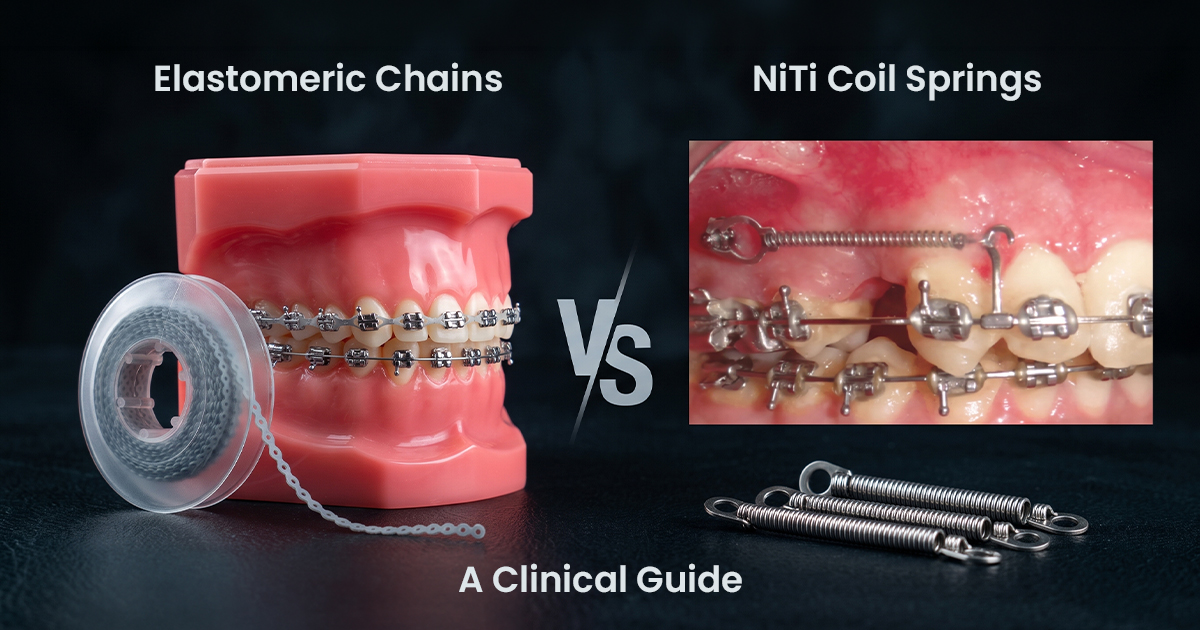
Elastomeric Chains vs. NiTi Coil Springs: A Clinical Guide
Elastomeric Chains vs. NiTi Coil Springs: A Clinical GuideSpace Closure Selection An elastomeric power chain delivers a high initial force that decays rapidly,

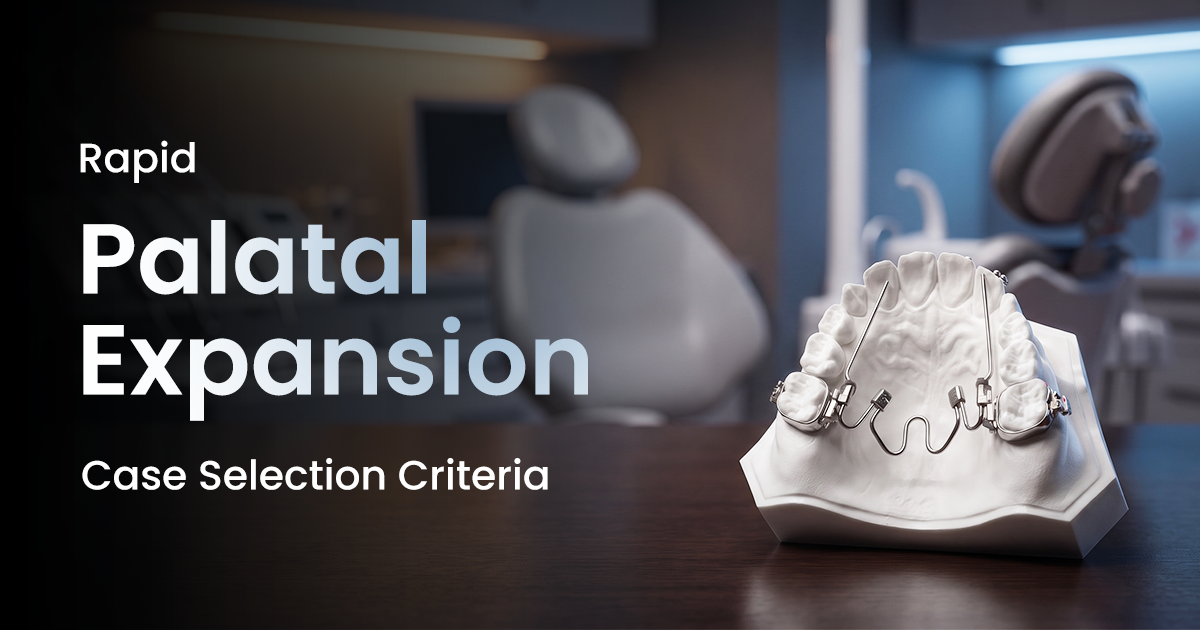
Rapid Palatal Expansion Case Selection Criteria
Rapid Palatal Expansion Case Selection CriteriaAn Orthodontic Clinical Guide A rapid palatal expander (RPE) is indicated for skeletal maxillary transverse defic


A Clinician's Guide to Pediatric Space Maintainer Selection
A Clinician's Guide to Pediatric Space Maintainer SelectionCase Selection Simplified A pediatric space maintainer is a custom-made appliance designed to preserv
