
Dr. Yashasvi Sharma
Contributing Dental Clinician
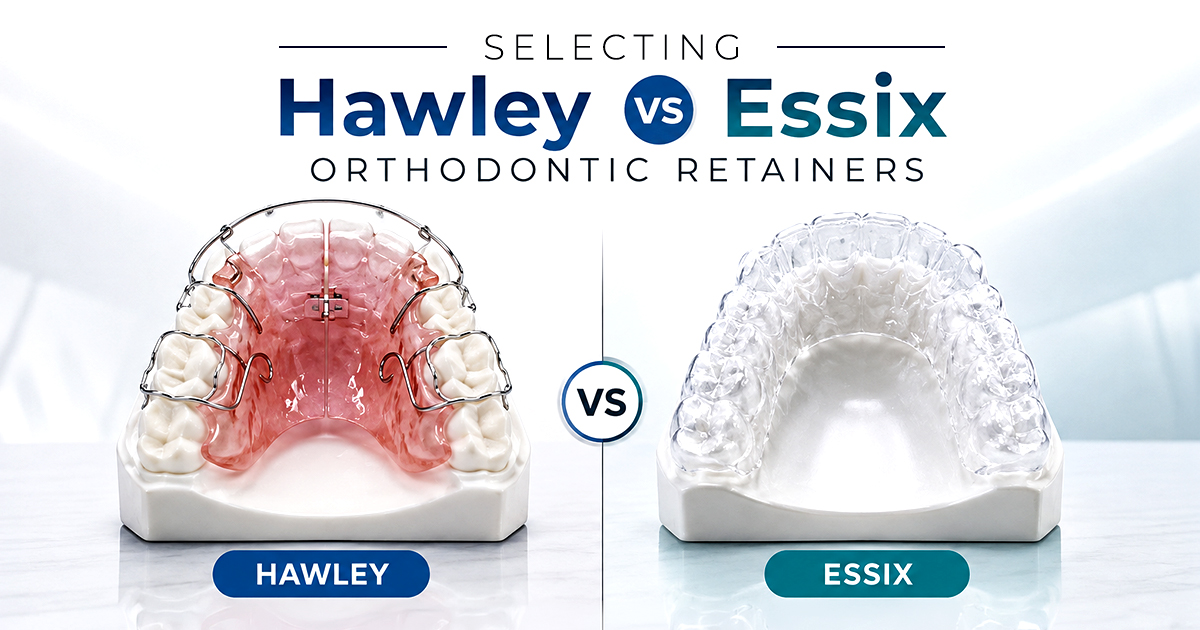
Selecting Hawley vs Essix Orthodontic Retainers
A Clinical Decision Guide
The clinical selection of orthodontic retainers hinges on whether the case requires occlusal settling and adjustability (Hawley) or prioritizes aesthetics and precise tooth position maintenance (Essix). This choice directly impacts the long-term stability of orthodontic outcomes and patient compliance in Indian dental practices.
Table of Contents
Superior Clinical Indications for Hawley Retainers
A Hawley retainer is the superior choice for cases requiring post-treatment vertical settling and future adjustability. Its rigid acrylic palate and stainless steel labial bow provide robust control over anteroposterior and vertical dimensions without inhibiting posterior intercuspation.
Clinically, the Hawley's design allows for minor tooth movements to be corrected chairside by adjusting the labial bow or clasps, a critical feature for managing minor relapses without fabricating a new appliance. This is particularly beneficial in growing patients or when managing the results of complex mechanics involving orthodontic wires and active components. The acrylic can also be thickened to incorporate an anterior bite plane, making it therapeutic for managing residual deep bites, often requiring at least 2 mm of clearance.
- Occlusal Settling: Ideal for non-extraction cases where posterior teeth need to erupt into a more stable Class I relationship.
- Durability: The robust acrylic and wire construction offers superior longevity, especially for patients with heavy occlusal forces or mild bruxism.
- Transverse Control: Essential for maintaining the results of maxillary expansion from RPE or quad-helix appliances.
- Adjustability: Allows for chairside modifications to address minor tooth movements, improving long-term stability without remaking the appliance.
Chairside Adjustability
The labial bow and clasps can be activated or deactivated to guide teeth, offering a degree of active control post-treatment.
Vertical Settling
The absence of occlusal coverage permits natural settling of posterior teeth into maximum intercuspation, improving function.
High Durability
Resistant to fracture and wear from occlusal forces, making it a reliable choice for long-term retention protocols.
Which Cases are Ideal for Essix Retainers?
Essix retainers are ideal for post-treatment cases where aesthetics are paramount and precise control of every tooth, including incisal and occlusal edges, is necessary. Fabricated from a clear thermoplastic sheet (typically 0.75 mm to 1.0 mm thick), they fully encapsulate the dentition.
This full-coverage design is highly effective at preventing minor rotational or spacing relapses, especially in the anterior sextants where patient perception of change is highest. Because they function as a rigid shell, they are excellent for holding the final alignment achieved with systems like clear aligners or finely detailed fixed orthodontic brackets. Their comfort and near-invisibility significantly boost patient compliance, a key factor for success in the retention phase.
- Aesthetic Demands: The clear choice for adult patients or those in professional roles who reject the visibility of a Hawley retainer.
- Anterior Alignment: Superior for maintaining correction of maxillary and mandibular incisor rotations and spacing.
- Post-Aligner Therapy: Provides a seamless transition from active clear aligner treatment to retention, using a familiar appliance form.
- Single-Arch Retention: Effective for lower arch retention where a fixed retainer is not indicated or desired by the patient.
Essix Suitability Checklist
The retainer's near-invisibility is a key factor for compliance.
No further vertical movement of posterior teeth is required or desired.
The full-coverage design provides excellent control over individual tooth positions.
Prevents plaque and calculus buildup under the retainer's full coverage.
Absolute Contraindications for Hawley and Essix
Absolute contraindications are clinical scenarios where a specific retainer type poses a significant risk to the patient or is guaranteed to fail. For Hawley retainers, the most critical contraindication is a documented allergy to the nickel in the stainless steel wire components.
For Essix retainers, the primary absolute contraindication is severe bruxism, as the patient will rapidly perforate and destroy the thermoplastic material, rendering it ineffective. Another key issue is poor oral hygiene, as the full-coverage design can trap plaque against the teeth, dramatically increasing caries and gingivitis risk. These contraindications are non-negotiable and require selecting an alternative retention strategy to safeguard patient health and treatment stability. Comprehensive orthodontic products are available for such alternative protocols.
- Material Allergy: A confirmed nickel allergy absolutely precludes the use of a standard Hawley retainer.
- Patient Compliance: If a patient is unwilling to tolerate the palatal coverage or bulk of a Hawley, it is contraindicated due to guaranteed non-use.
- Periodontal Health: In patients with active, uncontrolled periodontal disease, an Essix retainer can exacerbate the condition by creating a pathogenic microenvironment.
- Gag Reflex: A severe gag reflex can make a maxillary Hawley retainer intolerable for the patient.
| Clinical Condition | Hawley Retainer | Essix Retainer |
|---|---|---|
| Severe Bruxism | Tolerable (but with wear) | Contraindicated best |
| Nickel Allergy | Contraindicated best | Safe to Use |
| Poor Oral Hygiene | Less Risky | Contraindicated best |
| Requires Vertical Settling | Indicated best | Contraindicated |
Evaluate Occlusal Settling Needs for Selection
Occlusal settling refers to the physiologic micro-movement of posterior teeth that finalizes interdigitation after orthodontic appliances are removed. The need for settling is a primary determinant in retainer selection, as Hawley and Essix retainers have opposite effects on this process.
A Hawley retainer, by leaving the occlusal surfaces uncovered, actively permits and encourages this settling process. This is invaluable when the final occlusion after debonding is good but not perfectly intercuspated. Conversely, an Essix retainer acts as a bite block, completely preventing any vertical tooth movement. Prescribing an Essix when settling is needed can lock the patient into a less-than-ideal posterior occlusion. The final detailing with flexible NiTi archwires aims to minimize this, but some settling is often beneficial.
- Hawley for Settling: Prescribe a Hawley when posterior contacts are not perfectly established at the end of treatment.
- Essix for Holding: Use an Essix when the final occlusion is ideal and must be preserved exactly as-is without any further movement.
- Combination Therapy: Consider a maxillary Essix for aesthetics and anterior control, paired with a mandibular Hawley to allow settling in the lower arch.
- Timing: If an Essix is desired long-term, a Hawley can be used for the first 3-6 months to allow settling, followed by the fabrication of an Essix retainer.
Retainer Selection Based on Settling Needs
Frequently Asked Questions
The primary functional difference is occlusal coverage. A Hawley retainer has no occlusal coverage, allowing posterior teeth to settle into a final bite, while an Essix retainer covers all surfaces, preventing any tooth movement. This makes Hawley retainers active in settling the occlusion and Essix retainers passive in perfectly preserving the final tooth position.
A Hawley retainer is definitively better for retaining the results of palatal expansion. The rigid acrylic plate spanning the palate provides superior transverse stability, preventing skeletal and dental relapse. An Essix retainer lacks the necessary rigidity to resist the powerful constrictive forces that can occur after rapid palatal expansion (RPE).
Initially, patients should wear their orthodontic retainers full-time, approximately 20-22 hours per day, for the first 3-6 months post-treatment. After this initial stabilization period, the protocol typically transitions to nightly wear for life. Lifetime nightly retention is the current standard of care to prevent age-related physiological tooth movement and orthodontic relapse.
An Essix retainer may feel loose due to material fatigue or minor orthodontic relapse. The thermoplastic material can deform slightly with repeated insertion and removal, reducing its snug fit. More critically, if not worn as prescribed, even minor tooth movement of 0.5 mm can prevent the retainer from seating fully, indicating a relapse that needs immediate clinical assessment.
Yes, the terms are often used interchangeably. Essix is a specific brand name for the thermoplastic material (polypropylene/polyethylene copolymer) used to make clear, vacuum-formed retainers (VFRs). While other brands exist, "Essix" has become a genericized trademark in dentistry to describe any VFR that is fabricated in-house or by a lab.
Written by
Dr. Yashasvi Sharma
Contributing Dental Clinician
Dr. Yashasvi Sharma is a contributing Dental professional at Dentalkart Blogs, where she distills chair-side clinical experience into evidence-based, practice-ready guides for Indian dentists. Her work bridges the gap between academic dentistry and everyday practice, translating global research into actionable insights tailored to the realities of Indian clinical settings.
Keep reading
Browse all →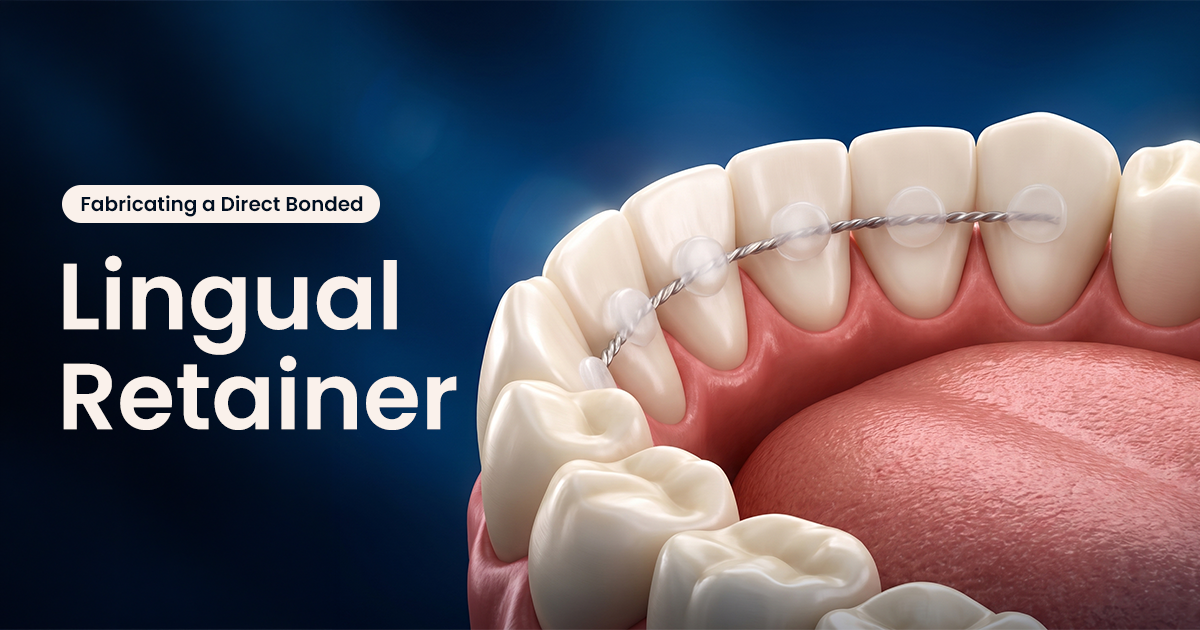
Fabricating a Direct Bonded Lingual Retainer
Fabricating a Direct Bonded Lingual RetainerA Chairside Clinical Protocol A fixed lingual retainer is a passive, multi-stranded wire bonded to anterior teeth's

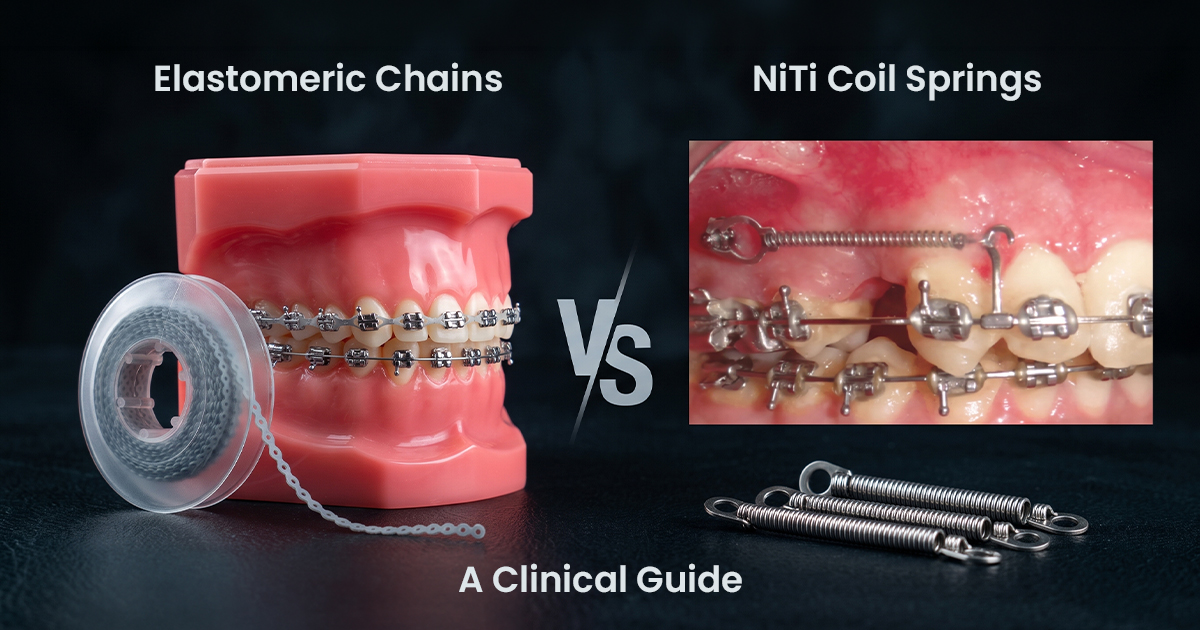
Elastomeric Chains vs. NiTi Coil Springs: A Clinical Guide
Elastomeric Chains vs. NiTi Coil Springs: A Clinical GuideSpace Closure Selection An elastomeric power chain delivers a high initial force that decays rapidly,

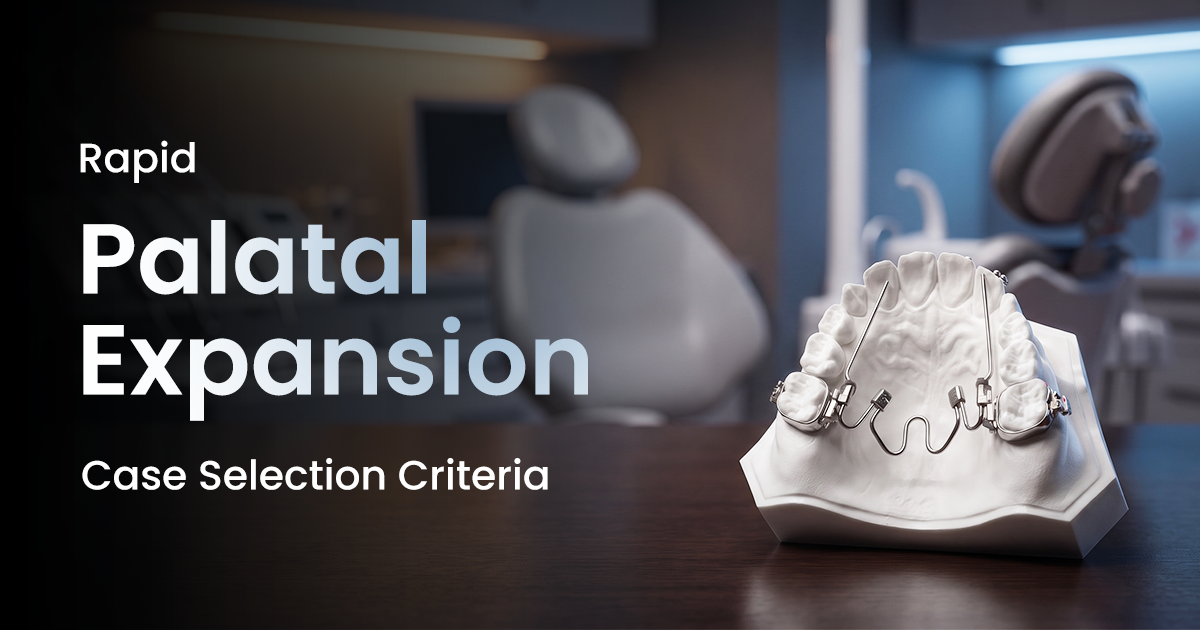
Rapid Palatal Expansion Case Selection Criteria
Rapid Palatal Expansion Case Selection CriteriaAn Orthodontic Clinical Guide A rapid palatal expander (RPE) is indicated for skeletal maxillary transverse defic