




Bone Rongeurs/Filer
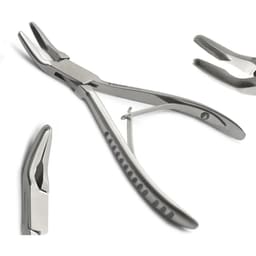
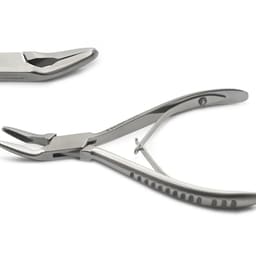
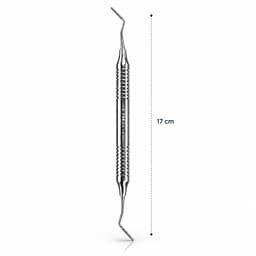
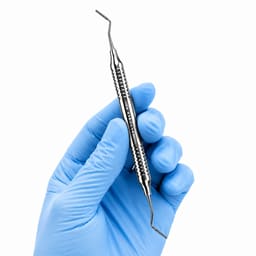
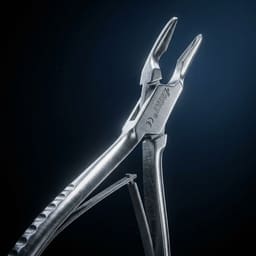
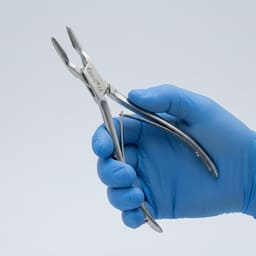
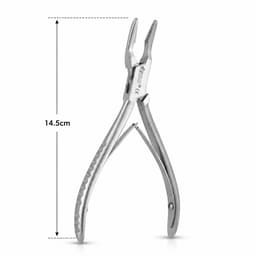
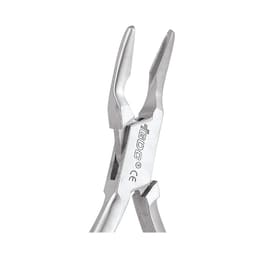
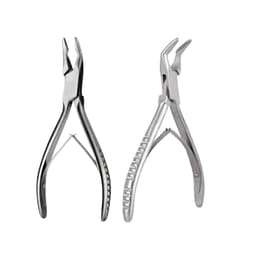
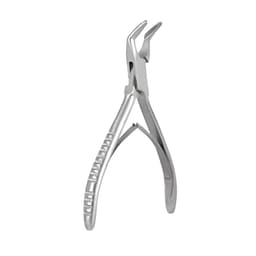
A bone rongeur is a sprung-jaw instrument that cuts alveolar bone away after an extraction, and a bone file is the serrated blade that smooths the margin left behind. Unlike a bur, both cut by hand, without heat or irrigation. Named patterns — Blumenthal, Friedman, Miller and Sugarman — come from GDC, Waldent and Oracraft, straight or angled to 30, 45 and 90 degrees.
 Recommended
 Price- High to LowPrice- Low to High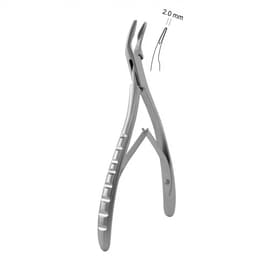



Only 4 Left
 26
26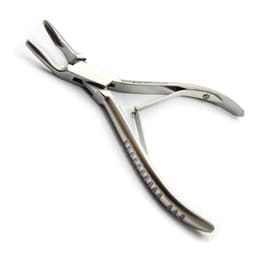


Only 3 Left
34
 35
35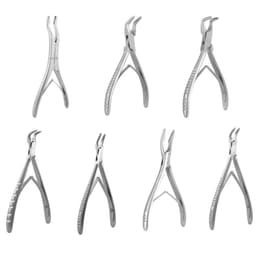
 20
20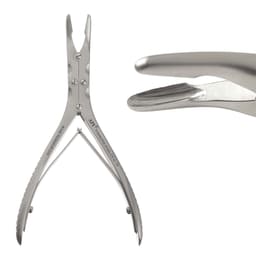
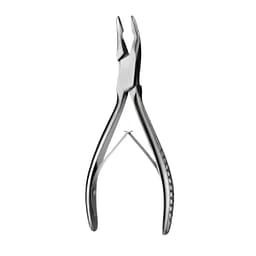
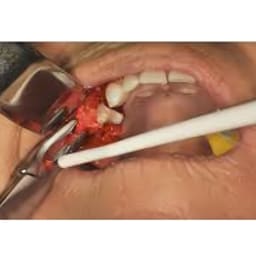
Bone rongeurs and bone files
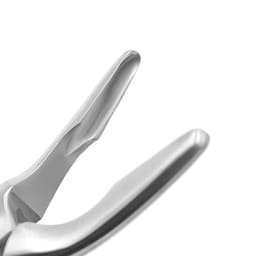
One instrument removes bone, the other refines it. They are stocked as one category because an extraction that opens bone rarely needs one without the other. The rongeur closes sprung, cupped jaws through an alveolar edge and lifts a fragment out with each squeeze. The file then travels across that same margin, taking down spicules too fine for any jaw to catch. Both belong to the Extraction Instruments range.
Jaw patterns and angles
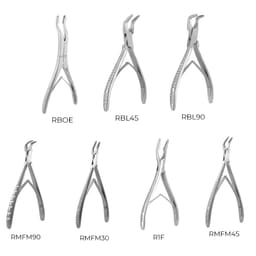
A rongeur is bought by its jaw pattern, and the pattern sets how far back it can work:
- Blumenthal — broad side-cutting jaws, straight or bent to 30, 45 or 90 degrees; the general-purpose choice.
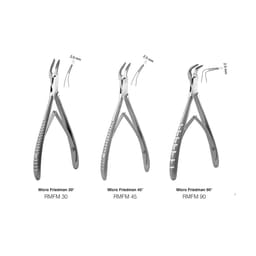
- Friedman and Mini Friedman — narrower jaws that cut at the tip, sized to a socket rather than a ridge.
- Micro Friedman, Legrange bend — an S-shaped shank that carries the jaws past the cheek to a distal mandibular site.
- Mead — a longer 16.5 cm body where depth and reach matter more than close control.
- Double action — a second hinge that turns a light squeeze into a hard bite through dense cortical bone.
Low in the arch the angle counts for more than the length, because the operator is working on bone seen at a slant. Bone that has to be split or planed instead of nibbled goes to the Osteotomes And Bone Chisels range.
The pull stroke
A bone file cuts in one direction only, and the stroke has to respect it:
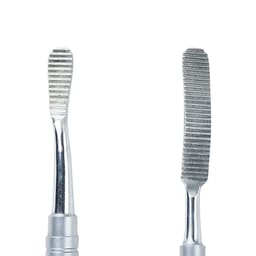
- Draw, never push — the teeth bite as the file travels outward; a forward stroke only burnishes and packs the rows.
- Coarse first — the heavier face levels the margin, the finer face polishes it.
- Lift between passes — reversing the head drives bone dust into the serrations and can snag a raised flap.
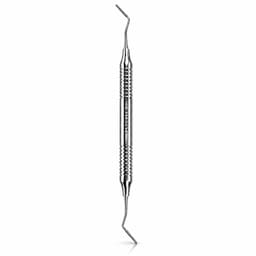
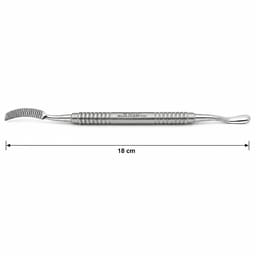
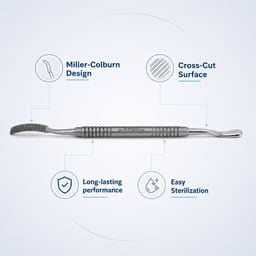
- Named heads — Miller 52 and 64 across a ridge, Howard 12 for an interproximal margin, Miller-Colburn 9/107 for a long taper, Schluger 15/825 and the Sugarman files for interdental bone.
A hollow handle stays light through long periodontal filing; a solid ring handle grips harder on dense bone. Access to any of it is opened first with the Periosteal Elevators range.
After the extraction
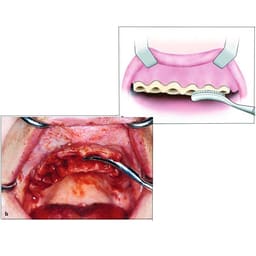
Bone finishing is done while the flap is still reflected:
- Palpate — sharp edges are found by fingertip under the tissue, not by eye.
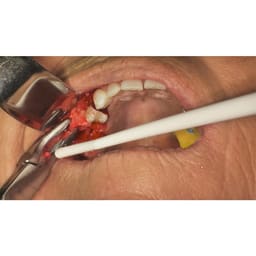
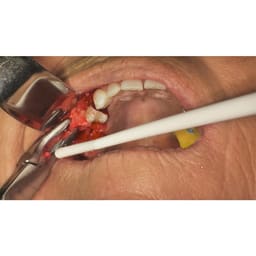
- Reduce — the rongeur takes down a projecting wall, an interradicular septum or a knife-edge ridge.
- Level and irrigate — the file evens the margin, and irrigation flushes the loose chips before closure.
Those few minutes decide whether the site heals quietly and whether a denture later seats without a sore spot. A socket levelled this way is also ready for the Bone Grafts range.
Upkeep
Both instruments fail quietly, and the failure shows up mid-procedure:
- Spring — a leaf spring that has lost tension leaves the jaws shut after release, ending one-handed use.
- Hinge — a worn joint lets the blades slip past each other instead of meeting, so bone is crushed rather than cut.
- Serrations — bone dried into the rows makes a file skid; brush along the blade direction before it sets.
- Edge — a blunt file does nothing on the first pass and tempts a harder push.
Hold the closed jaws against the light and squeeze-test the spring at every inspection. Cleaning, drying and oiling belong with the usual Instrument Sterilization routine.
Buy bone rongeurs and bone files at Dentalkart
What to buy follows the case: a Blumenthal for general alveolar trimming, an angled micro Friedman for a distal mandibular site, a double-action head where the cortex is dense, and Miller, Howard or Sugarman files for the finish. Stock spans GDC, Waldent, Oracraft and Api+, in single- and double-action rongeurs and in coarse and fine files. Individual patterns move in and out of availability, so each product page shows its own current status and can be set to alert you when it returns. A new surgical setup usually pairs them with the matching Extraction Forceps range.
Frequently Asked Questions (FAQs):
What does a bone rongeur do that a bur cannot?
It cuts cold. A rongeur bites through alveolar bone by hand, with no heat, no coolant and no thermal risk to the margin, and it lifts the fragment out in the same movement. A bur reduces bone faster, but it needs irrigation and a steadier, drier field to do it safely.
Is a double-action rongeur worth it over a single action?
For heavy bone, yes. One hinge and a leaf spring keep a single-action rongeur light and direct in the hand. Twin hinges multiply what the hand puts in, which is what dense mandibular cortex and a long impaction list both ask for. On thin maxillary bone the simpler pattern wins.
Why is a bone file worked only on the pull stroke?
Because the teeth are set at an angle. They cut only when the head is pulled towards the operator, and do nothing on the return. Working it back and forth wastes the stroke, loads the serrations with debris and puts a reflected flap at risk. One direction, lift, repeat.
Which rongeur pattern suits a distal mandibular third molar?
An angled one. A micro or mini Friedman, or a Blumenthal bent to 45 or 90 degrees, carries the cutting edge onto distal bone that a straight jaw cannot reach past the cheek. A Legrange S-shape shank clears soft tissue further still, and a double-action head handles the cortex.
How should a rongeur and bone file be cleaned and sterilized?
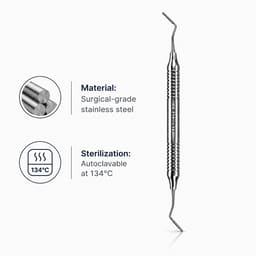
Scrubbed wet, then autoclaved with the surgical set. Clear the blade rows and the hinge before debris dries into them. Pouch the rongeur with its jaws open so steam reaches the joint surfaces, and oil the hinge after each cycle. Check spring and closure at every inspection.