




Sterilization Cassette/Box
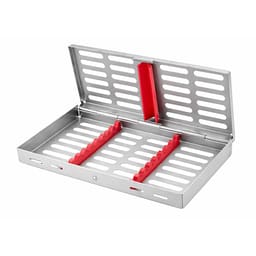
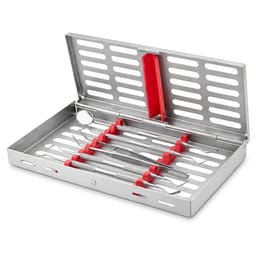
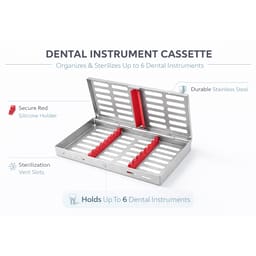
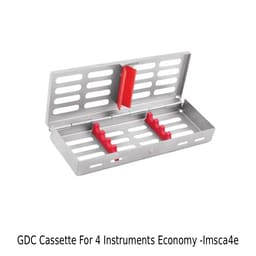
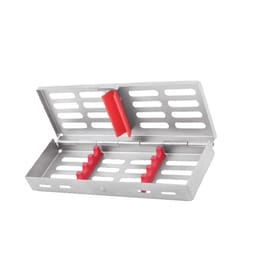
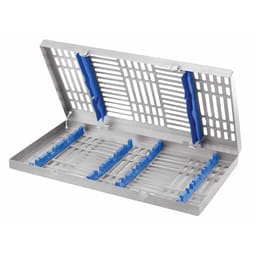
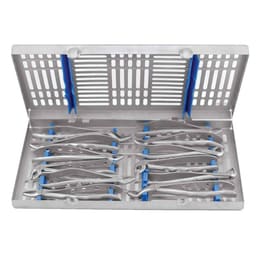
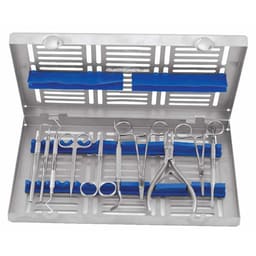
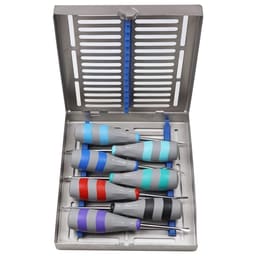
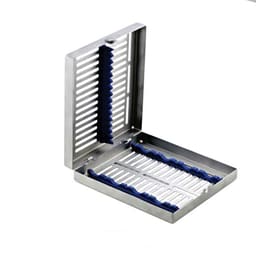
A sterilization cassette is a rigid metal tray that holds a set of dental instruments together through cleaning, autoclaving, and storage. Instead of handling loose tools at each step, the whole set stays clipped in order inside the cassette. It keeps a procedure's instruments organised, protects sharp tips, and is reused case after case.
 Recommended
 Price- High to LowPrice- Low to High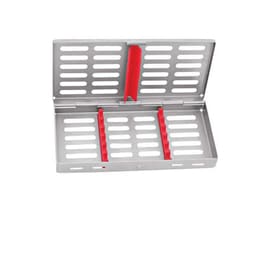
 34
34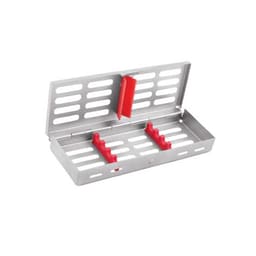
 33
33
?w=256)
Only 1 Left
184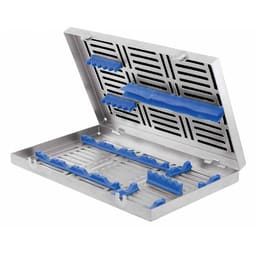
Only 3 Left
126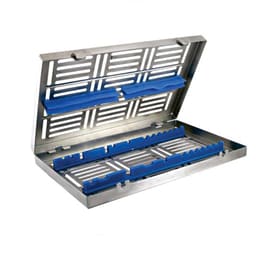
Only 2 Left
115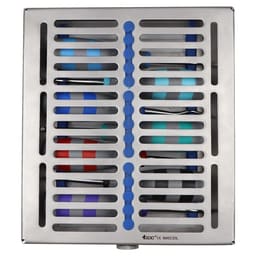

Only 5 Left
92

 1
1Sterilization Cassette/Box
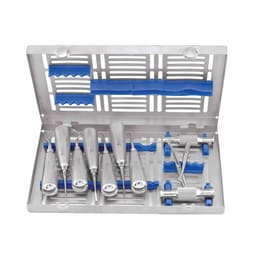
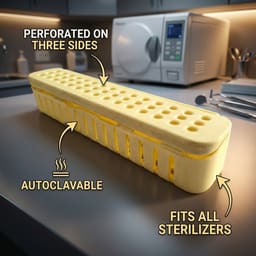
Handling loose instruments one by one at every stage is slow and risks damage and needle-stick injury. A cassette solves that by holding a whole set as one unit. It is a rigid, perforated metal tray that instruments clip into; it then goes through cleaning, the autoclave, and storage without the tools being unloaded. The perforations let water, detergent, and steam reach every surface, so the set can even be washed as a unit in an ultrasonic bath before sterilising. At the chair it opens as a ready, ordered tray, which is why they are a mainstay of oral surgery set-ups.
Organised by procedure or by count
Cassettes are stocked two ways, and clinics mix both:
- Procedure-specific — laid out for a named set, such as extraction forceps, root elevators, or a surgical kit, with each tool in its own slot.
- By capacity — general trays that hold a set number of instruments (5, 10, or 20) for building your own kits.
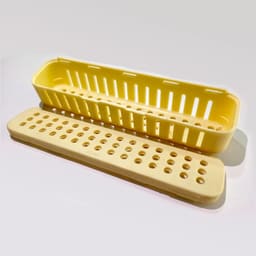
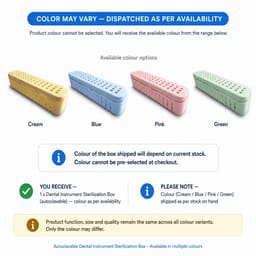
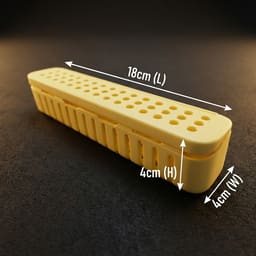
- Empty boxes — plain sterilization boxes for storing or transporting a group of items that do not need a fixed layout.
A busy surgery keeps procedure cassettes for its common cases and capacity trays for the rest, all feeding the clinic's sterilization routine.
What to look for
A few points when choosing a cassette:
- Capacity and layout — enough slots for the set, holding each instrument so tips do not clash.
- Perforation — an open mesh that lets cleaning fluid and steam through for full contact.
- Material — surgical stainless steel that takes repeated autoclaving without corroding.
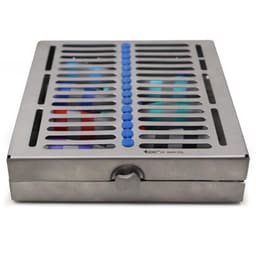
- Latch and hinge — a secure closure and smooth hinge that survive daily use.
Match the cassette to the instruments it will carry, drawn from the surgical instruments range.
How a cassette moves through the day
The cassette carries a set through every stage without unloading:
- Load once — clip the used instruments into their slots after treatment.
- Process as one — clean, then autoclave the whole cassette together, part of the instrument sterilization routine.
- Store and carry — keep the sterile set in its tray and take it to the chair ready to open.
Handling each set as one unit cuts loose-instrument contact at every stage.
Frequently Asked Questions (FAQs):
What is a sterilization cassette used for?
A sterilization cassette holds a set of instruments together as one unit through cleaning, autoclaving, and storage. Rather than handling each tool separately at every stage, the tools stay clipped in place in their tray. This saves time, cuts the risk of injury from loose sharp instruments, and keeps a procedure's tools organised and ready to open at the chair.
How is a cassette different from a pouch?
A pouch is soft, single-use packaging that wraps an instrument for one cycle. A cassette is a rigid, reusable metal tray that holds a whole set and organises it. Pouches suit individual items and one-time sealing; cassettes suit complete kits used together, protecting the instruments and keeping them in order case after case.
Can instruments be cleaned inside the cassette?
Yes. Cassettes are perforated so that water, detergent, and steam pass through and reach every instrument surface. This means the loaded cassette can be placed straight into an ultrasonic cleaner or washer and then the autoclave, without unloading the tools. Cleaning the set as a unit is faster and reduces direct handling of contaminated instruments.
Should I choose a procedure cassette or a capacity cassette?
It depends on the cases you run. Choose a procedure version when you repeat the same case often and want the kit fixed and complete every time. Choose a capacity version when you would rather assemble your own selection up to a slot count. Many surgeries run a few dedicated trays for frequent work and general trays for everything else.
What material should a sterilization cassette be?
Surgical-grade stainless steel is the standard. It withstands repeated autoclave cycles without corroding, resists the detergents used in cleaning, and holds its shape and hinge under daily use. Look also for smooth edges, a secure latch, and perforations sized to grip instruments while still letting cleaning fluid and steam pass through freely.