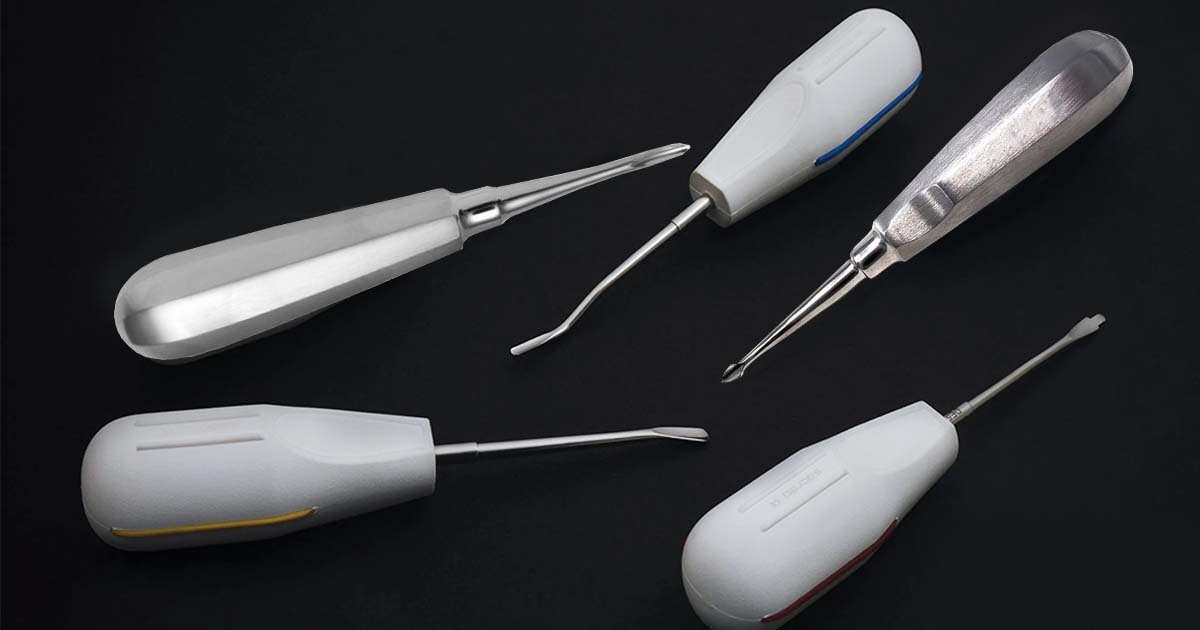
Dental Luxator vs Elevator: Which Instrument is Better?
Dr. Vandana Tanwar
Contributing Dental Clinician
Dental extractions can be a breeze or a real challenge — sometimes it feels like a walk in the park, and other times, it’s more like climbing a mountain.
The instruments you choose for an extraction play a major role and can thus make all the difference, not just for you but also for your patient. The wrong choice can lead to unnecessary trauma, prolonged discomfort, tissue damage, and slower healing. Instruments like forceps, periosteal elevators, dental elevators, luxators, bone-cutting burs, and many more are dentist's best friends in these situations. Among them, dental elevators and luxators often take center stage. Despite frequent confusion between them, each serves a distinct purpose and they are not interchangeable.
Understanding the differences between elevators and luxators is essential for every dentist. Proper selection can enhance the efficiency of the procedure, minimize patient discomfort, and prevent complications. In this guide, we’ll help you know the difference and help you decide which one is better for your dental practice.
What are Elevators?
Dental elevators used for extractions in oral surgery look similar to luxators but have few dissimilarities in their design. Their reduced sharpness, combined with the applied force, allows these elevators to tear the periodontal ligament and free the tooth while minimizing trauma to the surrounding tissues. These elevators are primarily used in extractions that require greater force.
Preferred by Top Dentists: Waldent Root Elevator Instruments Kit (Set of 11, K2/4)
Types of Elevator:
Winged:
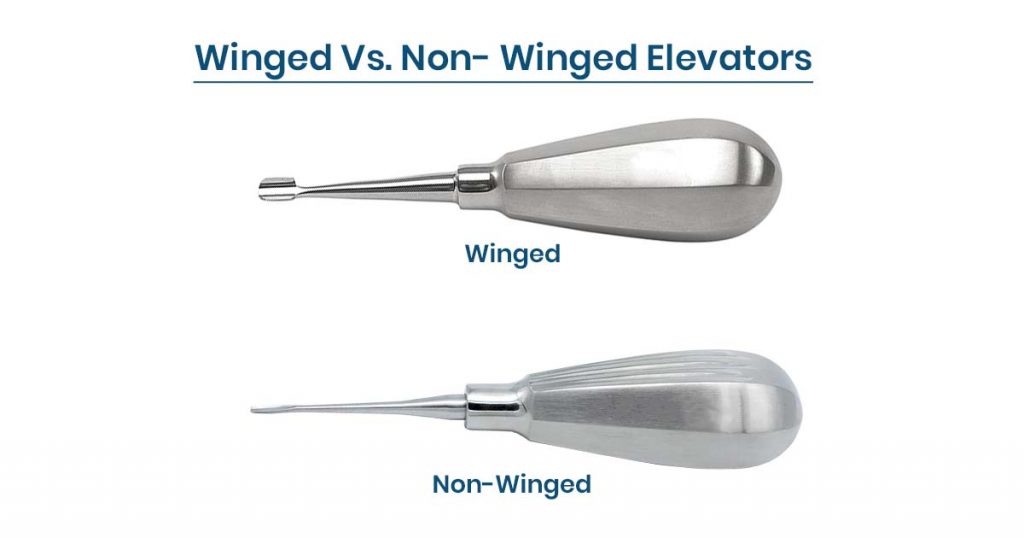
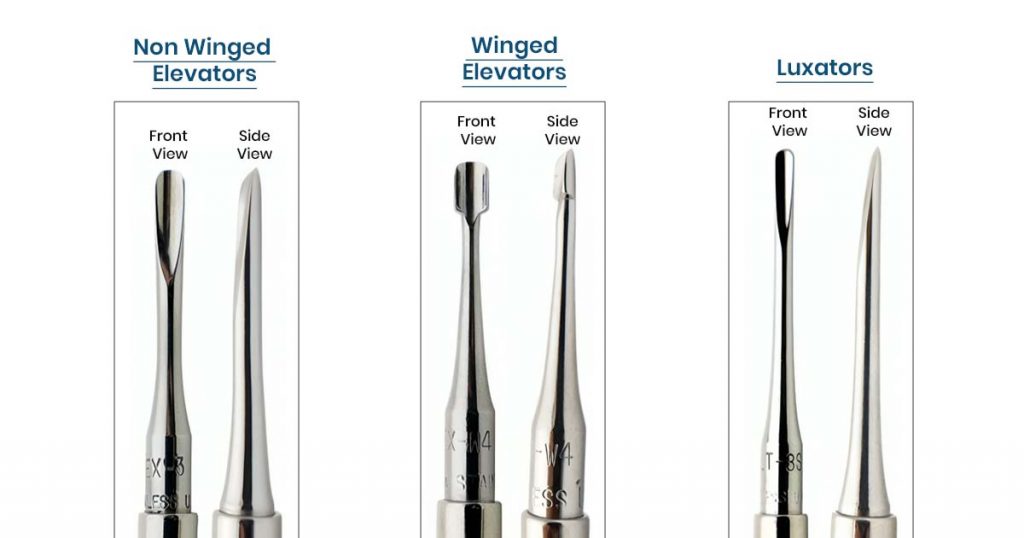
These robust elevators can be used for most extractions. With a thick blade, concave face on one side of the tip, and somewhat convex, slightly bowed shoulder on the back side, these elevators stretch and tear the PDL. These elevators have a narrowed neck at the base of the tips and flared, curved edges called ‘wings’. These wings follow the contour of the tooth root improving the control during extractions. Their larger surface area provides better leverage between the tooth and surrounding bone compared to non-winged elevators.
Use these elevators with a side-to-side rocking or twisting motion, applying gentle rotational and apical pressure, and never as a lever. The elevators’ wings are also useful to hook under the buccal bulge, facilitating tooth and root lifting, out of the socket, thus allowing easy extraction without excessive force. One disadvantage of these elevators is that they can cause crushing, roughening, or chipping of the surrounding alveolar bone.
Non Winged:
These elevators have a relatively strong and thick blade, designed to fatigue and tear the periodontal ligament (PDL) similar to winged elevators. Use these instruments primarily with the wedge technique by applying pressure at the root apex to mobilize the tooth and facilitate its removal from the socket. Use them with lever action or rotational torque as needed, depending on the specific requirements of the extraction. Their design and versatility make them particularly suitable for less experienced dentists or those who may rely on greater force during extractions.
What are Luxators?
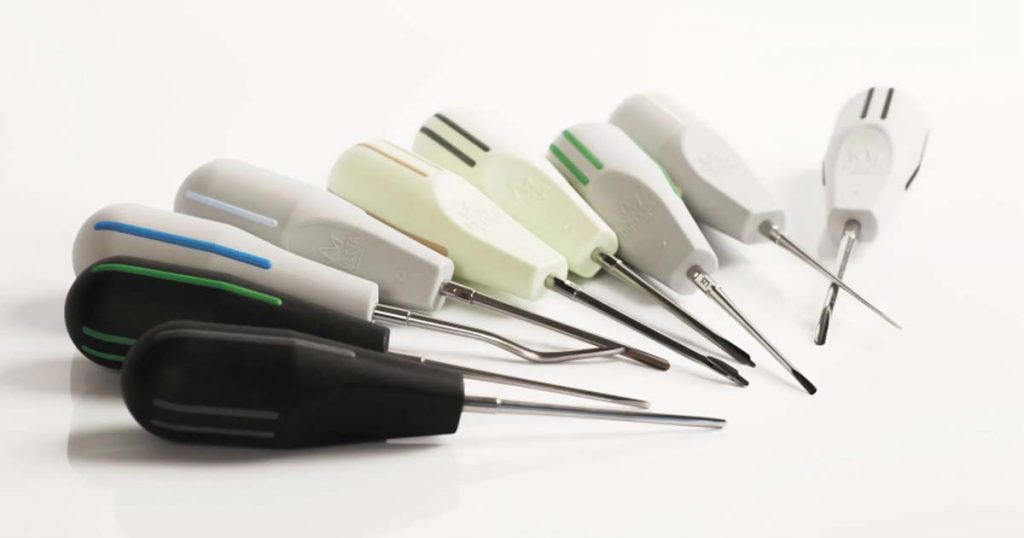
Luxators serve the same purpose of extraction but these tend to have a sharper, slimmer and less concave edge. These tend to cut through the tissue, unlike the elevators which tear the ligament. In other words, elevators move teeth, whereas luxators separate teeth from the periodontal ligament and surrounding structures. Their slim design makes them ideal for working in tight spaces of the mouth and in cases that require precise cutting and less trauma to bone like in immediate implant cases and orthodontic extractions.
Preferred by Top Dentists: GDC Luxatip
Components of Elevator/Luxator:
An elevator or a luxator consists of the following components in its design:
- Handle
- Shank
- Blade/tip
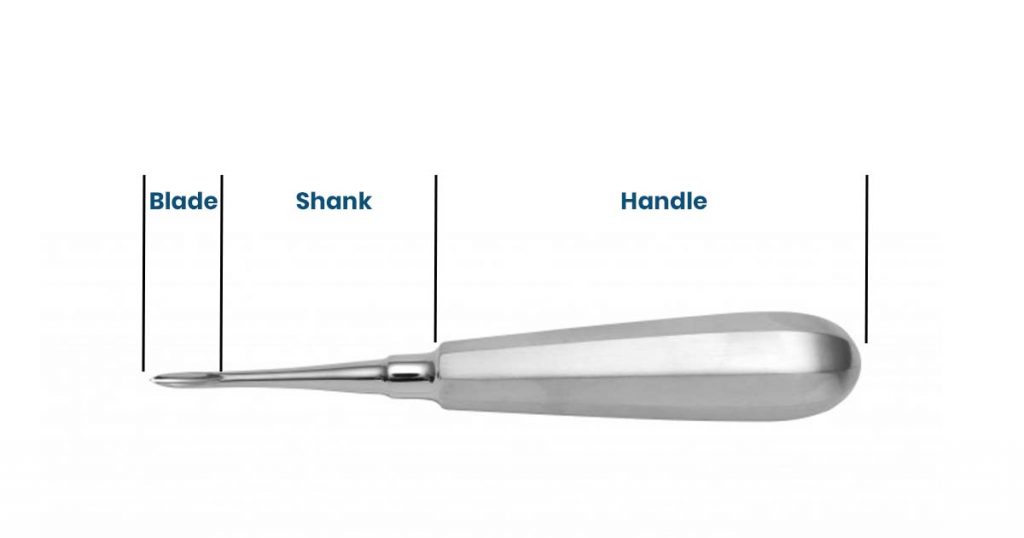
Different between Elevator vs Luxator:
While elevators might be of winged or non – winged types, there are a few types that are common for both luxators and elevators. These are as follows:
Straight: These elevators and luxators have a straight tip which helps in creating space between the tooth and the surrounding bone, thus making extractions safer and more efficient.
Curved: These elevators and luxators have a curved tip which helps in removing the teeth with better adaptation and force application by scooping along the curve of the tooth's roots.
Grooved or flat working end: The working tip can be grooved to adapt apically or flat to rest against the crown, aligned with the tooth’s long axis. These working ends allow for ease of operation for dentists and also lessen the time required for the luxation of a tooth.
Serrated or non-serrated: Serrations can be seen in both elevators and luxators. These help in cutting through the PDL more efficiently in luxators. Serrated luxators can be of great use during immediate implant procedures and damaged teeth extractions. On the other hand, non-serrated luxators and elevators are suitable for simpler extractions, where their smooth edges are sufficient to cut through or loosen the PDL effectively.
Bent: These elevators and luxators have a bent tip or angled tip to the right and left side. They facilitate better access to the periodontal ligament (PDL) space while keeping the handle away from the opposing arch, making them particularly suitable for patients with limited mouth opening. Dentist can also use these elevators or luxators depending on their need for better access to the PDL space during various dental extractions as well.
Read Also: PHYSICS FORCEPS: Best Approach to Atraumatic Extraction
What should I use, a luxator or an elevator?
| Features | Elevators | Luxators |
|---|---|---|
| Design | Thick blade, uniform stainless steel handle, robust structure; suitable for applying greater force. | Slim, sharp, designed for precision; usually has a plastic handle and soft steel shank |
| Functionality | The force applied by the elevator fatigues and tears the PDL to ultimately loosen the tooth for extraction. | Cuts through the sharpey’s fiber within PDL and separates the tooth from surrounding structures. |
| Application Technique | Used in rocking, twisting, rotational, and apical pressure; More in a prying manner. wedge | Used in a circular cutting motion or semi-circular rocking motion around the tooth root. |
| Principle Used | Elevators can be used with either of the following principles- Lever, Wedge, or Wheel and axle. ( Lever action is not recommended for winged types. | Uses the wedge principle. |
| Durability | Strong and less prone to breakage or twisting; built for long-term use. | More prone to breakage due to slimmer body; needs careful handling and frequent resharpening. |
| Suitability | Best for extractions requiring higher force or when greater control is needed. | Suitable for delicate extractions |
| Drawbacks | Can cause alveolar bone chipping or crushing in some cases (winged type). | Slim design may limit strength, making it less durable for demanding extractions. |
The choice between a luxator and an elevator depends on the specific extraction case and the dentist’s expertise. Many clinicians prefer elevators for their strength, versatility, robustness, and ability to provide powerful leverage during extractions. However luxators, with their sharp and precise design, are perfect for delicate dental extraction procedures requiring cutting of the PDL. Regardless of the choice, careful handling and technique are essential to minimize trauma and enhance patient comfort.
At DentalKart, India’s leading online dental store, you can explore a wide range of high-quality dental elevators and luxators to suit your practice's needs. Equip yourself with the right tools to make every extraction smoother, faster, and more efficient for you and your patients.
Frequently Asked Questions:
No, elevators and luxators are not the same. Both are used in dental extractions, but elevators are thicker and stronger, tearing the periodontal ligament (PDL) to loosen the tooth. Luxators, on the other hand, have a sharp and slim design, used to cut through the PDL and separate the tooth from surrounding structures.
A luxator cuts the periodontal ligament and separates the tooth from the surrounding tissues. Its sharp and slim design makes it ideal for working in tight spaces and performing delicate extractions without much surrounding tissue trauma.
Elevators tear the PDL and loosen the tooth for extraction. They provide leverage, making it easier to mobilize the tooth, particularly in cases that require greater force.
- Lever Principle
- Wedge Principle
- Wheel and Axle Principle
Written by
Dr. Vandana Tanwar
Contributing Dental Clinician
A contributing clinician at Dentalkart Blogs, Dr. Vandana Tanwar translates day-to-day chair-side learnings into evidence-based guides for dentists working across India.
Keep reading
Browse all →
Avoiding Common SSC Case Selection Errors
Avoiding Common SSC Case Selection ErrorsA Pediatric Clinical Guide SSCs are indicated for multi-surface carious primary molars, post-pulpotomy teeth, and high-

Choosing the Right Dental Rubber Dam Clamp
Choosing the Right Dental Rubber Dam ClampAn Isolation Selection Guide Selecting the correct dental dam clamps involves matching jaw design, bow configuration,

Bis-acryl vs. PMMA Temporary Materials
Bis-acryl vs. PMMA Temporary MaterialsA Case Selection Guide The choice between bis-acryl and PMMA provisional crown materials depends on the clinical case: bis