
Dr. Bhavishya Arora
Chief Dental Editor
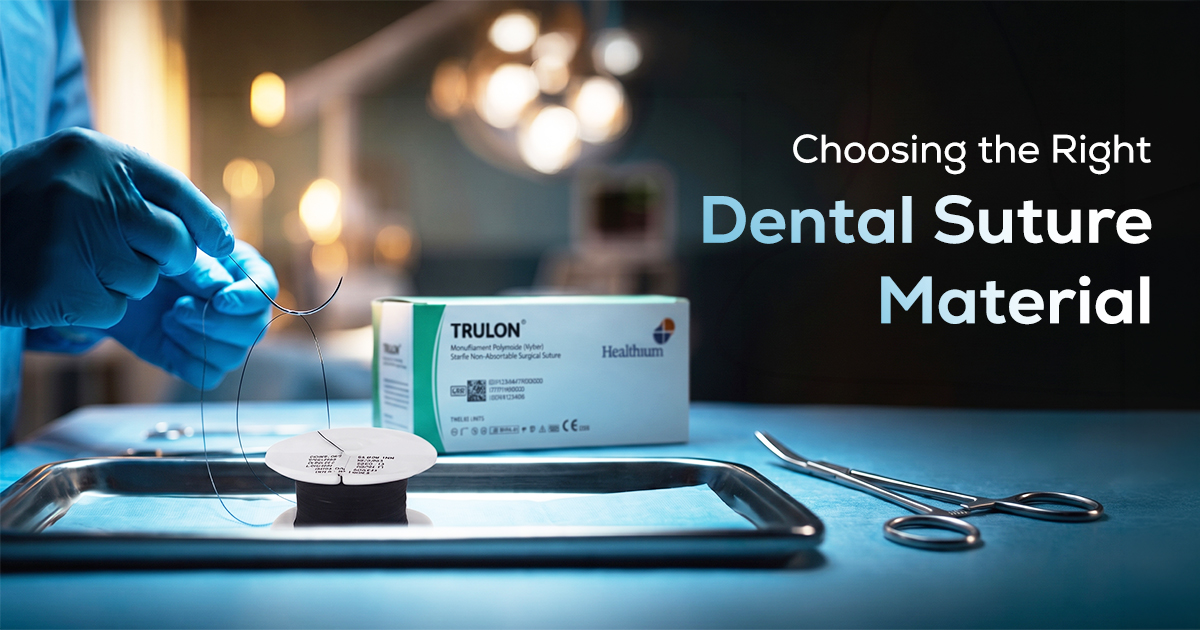
Choosing the Right Dental Suture Material: A Guide
Optimal Healing, Better Outcomes
Choosing the correct dental suture material involves balancing tissue type, healing time, and desired aesthetic outcome for optimal post-surgical recovery. This decision directly impacts wound stability, patient comfort, and the prevention of complications like infection or dehiscence in Indian dental practices.
Table of Contents
Absorbable vs. Non-Absorbable Sutures
The choice between absorbable and non-absorbable sutures depends on the required duration of wound support and whether a second appointment for removal is practical. This decision is fundamental to managing surgical sites from simple extractions to complex periodontal flaps.
Absorbable sutures lose their tensile strength within 60 days via hydrolysis (e.g., polyglycolic acid) or enzymatic degradation (e.g., catgut), making them ideal for internal tissues or patients with follow-up challenges. Non-absorbable sutures like silk or polypropylene maintain strength indefinitely and require removal, offering robust, long-term closure for high-tension areas. For instance, an absorbable suture may retain only 50% of its strength at 2 weeks, while polypropylene retains nearly 100% for months.
- Absorbable Sutures: Best for deep tissue layers, extraction sockets, and pediatric or special needs patients where removal is difficult.
- Non-Absorbable Sutures: Indicated for flap closure in implantology, periodontal surgery, and when prolonged, precise tension is critical for healing.
- Tensile Strength Profile: Match the suture's strength loss profile to the tissue's healing rate; oral mucosa typically regains sufficient strength in 7-14 days.
- Patient Compliance: Only use non-absorbable sutures when you are confident the patient will return for the 7-10 day removal appointment.
Absorbable Sutures
- No removal appointment needed
- Lower risk of suture track infection over time
- Absorption rate can be unpredictable
- Can induce more initial inflammation
Non-Absorbable Sutures
- High, predictable tensile strength
- Minimal tissue reaction (synthetics)
- Requires a second patient visit for removal
- Can act as a wick for bacteria (multifilament)
Monofilament vs. Multifilament Suture Properties
The primary difference is structure: a monofilament suture is a single solid strand, while a multifilament suture is braided or twisted from multiple smaller threads. This structural distinction dictates handling characteristics and biological response.
Monofilaments (Recommended product: Healthium Trulon Monofilament Polyamide) like polypropylene or polydioxanone pass smoothly through tissue with minimal drag, reducing trauma. However, they exhibit more memory and require more knots (typically 4-5 throws) for security. Braided multifilaments (Recommended product: Meril Filasilk Black Braided Silk Suture Reels) like silk or polyglycolic acid offer superior handling, flexibility, and knot security but their interstices can harbor bacteria, increasing infection risk through a phenomenon known as capillarity.
- Tissue Drag: Monofilaments cause significantly less tissue trauma, making them ideal for delicate tissues like gingival grafts.
- Knot Security: Multifilaments have a higher coefficient of friction, requiring fewer throws (typically 2-3) for a secure knot compared to monofilaments.
- Bacterial Wicking: The braided structure of multifilaments can draw bacteria along the suture track, a primary concern in the oral environment.
- Handling: Clinicians often prefer the soft, pliable feel of multifilaments, but monofilaments are better for avoiding the 'sawing' effect on tissues during placement.
| Property | Monofilament | Multifilament |
|---|---|---|
| Structure | Single strand | Braided or twisted strands |
| Tissue Passage | Smooth, low drag | Higher drag, may 'saw' tissue |
| Handling | Stiffer, has memory | Pliable, easy to handle |
| Knot Security | Requires more throws | Excellent, fewer throws best |
| Bacterial Harboring | Low risk | Higher risk (capillarity) |
Choosing Suture Needle Curvature and Point
For most oral surgery, a 3/8 circle reverse cutting needle is the standard choice, as it provides excellent control in confined spaces and minimizes tissue tearing. The needle is as critical as the suture thread for precise and atraumatic wound closure.
The needle's curvature (e.g., 3/8, 1/2 circle) determines its turning radius, which is crucial for navigating tight intraoral spaces. A 3/8 circle is versatile for most flap closures. The needle point dictates tissue penetration. Reverse cutting needles have a triangular body with the third cutting edge on the outer curvature, which directs forces away from the wound margin, reducing the risk of the suture pulling through friable oral mucosa.
- 3/8 Circle: The most common curvature in dentistry, ideal for mucogingival surgery, extractions, and implant flaps where maneuverability is key.
- 1/2 Circle: Useful in more confined areas like posterior regions or palatal surgery where a larger, deeper turning radius is needed for access.
- Reverse Cutting Point: The sharp outer edge provides superior penetration while preventing tissue cutout. This is the standard for skin and oral mucosa.
- Taper Point: These needles pierce and spread tissue without cutting. They are best for delicate, easily-torn tissues but are less common for general oral surgery flaps.
Needle Selection Guide for Common Procedures
Suture Material and Tissue Reaction
Suture material significantly affects post-operative tissue reaction, with natural materials generally causing more inflammation than modern synthetic polymers. This reaction is the body's foreign body response to the implant.
Natural materials like surgical gut and silk provoke a strong inflammatory response due to their proteinaceous composition. Synthetic absorbable sutures like PGA or PDS are broken down by predictable hydrolysis, causing a milder, more controlled reaction. Synthetic non-absorbables like polypropylene and PTFE are the most inert, eliciting minimal tissue reaction. This makes them ideal for situations requiring long-term tissue support or in aesthetically sensitive areas.
- Highest Reactivity: Plain and chromic gut, due to enzymatic degradation and foreign proteins.
- High Reactivity: Silk, a natural protein, is known for attracting plaque and causing a significant inflammatory reaction, sometimes leading to a 'suture abscess'.
- Moderate Reactivity: Braided synthetics like polyglycolic acid (PGA) and polyglactin 910.
- Lowest Reactivity: Synthetic monofilaments like polypropylene, nylon, and especially polytetrafluoroethylene (PTFE), which are considered the most biocompatible options.
HIERARCHY OF SUTURE MATERIAL BIOREACTIVITY
Natural materials like gut and silk cause the most significant inflammatory response and plaque accumulation.
Synthetic absorbable materials like PGA and Vicryl elicit a milder, more controlled inflammatory reaction.
Synthetic non-absorbables like Polypropylene and PTFE are the most inert and biocompatible options available.
Frequently Asked Questions
USP (United States Pharmacopeia) sizing denotes suture diameter, where a higher number preceding a zero indicates a smaller thread (e.g., 5-0 is thinner than 3-0). For most oral procedures, 3-0 and 4-0 sutures provide an excellent balance of strength and minimal tissue trauma. Finer sutures like 5-0 or 6-0 are reserved for delicate mucogingival or plastic surgery procedures.
Both are synthetic absorbable sutures, but Vicryl (polyglactin 910) is a braided multifilament while Monocryl (poliglecaprone 25) is a monofilament. Vicryl retains its strength longer (about 50% at 3 weeks) and has better handling, whereas Monocryl has a shorter absorption profile and passes through tissue more smoothly. Monocryl is often preferred for subcuticular closures where aesthetics are key.
For a routine extraction socket, selecting the right dental suture material like a 3-0 or 4-0 absorbable suture (e.g., chromic gut or a synthetic PGA) is often ideal. These materials provide adequate support for the initial 7-10 day healing phase without requiring a removal appointment. In cases where primary closure over a graft is needed, a longer-lasting monofilament suture may be preferred for its biocompatibility.
While historically popular for its excellent handling, silk is a braided natural protein that is no longer considered standard due to its high capillarity. This property allows it to wick bacteria and oral fluids into the wound, significantly increasing the risk of post-operative infection and inflammation. Modern synthetic options offer superior biocompatibility and lower infection rates.
Non-absorbable sutures in the oral cavity should typically be removed after 7 to 10 days. Leaving them in for longer increases the risk of suture track epithelialization and localized infection due to plaque accumulation. The exact timing depends on the procedure and tissue tension, but exceeding 14 days is rarely recommended for oral mucosa.
Written by
Dr. Bhavishya Arora
BDS, MDSChief Dental Editor
A contributing clinician at Dentalkart Blogs, Dr. Bhavishya is a compassionate, detail-driven dentist known for thoughtful patient care, clear communication, and a calm chair-side manner that puts patients at ease. Beyond the clinic, she leads product content and category initiatives at Dentalkart India's largest dental marketplace where she bridges clinical understanding with commercial insight to help dentists make better-informed product choices.
Keep reading
Browse all →
When to Use Absorbable Gelatin Sponges?
When to Use Absorbable Gelatin Sponges?Clinical Hemostasis Case Selection An absorbable dental hemostatic sponge is a sterile, porcine-derived gelatin foam used

Correcting Common Pit & Fissure Sealant Application Errors
Correcting Common Pit & Fissure Sealant Application ErrorsAn Evidence-Based Guide Successful pit and fissure sealant application is technique-sensitive, and

Dental RVG Sensor Quality Assurance Protocol
Dental RVG Sensor Quality Assurance ProtocolA Clinical Calibration Guide A dental RVG (radiovisiography) sensor quality assurance protocol is a set of routine t