
Dr. Prerna Sahrawat
Contributing Dental Clinician
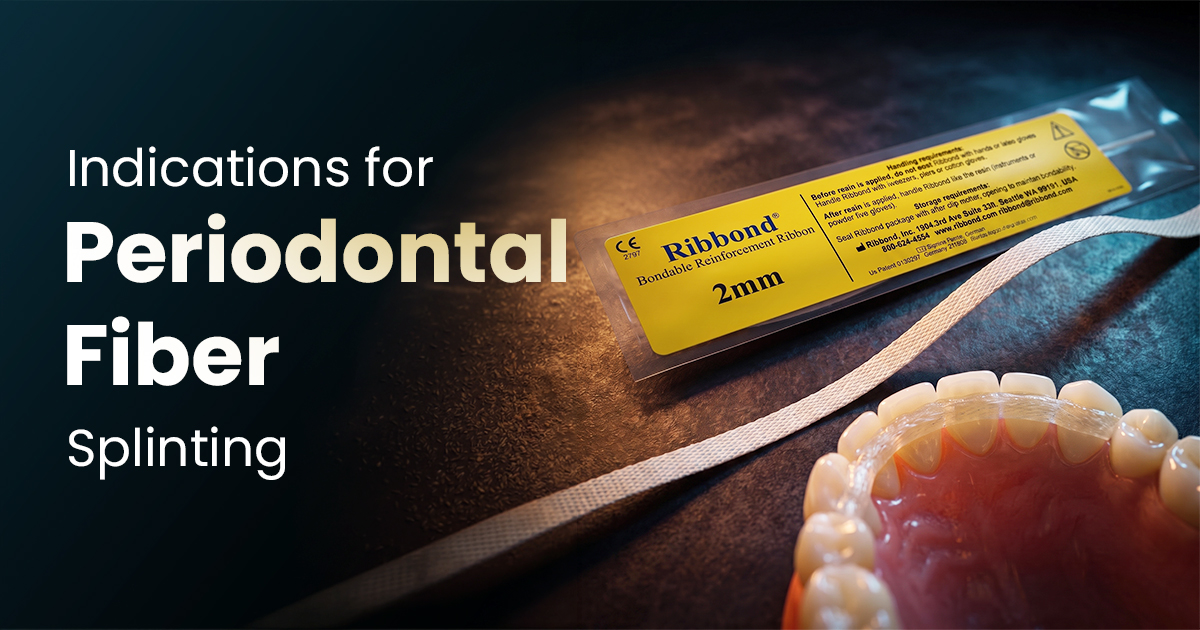
Indications for Periodontal Fiber Splinting
A Clinical Case Selection Guide
Periodontal splinting is indicated for stabilizing teeth with increasing mobility (Miller Class II or greater) that compromises function or patient comfort, most often using a fiber splint. Proper case selection is crucial for transforming a guarded prognosis into a successful long-term clinical outcome.
Table of Contents
What Degree of Tooth Mobility Warrants Splinting?
Splinting is primarily justified for Miller Class II and select Class III mobility cases where the mobility is increasing or causing discomfort during mastication. It is not a cure for periodontitis but rather a method to improve function after the primary etiological factors, like inflammation and occlusal trauma, have been addressed. The goal is to redistribute functional forces across a segment of teeth, reducing the load on individual compromised teeth.
Clinically, splinting teeth with only Class I mobility is generally considered overtreatment unless part of a comprehensive post-orthodontic or post-traumatic stabilization plan. For a splint to succeed, the terminal abutment teeth must have sufficient periodontal support to bear the additional load. All necessary endodontic and periodontal therapy, including management with essential periodontic products, must be completed prior to splint placement.
- Class I Mobility: Splinting is rarely indicated. Focus on etiology control.
- Class II Mobility: This is the primary indication, especially if mobility is progressive or impacts patient comfort.
- Class III Mobility: Splinting is a selective option for maintaining teeth with a hopeless prognosis for a limited time, often for aesthetic reasons or while awaiting implant therapy. The abutments must be solid.
- Fremitus: The presence of fremitus (vibrational movement under occlusal forces) is a strong indicator for splinting after occlusal adjustment.
Mobility-Based Splinting Decisions
When Periodontal Splinting is Contraindicated
Periodontal splinting is contraindicated when active, uncontrolled periodontal disease is present. Applying a splint in an environment with significant inflammation and deep pockets will hinder oral hygiene, accelerate attachment loss, and lead to failure. The presence of severe bone loss (less than 30% remaining bone support) around potential abutment teeth also makes splinting a poor choice, as these teeth cannot provide the necessary anchorage.
Furthermore, patients with poor oral hygiene or low motivation for maintenance are not suitable candidates. A splint acts as a plaque-retentive surface, and without meticulous cleaning, the underlying condition will worsen rapidly. From a structural standpoint, having an insufficient number of sound abutment teeth to support the mobile segment will overload the entire system, leading to abutment failure.
- Active Periodontitis: Never splint teeth with untreated, active inflammation or suppuration.
- Poor Oral Hygiene: Inadequate plaque control is an absolute contraindication.
- Insufficient Abutments: A 2:1 abutment-to-pontic ratio is a guideline, but clinical judgment of root surface area is key.
- Severe Bone Loss: Splinting teeth with minimal remaining alveolar bone support is not viable.
- Patient Non-Compliance: If a patient is unwilling to commit to a rigorous maintenance schedule, treatment is likely to fail.
Primary Contraindication: Uncontrolled Inflammation
Applying a splint over teeth with unresolved gingival inflammation and deep pockets creates a biofilm-retentive area that makes periodontal therapy ineffective. This will accelerate bone loss and can lead to the loss of both the splinted teeth and the abutments.
Flexible vs. Rigid Splints: Which Material to Choose?
The choice between flexible and rigid splinting materials depends on the clinical objective. Flexible splints, typically made from ultra-high molecular weight polyethylene (UHMWPE) fibers like Ribbond or Splint-It, allow for physiologic tooth movement. This is ideal for post-trauma stabilization and for splinting periodontally compromised teeth where minor individual movement is desired to avoid ankylosis and stimulate the PDL.
Rigid splints, traditionally made from metal wires or more modernly with pre-impregnated glass fiber systems, offer absolute immobilization. This is beneficial for long-span bridges or when consolidating extremely mobile teeth where no movement is desired. However, rigidity can concentrate stress at the composite-enamel interface, potentially increasing debonding risk if not executed perfectly. For most periodontal cases, a semi-rigid or flexible periodontal fiber splint offers the best balance of stabilization and biocompatibility.
For appliances used in bruxism and TMD rather than periodontal stabilization, see our guide on choosing the right occlusal splint material.
- Polyethylene Fibers (Flexible): Excellent for trauma and most perio cases. Allows physiologic movement, has superior fatigue resistance, and is easy to handle.
- Glass Fibers (Semi-Rigid/Rigid): Higher modulus of elasticity provides greater rigidity. Good for longer spans but can be more brittle.
- Metal Wire (Rigid): A traditional but less aesthetic option. Can be difficult to adapt passively, inducing stress.
Polyethylene Fiber Splints
- Allows physiologic tooth movement, reducing stress concentration.
- High fracture toughness and less prone to catastrophic failure.
- Easier to adapt and less technique-sensitive than rigid options.
- Lower modulus of elasticity, providing less rigidity for very long spans.
Glass Fiber Splints
- Higher stiffness provides greater immobilization.
- Aesthetically pleasing and bonds well to composite resin.
- More brittle and can fracture under high occlusal loads.
- Can be more difficult to contour perfectly to the teeth.
Assess Occlusal Factors Before Splinting Teeth
A thorough occlusal analysis is mandatory before placing a periodontal splint. Unaddressed occlusal discrepancies are a primary cause of splint failure and can exacerbate periodontal breakdown. The objective is to ensure that occlusal forces are directed axially and distributed evenly across the splinted unit, eliminating traumatic lateral forces on compromised teeth.
Begin by checking for premature contacts in centric relation and excursive interferences using articulating paper of 20-40 microns. It is critical to identify and manage parafunctional habits like bruxism or clenching, as these generate excessive non-axial forces that can debond a splint or fracture an abutment tooth. An occlusal guard may be an essential part of the overall treatment plan. Failure to perform occlusal equilibration before splinting essentially locks in the traumatic occlusion, negating the splint's intended benefit.
- Check for Fremitus: Palpate teeth while the patient taps and grinds; vibrational movement indicates occlusal trauma.
- Eliminate Interferences: Perform selective grinding to remove premature contacts in centric, lateral, and protrusive movements.
- Evaluate Parafunction: Look for signs of wear facets, abfractions, and muscle tenderness indicative of bruxism.
- Ensure Passive Fit: The splint itself must not alter the occlusion; it should fit passively without creating new high points.
Pre-Splinting Occlusal Checklist
Use thin articulating paper to confirm stable, simultaneous posterior contacts.
Ensure canine guidance or group function without non-working side interferences.
Document wear facets and discuss the potential need for a night guard post-treatment.
Adjust any traumatic contacts before taking the final impression or placing the splint.
Frequently Asked Questions
Periodontal splinting is a procedure that joins mobile teeth to stable neighbours to stabilize them and improve function and comfort. It is needed when teeth show increasing Miller Class II or greater mobility that interferes with chewing, once active periodontal inflammation is controlled. A fiber splint is the most common and aesthetic approach.
A fiber-reinforced splint offers superior aesthetics, better stress distribution, and a stronger bond to tooth structure compared to a traditional wire-and-composite splint. Modern polyethylene fibers are flexible, allowing for physiologic tooth movement, which is healthier for the PDL. In contrast, rigid wire splints can concentrate stress, are less aesthetic, and may be more prone to plaque accumulation if not perfectly adapted.
A flowable composite resin with high flexural strength is generally the best choice for luting a periodontal fiber splint. Its low viscosity allows it to thoroughly wet the fiber and adapt intimately to the tooth surface and interproximal areas, minimizing voids. A hybrid or microhybrid flowable provides a good balance of strength, polishability, and handling for this specific clinical application.
A patient with a fiber splint requires a rigorous periodontal maintenance schedule, typically a recall every 3 to 4 months. These appointments are critical for professional cleaning around the splint, evaluating its integrity, checking for any debonding, and monitoring the periodontal health of the abutment teeth. Meticulous oral hygiene reinforcement is a key component of every recall visit.
The most common reason for failure is inadequate moisture control during the bonding procedure, leading to a compromised enamel-composite bond. Saliva or gingival crevicular fluid contamination of the etched enamel surface is a frequent chairside error. Other significant causes include unmanaged occlusal trauma, parafunctional habits exerting excessive force, or an insufficient bonding surface area on the abutment teeth.
Written by
Dr. Prerna Sahrawat
Contributing Dental Clinician
Dr. Prerna Sahrawat is a dentist with over 4 years of experience in clinical dentistry and dental content writing. She is passionate about simplifying complex dental concepts into practical, evidence-based content that helps dentists make informed clinical and purchasing decisions while staying updated with the latest advancements in dentistry.
Keep reading
Browse all →
Indications for Periodontal Dressing Placement
Indications for Periodontal Dressing PlacementA Clinical Case Selection Guide A periodontal dressing material is a protective pack placed over a surgical site t
Preventing Burnished Calculus with Gracey Curettes
Preventing Burnished Calculus with Gracey CurettesA Subgingival Scaling Protocol Burnished calculus is a residual deposit smoothed by an incorrectly used curett
Socket Preservation Grafting: A Case-Based Clinical Analysis
Socket Preservation Grafting: A Case-Based Clinical AnalysisSelecting Materials for Ridge Integrity Socket preservation — also called alveolar ridge preservatio
