
Dr. Yashasvi Sharma
Contributing Dental Clinician
Prefabricated vs Cast Post and Core
A Clinical Comparison
Choosing the right system to restore an endodontically treated tooth is crucial. This guide compares two common approaches to help Indian dental practitioners select the ideal foundation for successful long-term restorations.
Table of Contents
Clinical Indications for Each System
- Prefabricated posts are ideal for canals with a circular cross-section.
- Cast posts are necessary for flared, elliptical, or ovoid canals.
- Use prefabricated systems when more than 50% of coronal structure remains.
- A cast post is superior for teeth requiring core angulation changes.
- Choose prefabricated posts for efficient, single-visit restorative appointments.
- Select a cast post for bridge abutments needing maximum rigidity.
DECISION FACTORS: PREFABRICATED VS. CAST
Sufficient structure favors prefabricated posts; significant loss requires a cast post.
Circular canals suit prefabricated posts, while flared canals need a custom cast fit.
Anterior teeth may use fiber posts, but abutments need strong cast alloys.
Prefabricated systems allow for single-visit treatment, saving valuable chair time.
A Comparative Procedural Workflow
- Prefabricated: Canal is shaped using calibrated drills matching the post.
- Cast: An impression of the prepared post space is taken for the lab.
- Prefabricated: The post is cemented and the core is built up chairside.
- Cast: A temporary restoration is placed while the post is fabricated.
- Prefabricated: This procedure typically takes less than 60 minutes to complete.
- Cast: Requires a second visit for try-in, adjustment, and final cementation.
Prefabricated Post
- + Single appointment procedure
- + Conserves more tooth structure
- + Lower initial cost
- - Less precise fit in irregular canals
Cast Post & Core
- + Excellent passive fit
- + High strength and rigidity
- + Corrects tooth angulation
- - Requires two appointments
Material Science and Biomechanics
- Fiber-reinforced composite posts offer flexural properties similar to dentin.
- Cast posts are made from high-strength noble or base metal alloys.
- A dentin-like modulus of elasticity helps prevent catastrophic root fractures.
- Rigid metal posts transfer occlusal stress directly to the root structure.
- Fiber posts are radiolucent, sometimes complicating radiographic evaluation.
- Metal alloys in cast posts offer high compressive and tensile strength.
| Property | Prefabricated Fiber Post | Cast Metal Post |
|---|---|---|
| Elastic Modulus | Similar to Dentin | High (Rigid) |
| Fracture Mode | Favorable (Restoration) best | Unfavorable (Root) |
| Esthetics | Excellent | Poor (Opaque) |
| Corrosion | None | Potential (Base Metals) |
| Procedure | 1 Visit (Direct) | 2 Visits (Indirect) |
Biomechanical Tip
Always aim for a post length that is two-thirds the length of the root, ensuring at least 4-5 mm of gutta-percha remains apically to maintain a complete and effective seal.
Failure Modes and Retrievability
- Debonding is the most frequent complication for prefabricated fiber posts.
- Cast posts carry a higher risk of causing vertical root fractures.
- An inadequate ferrule (less than 1.5mm) is a primary cause of failure.
- Fiber posts are generally easier to retrieve than metallic posts.
- Retrieval of a well-fitted cast post can be highly destructive.
- Ultrasonic instruments are often used to break the cement seal for removal.
FAILURE RISK AND EASE OF RETRIEVAL
Higher with prefabricated posts, often due to cementation or contamination issues.
A significant concern with rigid cast metal posts that concentrate stress.
Fiber posts can be drilled out, simplifying future endodontic retreatments.
Cast posts are very challenging to remove without damaging the root.
Frequently Asked Questions
A minimum circumferential ferrule of 1.5 to 2.0 mm of sound vertical tooth structure is crucial for long-term success. This 'ferrule effect' braces the tooth against functional forces, significantly reducing the risk of fracture by over 90% compared to teeth that lack an adequate ferrule.
Yes, but with careful consideration. While a fiber post can be used, its success heavily depends on the remaining tooth structure, especially the ferrule. If less than 50% of the coronal structure remains or the ferrule is compromised, a cast post and core often provides better stability and longevity for the final crown.
The cement is critical. For fiber posts, a dual-cure resin cement is recommended to ensure complete polymerization deep within the canal, achieving a bond strength of around 20 MPa. For cast metal posts, traditional cements like glass ionomer or zinc phosphate are often used, relying on macromechanical retention rather than chemical adhesion.
While the post and core buildup itself is a single-visit procedure, the entire restoration is not. The clinician places the post and builds the core in one appointment, which may take about 60 minutes. However, the final crown requires a separate impression and lab fabrication, necessitating a second visit for seating 5-7 days later.
Written by
Dr. Yashasvi Sharma
Contributing Dental Clinician
Dr. Yashasvi Sharma is a contributing Dental professional at Dentalkart Blogs, where she distills chair-side clinical experience into evidence-based, practice-ready guides for Indian dentists. Her work bridges the gap between academic dentistry and everyday practice, translating global research into actionable insights tailored to the realities of Indian clinical settings.
Keep reading
Browse all →Optimizing Your Dental Lab Vibrator Technique
Optimizing Your Dental Lab Vibrator TechniqueA Guide to Bubble-Free Casts A dental vibrator machine uses controlled vibrations to remove trapped air from gypsum

When Should You Use a Dental Vacuum Former?
When Should You Use a Dental Vacuum Former?A Guide to Clinical Applications A dental vacuum former is best used for fabricating single-arch appliances like blea

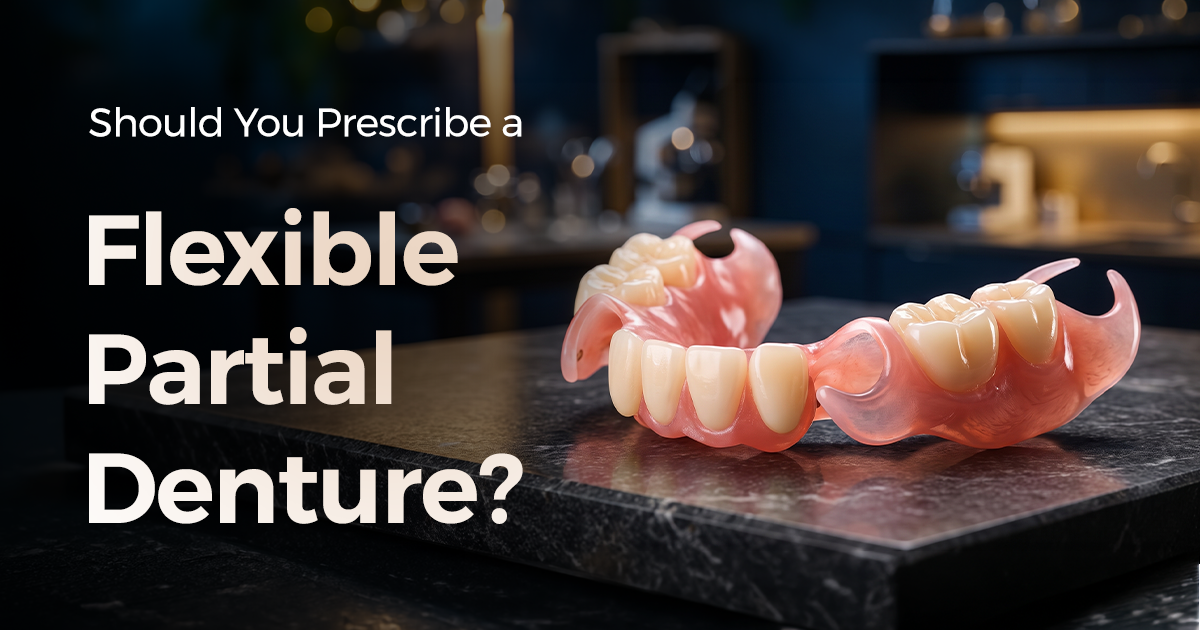
Should You Prescribe a Flexible Partial Denture?
Should You Prescribe a Flexible Partial Denture?A Clinical Case Selection Guide Flexible partial dentures are metal-free removable prostheses ideal for patients