
Dr.Bhavishya
Dental Content Contributor
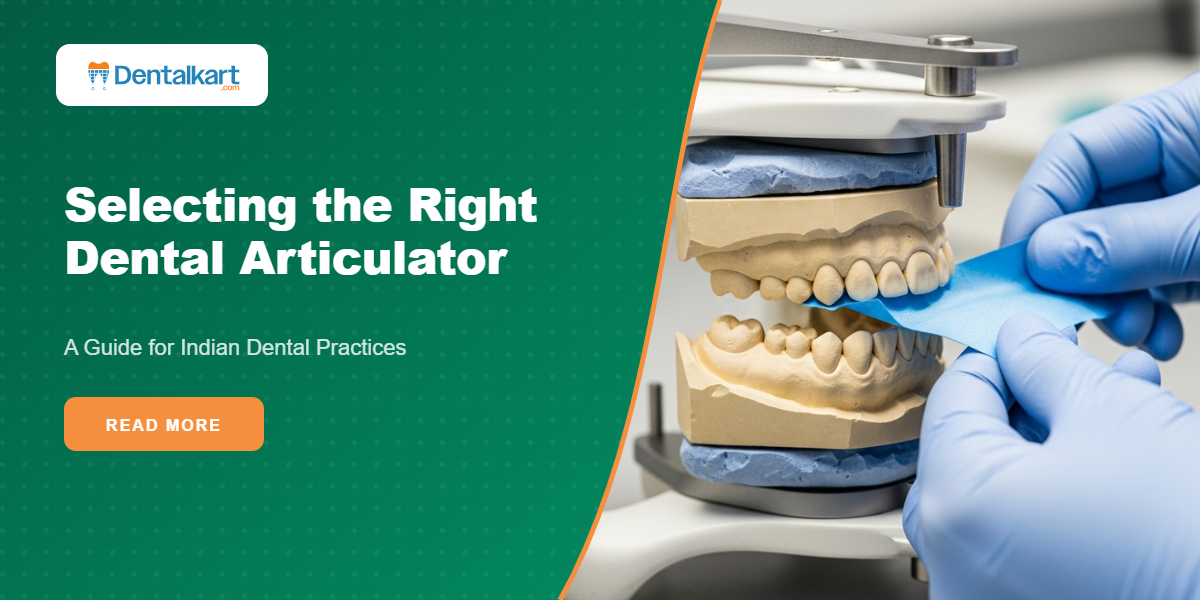
Selecting The Right Dental Articulator
A Guide for Indian Practices
Achieving predictable outcomes in prosthodontics requires the right tools. This mechanical instrument simulates patient-specific jaw movements, enhancing the functional success of restorations. Our guide simplifies your selection process for any clinical case.
Table of Contents
Understanding Articulator Classifications
- Class I devices are simple holding instruments accepting a single static registration.
- They only perform vertical motion and are often called slab articulators.
- Class II instruments permit horizontal as well as vertical motion but are not patient-oriented.
- Class III devices, or semi-adjustable types, simulate condylar pathways using averages.
- They allow for orientation of the casts relative to the joints.
- Class IV instruments, or fully adjustable types, accept 3D dynamic registrations.
| Class | Adjustability | Common Use Case |
|---|---|---|
| Class I (Non-Adjustable) | Vertical Hinge Only | Single Crown (Limited Use) |
| Class II (Simple) | Vertical & Horizontal (Averages) | Denture Occlusal Equilibration |
| Class III (Semi-Adjustable) | Condylar & Bennett (Averages) best | Most Restorative Cases |
| Class IV (Fully Adjustable) | Patient-Specific 3D Paths premium | Full Mouth Rehabilitation |
Arcon vs. Non-Arcon Comparison
- Arcon types have the condylar guidance on the upper member.
- The condylar element is on the lower member, similar to the human mandible.
- Non-Arcon types have the condylar guidance attached to the lower member.
- Here, the condylar element is part of the upper member.
- Arcon models maintain a more constant angle during opening and closing.
- Non-Arcon models are often more robust with fewer loose components.
Arcon Type
- Anatomically more accurate simulation
- Condylar inclination is fixed
- Easier to understand jaw movement
- Better for diagnostic procedures
Non-Arcon Type
- Condylar inclination changes on opening
- Less anatomically correct design
- Mechanically robust and stable
- Good for routine fixed prosthodontics
The Critical Role of Facebows
- It captures the patient's unique hinge axis for accurate rotation.
- This orients the maxillary cast in three dimensions: anteroposteriorly and mediolaterally.
- It helps establish the correct occlusal vertical dimension on the instrument.
- Using a facebow significantly reduces the need for intraoral occlusal adjustments.
- There are two main types: arbitrary (earpiece) and kinematic (hinge axis).
- Arbitrary facebows are sufficient for over 90% of restorative cases.
Mounting Tip
To prevent the heavy weight of mounting stone from altering the facebow position, always support the facebow fork with a jig or stand during the maxillary cast mounting procedure. This ensures your vertical dimension remains accurate.
Matching Instrument to Case
- Single posterior crowns can often be managed with a semi-adjustable model.
- Complete dentures require at least a semi-adjustable instrument for balanced occlusion.
- Anterior aesthetic cases benefit from semi-adjustable settings to manage guidance.
- Full mouth rehabilitations demand a fully adjustable system for precision.
- Diagnostic wax-ups are best done on a semi-adjustable Arcon type.
- Splint therapy for TMD often requires a more advanced instrument.
Instrument Selection Matrix
Frequently Asked Questions
While these instruments are robust, it's good practice to check for wear and tear annually. Verify the incisal pin is at zero and that there is no lateral play in the condylar elements. A full manufacturer calibration is recommended every 3-5 years, especially for devices used in high-volume labs or practices to maintain accuracy.
For a single posterior crown where the occlusion is well-established and supported by adjacent teeth, a facebow may not be strictly necessary. However, for any anterior crown, bridge, or case involving multiple units, a facebow transfer is critical. It provides an essential baseline that saves significant chair time by reducing occlusal adjustments by up to 80%.
The primary advantage is precision. A fully adjustable system can be programmed to replicate the patient's exact condylar border movements, including the precise curvature of the condylar path and the immediate and progressive side shift. This level of detail is impossible with a semi-adjustable model's average settings and is essential for success in full mouth rehabilitation cases with 10 or more units.
Using a simple hinge for complete dentures is strongly discouraged. It cannot replicate the protrusive or lateral movements necessary to create a balanced occlusion. This will result in denture instability, poor function, and patient discomfort. At minimum, a semi-adjustable (Class III) instrument is required to set denture teeth for proper function, with an average setting of 30 degrees for the condylar guidance.
Written by
Dr.Bhavishya
Dental Content Contributor
A contributing clinician at Dentalkart Blogs, Dr. Bhavishya is a compassionate, detail-driven dentist known for thoughtful patient care, clear communication, and a calm chair-side manner that puts patients at ease. Beyond the clinic, she leads product content and category initiatives at Dentalkart India's largest dental marketplace where she bridges clinical understanding with commercial insight to help dentists make better-informed product choices.
Keep reading
Browse all →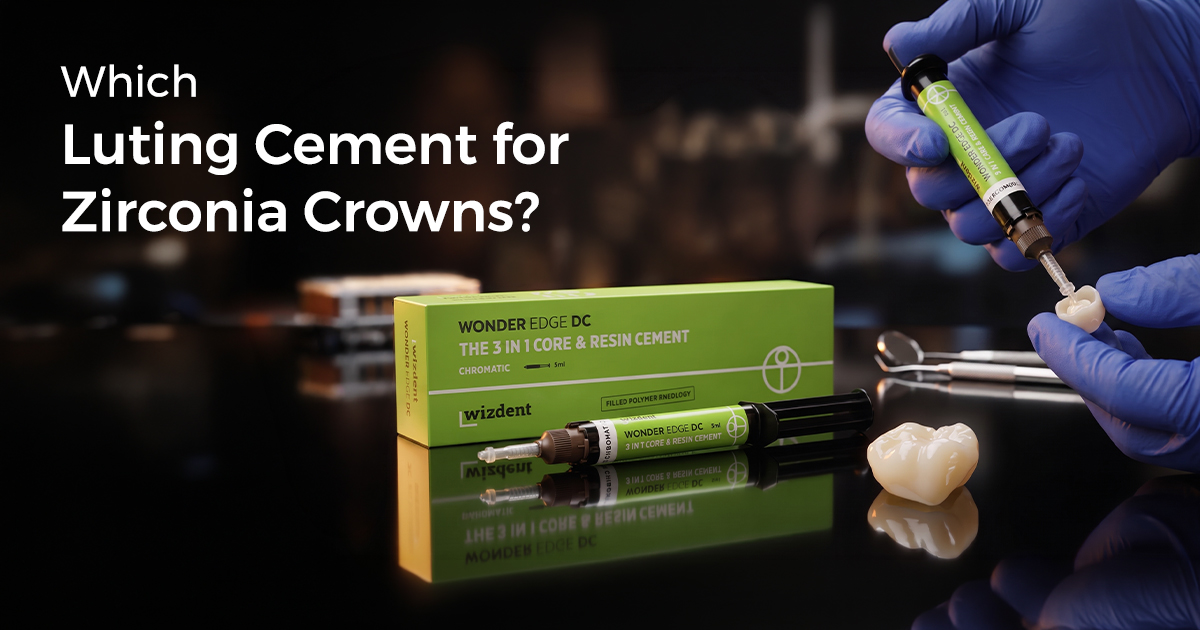
Which Luting Cement for Zirconia Crowns?
Which Luting Cement for Zirconia Crowns?A Clinical Decision Guide The ideal luting cement for zirconia crowns is typically a self-adhesive resin cement, prized
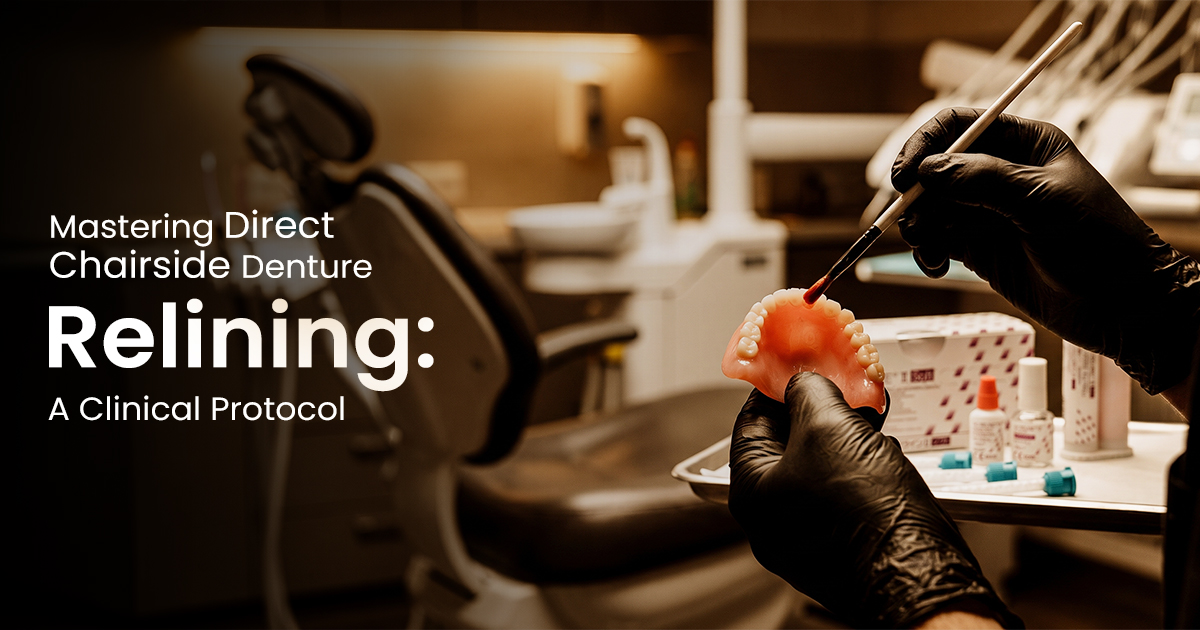
Mastering Direct Chairside Denture Relining: A Clinical
Mastering Direct Chairside Denture Relining: A Clinical ProtocolImprove Fit, Function, and Comfort Direct chairside relining readapts a denture's intaglio surfa

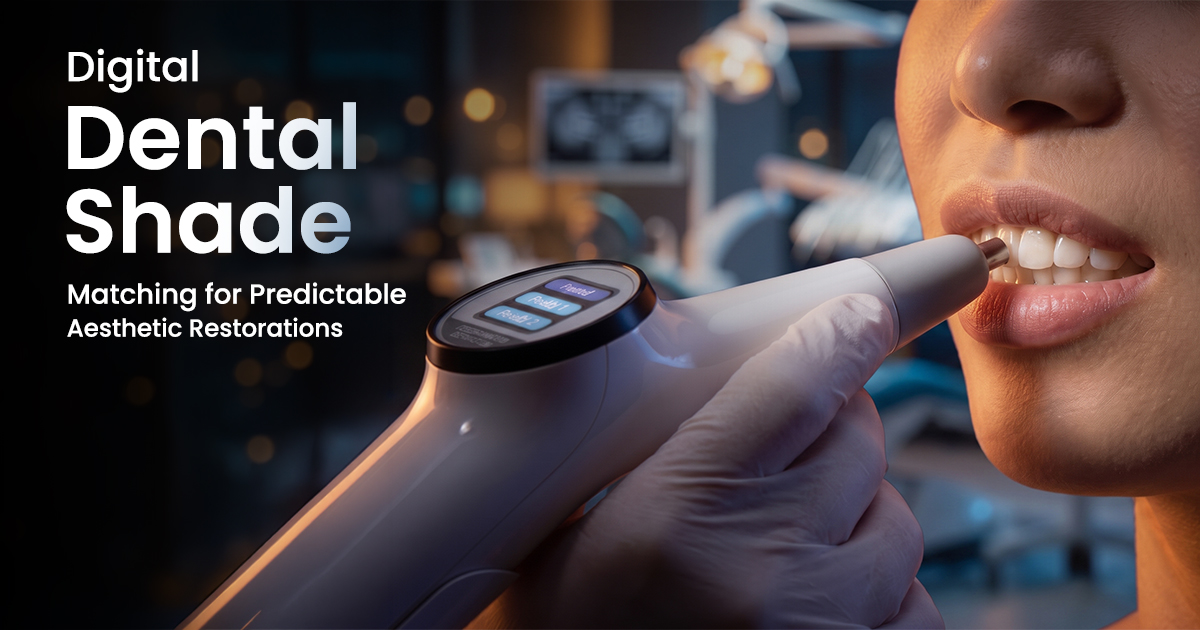
Digital Dental Shade Matching for Predictable Aesthetic
Digital Dental Shade Matching for Predictable Aesthetic RestorationsPrecision Beyond the Eye A dental spectrophotometer is a device that objectively measures to