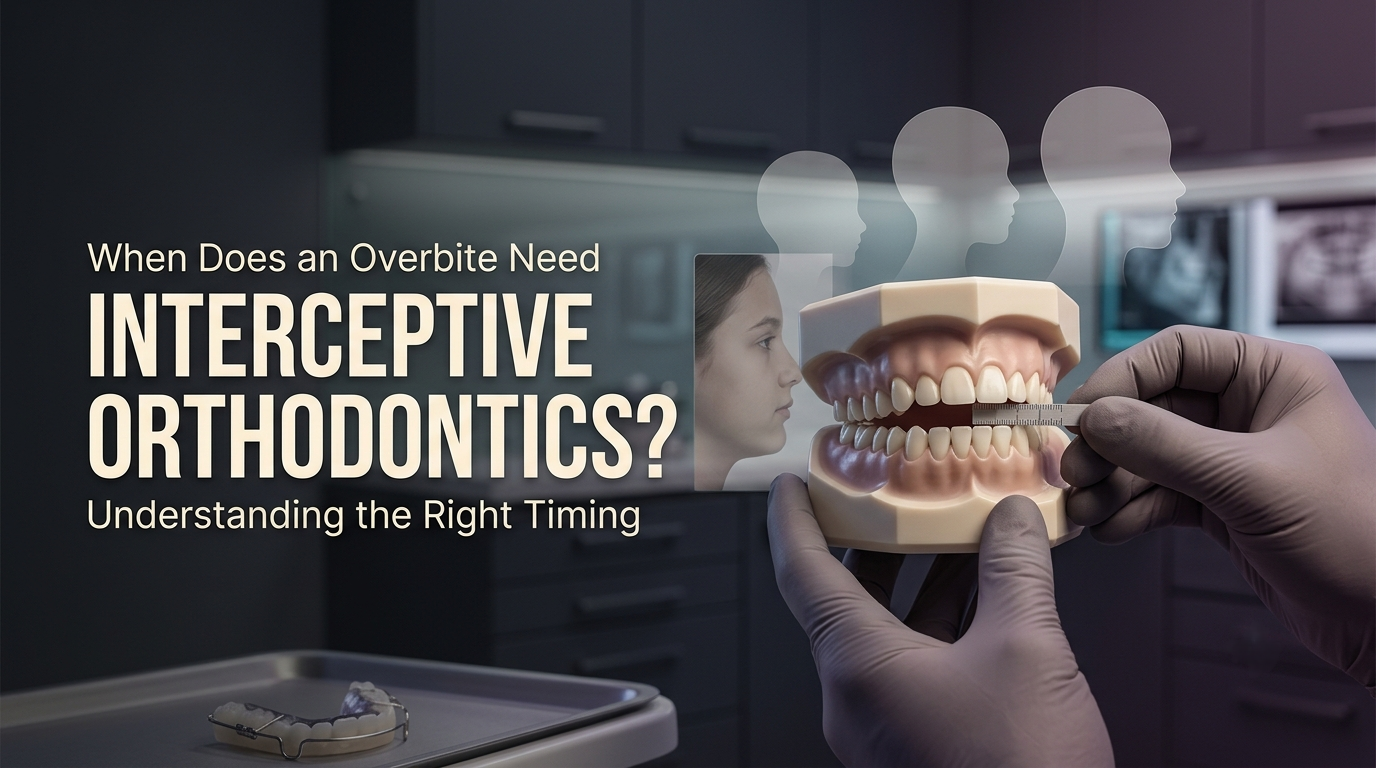
When Interceptive Orthodontics Is Needed for an Overbite

Dr. Gurjeet
Contributing Dental Clinician
When Does an Overbite Case Call for Interceptive Orthodontics Instead of Waiting?
Interceptive orthodontics is justified in an overbite case in two situations: when the bite is already causing damage, or when a skeletal problem is developing that growth can still influence. Treat early when:
lower incisors are biting into the palatal or gingival tissue,
a habit is sustaining an open bite, or
a Class II pattern with a large overjet puts the upper incisors at risk of trauma.
A mild, stable dental deep bite in a Class I child can usually be monitored instead.
The difficulty is that overbite keeps changing in the mixed dentition. Incisors erupt, premolars replace primary molars and the vertical dimension shifts, so a single reading can mislead. I base the decision on three questions:
Is the bite causing harm?
Is the cause dental or skeletal?
Where is the child on the growth curve?
Overbite and Overjet: Why Both Matter Here
Parents, and many referral letters, say "overbite" when they mean the upper front teeth stick out. Clinically these are two different measurements. Overbite is the vertical overlap of the upper incisors over the lowers. Overjet is the horizontal distance between them. They often travel together: a Class II Division 1 child commonly has both a deep overbite and an increased overjet, because the lower incisors, with nothing to stop against, over-erupt behind the uppers. That is why the strongest evidence on early treatment, discussed below, comes from trials of children with increased overjet. It applies to the deep-bite child when the deep bite is part of a Class II pattern with prominent upper incisors. It does not tell us much about an isolated deep bite with a normal overjet.
Act-Now Signals Versus Watch-and-Review Signals
Finding | Leans towards intervening | Leans towards monitoring |
Soft tissue | Lower incisors impinging on the palate or upper gingiva, with indentation or inflammation | Deep overlap with no tissue contact |
Overjet | Large overjet with lip incompetence and prominent upper incisors | Overjet within or close to the usual 2 to 3 mm |
Cause | Skeletal Class II during the pre-pubertal or pubertal window | Dental deep bite in a Class I skeletal pattern |
Function | Functional shift on closure, incisor wear, joint symptoms | Normal closure path, no wear |
Habits | Persistent digit sucking or tongue thrust holding an open bite | Habit already stopped, bite self-correcting |
Use the table as a starting point. A child can fall into both columns; a mild dental deep bite may still have traumatic palatal contact. In that case the tissue damage usually decides the matter.
Measuring the Overbite So the Number Means Something
Record overbite two ways: in millimetres, and as the percentage of the lower incisor crown that is covered. In a growing child the percentage is the more useful figure, because it scales with crown size.
Worked example (hypothetical): a 10-year-old has a lower central incisor clinical crown of 9 mm and an overbite of 5.5 mm.
That covers about 60% of the crown.
That is well above the commonly cited 20 to 30% range, and above the 50% level most clinicians would flag.
If the same child had a 3 mm overbite, coverage would be 33%: borderline, and a reasonable case to watch.

Measure in centric occlusion. Check for a forward posture or a shift on closing, either of which can hide the true overlap. Confirm the clinical figure on study models or scans, so the next reading is taken from the same reference.
The table below gives commonly cited reference values. Norms vary between analyses and populations, so use the values of the method your clinic follows.
Measure | Commonly cited typical value | Often flagged |
Overbite | 2 to 3 mm (about 20 to 30% coverage) | Over 4 mm or over 50%; edge to edge; negative (open bite) |
Overjet | 2 to 3 mm | Over about 5 mm; reverse overjet |
Curve of Spee | Up to about 2 mm | Deeper than about 3 mm |
ANB | About 2° (0 to 4°) | Over 4° suggests Class II; below 0° suggests Class III |
SN-MP | About 32° (±5°) | Low angle favours deep bite; high angle favours open bite |
Dental or Skeletal: The Distinction That Drives the Plan
A deep bite is largely dental when it shows:
a normal ANB,
an average or low SN-MP angle, and
over-erupted lower incisors or a deep curve of Spee.
Dental deep bites often improve as the dentition matures, or respond to simple mechanics later.
A deep bite is skeletal Class II when it comes with an ANB over 4°, a retrusive mandible and a large overjet. Here, timing becomes the central question.
Take a lateral cephalogram when the skeletal pattern is in doubt or when you are considering a growth-modifying appliance. Our overview of digital cephalometric software explains how tracing and measurement are handled digitally.
The vertical pattern also affects mechanics. Low-angle children tend to have deep bites that resist correction. High-angle children with an open-bite tendency need extra caution with any mechanics that extrude the posterior teeth.
What the Evidence Says About Treating Class II Early
The strongest summary of the evidence is the Cochrane review by Batista and colleagues (2018), which covers children with prominent upper front teeth (increased overjet). It included 27 randomised trials with 1,251 participants and reported two main findings for early treatment with functional appliances:
Final outcomes: once both groups had finished treatment, early two-phase treatment gave no clear advantage over single-phase treatment in adolescence for final overjet or ANB.
Incisal trauma: early treatment reduced new incisal trauma. In the three trials comparing early with late functional appliance treatment, 19% of early-treated children (31 of 161) had new trauma, compared with 30% of those treated later (51 of 171). The odds ratio was 0.56 (95% CI 0.33 to 0.95), rated moderate-certainty evidence.
Put simply, about one child is spared incisal trauma for every 9 or 10 children treated early.

That benefit is meaningful for a child who plays contact sports, or who has markedly prominent incisors and incompetent lips. The case is weaker for a child with a moderate overjet who will need a second phase of treatment anyway. Weigh the benefit against the extra treatment time, the burden of wearing an appliance and the cost to the family.
For growth modification, getting the timing right usually matters more than which appliance you choose. Functional appliances are generally planned around the pubertal growth spurt. Skeletal maturity is a more reliable guide than age, because the growth peak can differ by two years or more between children of the same age. Assess it with cervical vertebral maturation (CVM) staging on the lateral cephalogram you already have. Because CVM staging varies between observers, have borderline films staged by a second clinician; a hand-wrist radiograph is reserved for the occasional case where the stage remains unclear and the decision depends on it.
Matching the Intervention to the Finding

IF lower incisors traumatise the palate in a dental deep bite, THEN consider an anterior bite plane. It separates the posterior teeth and relieves the palatal contact. Our guide to Hawley vs Essix retainers explains why an acrylic-baseplate design suits this kind of modification.
IF a skeletal Class II with a large overjet is entering the growth spurt, THEN plan a functional appliance. Where the aim is to restrain the maxilla, consider extraoral appliances such as headgear instead.
IF a digit habit is holding an open bite, THEN deal with the habit first. A habit appliance may be needed if counselling alone fails.
IF a narrow maxilla or crossbite is also present, THEN assess the case for expansion, using the criteria in our article on rapid palatal expansion case selection.
IF the bite is dental, mild and causing no harm, THEN monitor it with dated measurements and photographs.
Early loss of primary molars can also deepen a bite, through mesial drift and retroclination of the lower incisors. Space maintainer selection is therefore part of interceptive planning, not a separate topic.
Records to Complete Before Deciding Either Way
Choosing to wait is a clinical decision, so it deserves the same records as choosing to treat. Before deciding, document:
dentition stage;
overbite and overjet, in millimetres and as a percentage;
any tissue contact, wear or incisor injury;
closure path and joint findings;
habits;
the cephalometric analysis used and its values;
growth stage, and how it was assessed;
dated photographs and radiographs;
the options discussed, the family's decision and the review date.
Standardised intraoral photography helps here. Photographic mirrors and other record-taking essentials are available in Dentalkart's orthodontic instruments range.
Also check a panoramic film, where indicated, for missing, supernumerary or ectopic teeth, since any of these can change the bite later. If the records disagree, for example a modest measured overbite alongside clear palatal indentation, resolve the conflict before planning.
Frequently Asked Questions
Usually not. A bite plane lets the posterior teeth erupt and relieves palatal trauma, which improves the dental part of the problem. It does not change the underlying jaw relationship. A skeletal Class II deep bite still needs growth modification or later comprehensive treatment.
Every 6 months during the mixed dentition is common practice. Review sooner if there is tissue contact or an active habit. At each visit, re-measure in the same position and compare the percentage coverage, not just the millimetre value.
Not necessarily. A complete overbite that rests on the cingulum can usually be monitored, provided there is no soft-tissue contact, wear or functional shift. Treatment is generally reserved for cases where tissue contact or a skeletal discrepancy is confirmed.
Written by
Dr. Gurjeet
Contributing Dental Clinician
Dr. Gurjeet is a practising dental clinician contributing to Dentalkart Blogs, sharing chair-side experience, treatment protocols, and equipment insights for the wider dental community.
Keep reading
Browse all →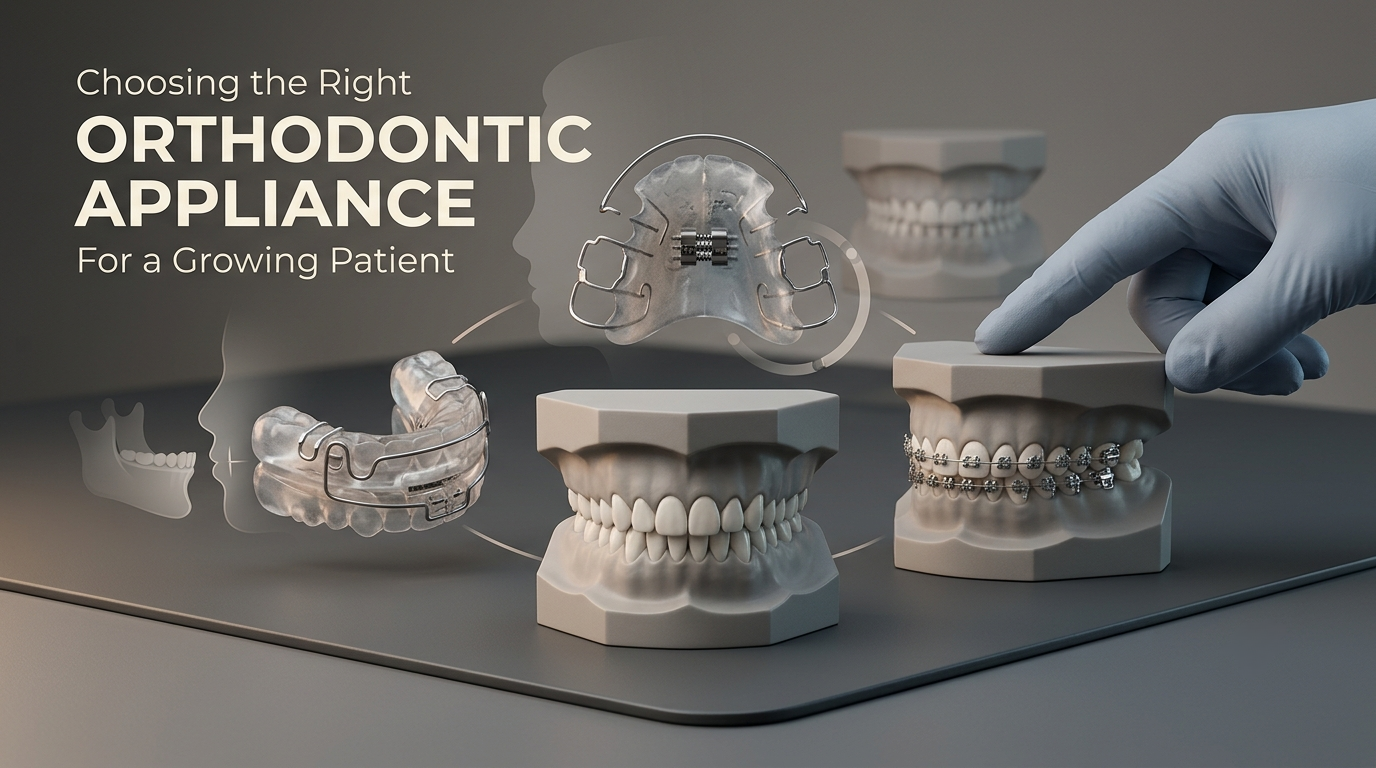
How to Choose Orthodontic Appliances for Growing Patients
How Do You Choose Between a Functional, Removable, or Fixed Orthodontic Appliance?In a growing patient, choose the appliance by the level of the problem first,
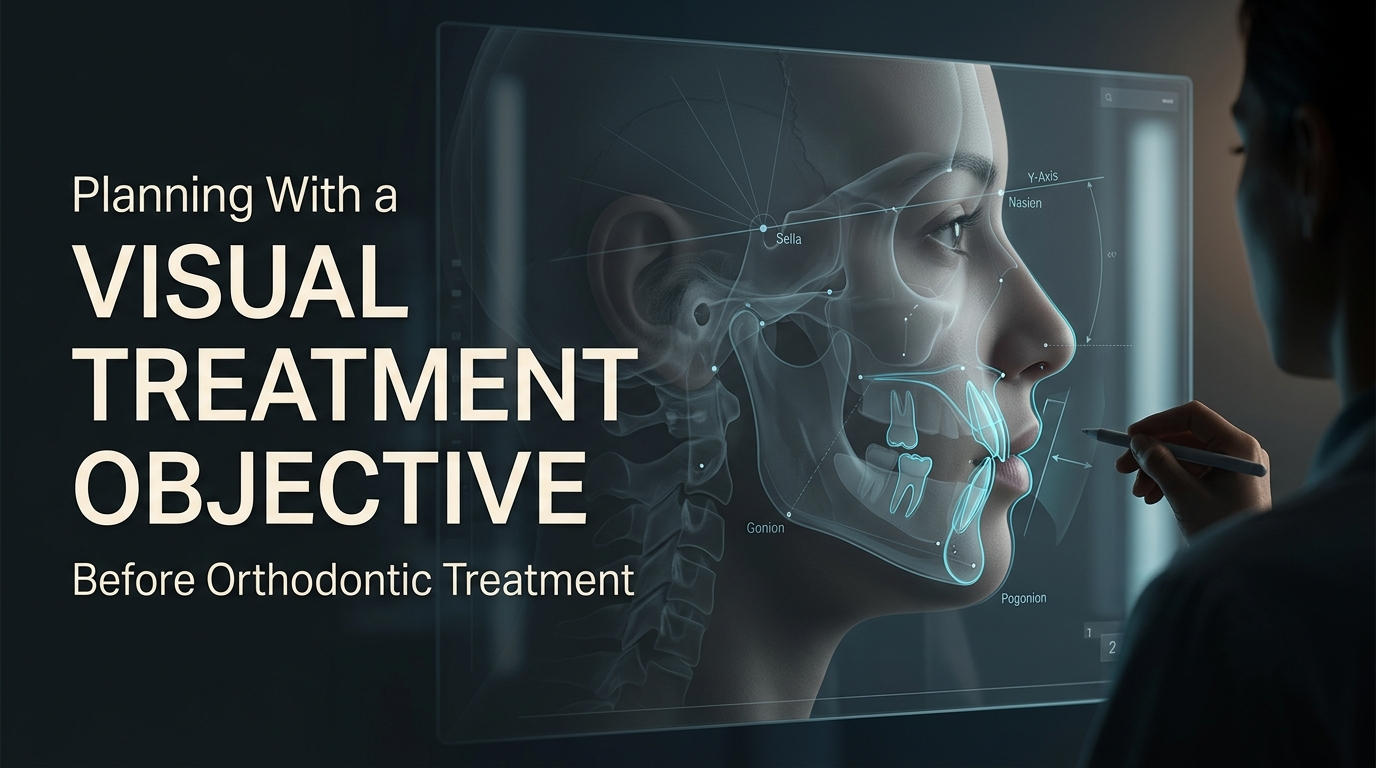
How VTO in Orthodontics Helps Plan Treatment and Outcomes
How Is a Visual Treatment Objective (VTO) Used to Plan an Orthodontic Case?A Visual Treatment Objective is used to test a plan before treatment starts. On the l
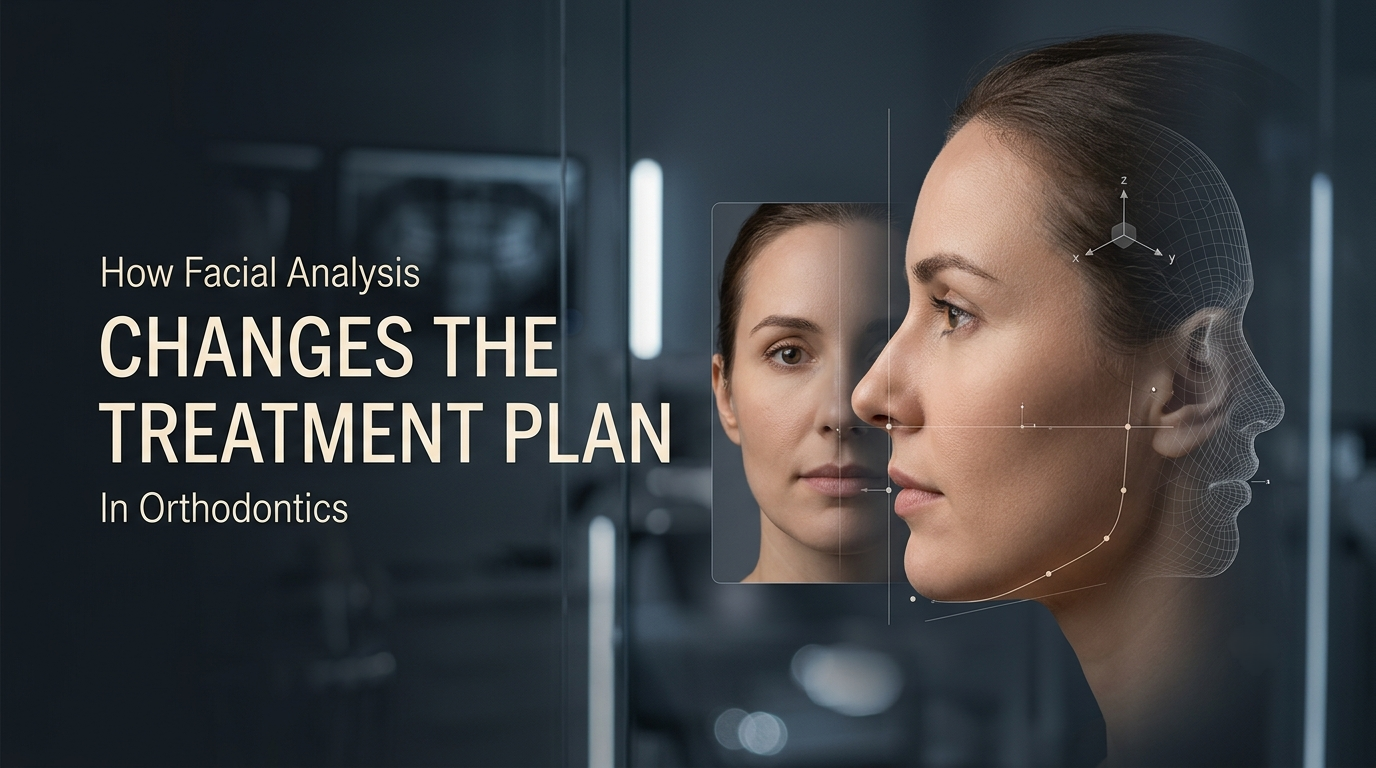
Facial Divergence in Orthodontics and Treatment Planning
How Does Facial and Photographic Analysis Change an Orthodontic Treatment Plan?Facial analysis changes the plan by setting soft-tissue limits on tooth movement.